How to Choose Boards for Concrete Formwork in 2026?
Choosing boards for concrete formwork in 2026 means balancing surface quality, strength, cost, and the number of planned reuses. The right board should resist wet concrete, hold its shape under pressure, and release cleanly after curing. Yet no single material suits every pour. A small garden step and a large foundation wall place very different demands on the form.
Start with the job conditions. Note the wall height, pour rate, expected concrete pressure, and spacing of supports. Check whether the boards will face rain, repeated wetting, or long storage outdoors. Plywood is common for broad, smooth faces, while solid timber can suit simple or irregular forms. Either choice can disappoint if the edges swell, the panels bow, or the bracing is too far apart. Measure twice. Inspect the grain, thickness, flatness, and condition before installation. These small checks are not glamorous, but they can prevent leaks and uneven concrete faces.
This guide explains how to compare board materials, select suitable dimensions, and judge reuse value without relying on price alone. It also covers fastening, sealing, storage, and common selection mistakes. Manufacturer data and project specifications should guide load limits; appearance is not proof of structural capacity. In practice, site conditions can change, and even a carefully chosen board may need adjustment. That is worth admitting. Use the recommendations as a decision framework, then confirm the final setup with a qualified professional when loads or project requirements are uncertain.
What Boards for Concrete Formwork Are and How They Perform
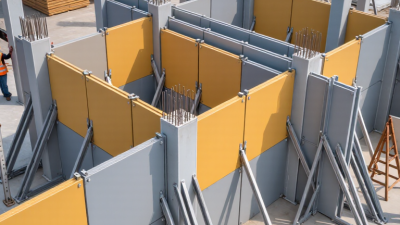
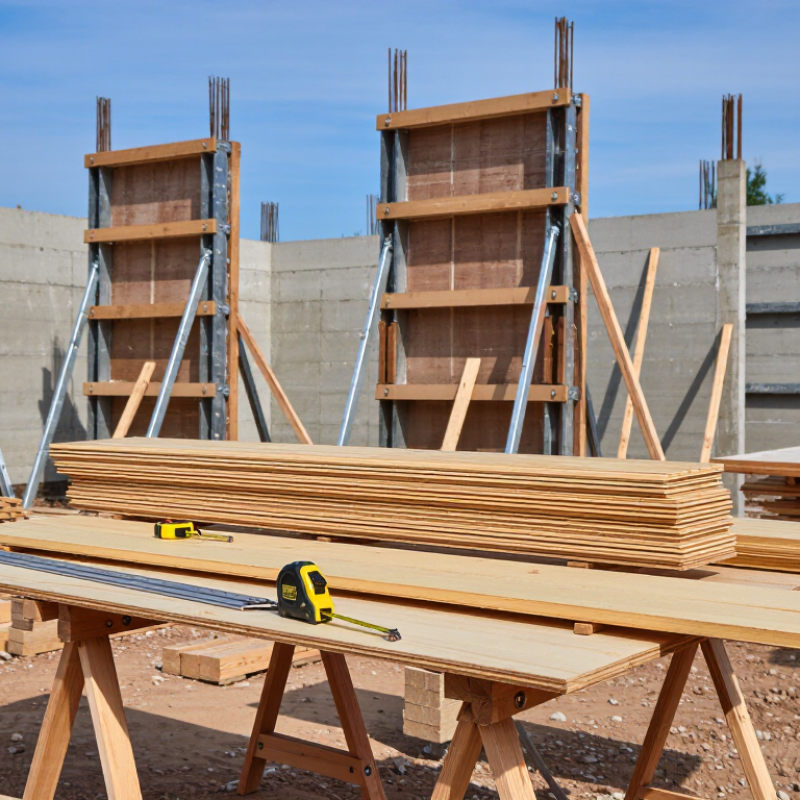
Concrete formwork boards are the temporary faces that hold wet concrete in shape until it can support itself. They are commonly sawn lumber or plywood, supported by studs and braces. A smooth face can reduce surface blemishes, while stiff, well-supported panels help limit bulging. Small gaps matter: cement paste can leak through them, leaving rough edges and wasted material.
Performance depends on more than board thickness. Moisture, panel condition, support spacing, concrete placement rate, and vibration all affect the pressure and deflection a form must withstand. ACI 347R-14, Guide to Formwork for Concrete, identifies fresh-concrete pressure as a key design load; where pressure approaches hydrostatic conditions, a normal-weight mix at about 2,400 kg/m³ creates roughly 23.5 kPa of pressure per metre of concrete depth. Check the project’s mix and placement conditions rather than relying on a generic board choice.
Reuse can lower material demand, but only when boards stay flat, clean, and securely fastened. Inspect edges for swelling and faces for delamination before each pour. One imperfect panel can print its flaws into the concrete. ACI guidance is useful, though it does not replace a project-specific formwork design or a careful site inspection.
Which Project Requirements Should Guide Board Selection in 2026?
Choosing boards for concrete formwork in 2026 starts with the project, not a price list. Check the wall height, pour rate, concrete pressure, and required surface finish. A low garden wall may need different stiffness from a tall foundation wall poured quickly. Board thickness and support spacing must match the formwork design. When uncertain, ask a qualified site engineer to review the loads.
Moisture matters. Fresh concrete and wet site conditions can cause some boards to swell, warp, or lose strength. Look for straight edges, sound faces, and consistent thickness before installation. Reject boards with deep splits or soft, damaged areas. A smooth face can reduce patching, but it is not always worth the extra cost if the concrete will be covered. Check how many pours the board can realistically withstand, and include cleaning and storage in that estimate. Small details count.
Plan around handling, too. Long, heavy boards can slow a small crew or prove awkward in tight spaces. Local availability may affect replacement time if a panel is damaged mid-pour. Reuse claims also deserve a careful look; site conditions often shorten service life. I have seen a modest board choice work well on one job and disappoint on another. That is a useful reminder: match the board to the actual pour, crew, and finish requirements, then inspect it again before each use.
How to Compare Board Materials, Sizes, and Surface Finishes
How to Choose Boards for Concrete Formwork in 2026?
How to Compare Board Materials, Sizes, and Surface Finishes
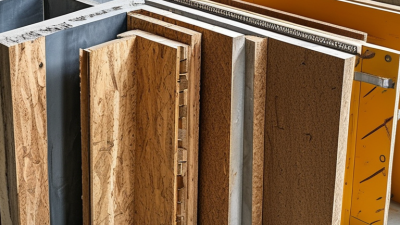
Choosing formwork boards starts with the pour, not the price tag. Plywood is easy to cut and suits many wall and slab layouts, while solid timber can work well for smaller, irregular sections. Plastic-faced boards often leave a smoother finish and resist moisture, but damaged edges still need attention. Compare thickness and stiffness against the pressure and height of the pour. A board that flexes can create uneven faces. Measure the frame spacing, too; wider gaps may call for thicker boards or closer supports.
Tips: Check the board’s stated reuse guidance and inspect both faces for swelling, delamination, or deep scratches. Match the surface finish to the concrete you want: textured boards can leave visible grain, while smooth faces usually produce a cleaner appearance. Keep samples beside the work area and test a small section when appearance matters. Small trials save rework.
Size affects handling as much as coverage. Large panels reduce joints, yet they can be awkward to lift and align on a tight site. Smaller boards are easier to replace, though extra seams may show on the finished concrete. I would not assume every “smooth” board stays smooth after repeated wet use; site conditions vary, and that assumption deserves a second look. Check cut edges and fastener locations before each pour, then replace boards that no longer hold their shape.
How to Choose Boards for Concrete Formwork in 2026?
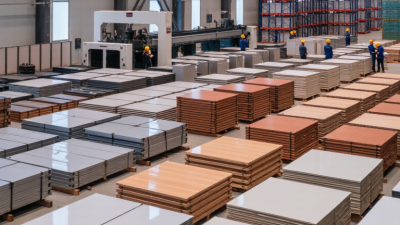
Compare common nominal sheet formats by panel area. Larger panels can reduce the number of joints, while smaller panels may be easier to handle.
How to compare: Formwork plywood is commonly available in thicknesses such as 12, 15, 18, and 21 mm; select thickness according to design loads and support spacing. Film-faced surfaces generally produce a smoother concrete finish and are easier to clean, while untreated or textured faces can leave a different surface appearance. These are nominal sheet formats: availability and actual dimensions vary by market and supplier. Confirm the board specification and consult the formwork design before use.
How to Check Strength, Reuse Potential, and Site Compatibility
How to Choose Boards for Concrete Formwork in 2026?
A board that looks sound in the yard can still bow under wet concrete. Check its grade, thickness, straightness, and visible damage before use. Press along the edge and look for soft spots, splits, loose veneers, or swelling. For heavier pours or tall walls, confirm the design with a qualified site professional; appearance alone cannot establish safe load capacity. A simple check helps, but it is not a substitute for a load calculation.
Reuse potential depends on more than board strength. Smooth faces release concrete more cleanly, while sealed edges resist moisture better. After stripping, inspect for cracks, crushed corners, and cement buildup that could mark the next pour. Keep a basic count of reuse cycles and record repairs. Honestly, cycle counts are only estimates: rough handling and storage can shorten a board’s life quickly.
Site compatibility matters just as much. Boards should fit the form dimensions without awkward gaps, and their thickness must work with the planned supports and fasteners. Check how they will be carried, cut, stored, and protected from rain. On a cramped site, oversized sheets may create needless handling problems. Test a small section before building the full form. Keep it practical. A board that is strong on paper may still be the wrong choice for the crew, weather, or pour schedule.
How to Select and Prepare Boards for a Specific Pour
A board that works for a short garden footing may fail on a tall wall pour. Choose boards for the pressure, height, and shape of the specific pour, not just the lumber aisle price. For small forms, straight, sound boards often provide adequate support. Check each piece for bowing, splits, loose knots, and damp, softened edges. Sight down its length. A slight curve can leave a visible wave in the finished concrete.
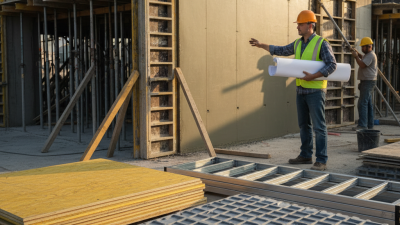
Measure the form height and estimate how quickly concrete will be placed. Taller forms and faster placement can create greater pressure, so they may need thicker boards, closer supports, or both. Follow the formwork design and project requirements; do not rely on guesswork for a heavily loaded form. Before assembly, cut boards to length and lay them on a flat surface to spot gaps. Dry-fit corners and check dimensions twice. It takes a minute.
Seal or line the concrete-facing surface if a smoother finish or easier stripping is needed. Keep release products off reinforcing steel and follow product directions. Use clean, compatible fasteners, and avoid driving them close to split-prone ends. I have seen a form look square before bracing, then shift during placement; checking diagonals after bracing is easy to forget. Recheck alignment, joints, and supports before the pour, and repair any opening where wet concrete could escape.