China Top 10 Concrete Formwork Manufacturers?

China’s concrete formwork industry supports housing, bridges, tunnels, energy facilities, and large commercial projects. This guide examines ten manufacturers that attract attention in domestic and international markets.

The selection considers product range, engineering experience, manufacturing capacity, export performance, and documented project applications. It also reviews panel systems, steel formwork, aluminum formwork, climbing systems, and tunnel solutions. Practical details matter. A strong supplier should provide accurate drawings, stable dimensions, reliable ties, and responsive site support.

Field performance reveals more than a polished brochure. Panels must remain aligned after repeated lifting and cleaning. Connections should resist movement during concrete placement. Delivery schedules also matter when cranes, labor, and concrete pumps operate under pressure. Small delays can affect an entire floor cycle.

Not every company fits every project. A low-cost system may require more labor. A premium system may create unnecessary expense for a smaller site. Regional service coverage can also change the final decision.

This list is a starting point, not an official ranking. Manufacturing claims, certifications, production figures, and project references should be verified with current company documents. Some public information may be incomplete or inconsistent. That limitation deserves attention.

Readers can use this overview to compare technical capability, customization, quality control, and long-term value. The best concrete formwork manufacturer is not always the largest. It is the supplier that matches the structure, schedule, safety expectations, and local construction conditions. Careful comparison remains essential.
China Top 10 Concrete Formwork Manufacturers?

What Is Concrete Formwork and Why Does It Matter?

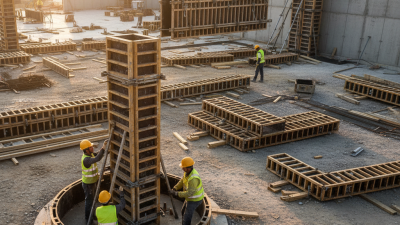
Concrete formwork is the temporary or permanent mold that holds fresh concrete until it can support itself. It shapes walls, columns, slabs, and beams. It also resists pressure from wet concrete, workers, and placing equipment. A small leak can leave a rough edge. A weak support can cause serious movement. Details matter.

The scale is significant. The Global Cement and Concrete Association estimates that about 14 billion cubic metres of concrete are used worldwide each year. That figure helps explain why formwork quality affects construction time, material use, and finish across many projects.

ACI 347R, the American Concrete Institute’s guide to formwork, addresses design loads, supports, and construction practices. These are not minor checks. They help crews manage pressure and maintain the intended shape while concrete sets.

Good formwork is not simply strong; it must also fit the pour sequence and site conditions. Panels need tight joints, stable bracing, and safe access for inspection. Reusable systems can reduce waste, but reuse is not automatically efficient. Damaged panels or poor cleaning can create defects and extra work. In practice, the best choice depends on geometry, schedule, crew experience, and concrete placement rate. Even careful planning can miss something. That is worth reviewing before the pour.

Key Criteria for Ranking China’s Formwork Manufacturers

Ranking China’s concrete formwork manufacturers requires more than comparing catalogue prices. China’s National Bureau of Statistics reported construction-industry output of about RMB 31.6 trillion in 2023, a scale that makes reliable delivery and repeatable quality especially important. Yet that figure measures construction output, not formwork sales. It should provide context, not serve as a ranking score.

A practical assessment should examine load-test records, dimensional tolerances, corrosion protection, and documented quality controls. Ask for test dates and product configurations; results from one panel may not represent an entire system. Check whether production capacity matches stated delivery times, and whether spare parts and technical support are available near the project. Safety matters. The International Labour Organization identifies construction as a high-risk sector, so clear assembly guidance and traceable inspection records deserve weight. Compare total cost across reuse cycles, including transport, repair, cleaning, and rejected components. A cheaper panel can become costly after repeated repairs. ISO 9001 certification can indicate a managed quality process, but it does not prove that a product performs well on site. This is an imperfect screen. Site trials and customer references still matter.

China Top 10 Concrete Formwork Manufacturers? - Key Criteria for Ranking China’s Formwork Manufacturers

A fact-based ranking requires comparable, current evidence for each manufacturer. The criteria below provide a transparent scoring framework; the weights are suggested evaluation weights, not published industry statistics. No company-specific rankings or scores are asserted.

No. Ranking criterion Suggested weight Evidence to review Why it matters
1 Product range and system capability 15% Current product catalogs, technical data sheets, and documented systems for walls, columns, slabs, or climbing applications. Shows whether the supplier can address different project types and construction methods.
2 Manufacturing capability 13% Audited production information, facility details, process controls, and evidence that the stated capacity is operational. Helps assess the ability to produce consistently and meet delivery commitments.
3 Quality management and inspection 13% Valid quality-system certificates, inspection records, material traceability, and documented nonconformance procedures. Provides evidence of repeatable production controls; certificates should be checked with the issuer.
4 Engineering and customization 12% Engineering team qualifications, design examples, calculation procedures, and documented customization workflow. Relevant where projects require non-standard layouts, interfaces, or system configurations.
5 Standards and technical documentation 10% Applicable test reports, declarations, installation instructions, safety information, and clearly identified standards and editions. Allows buyers to evaluate suitability against project and market requirements.
6 Export and logistics experience 10% Verifiable shipment records, export documentation capability, packaging specifications, and delivery-process information. International orders involve documentation, packing, transport, and coordination requirements.
7 Project references and track record 9% Reference projects supported by client permission, project records, or independently verifiable case studies. Provides context on real-world use; project claims should be independently checked.
8 After-sales and technical support 7% Written service scope, response channels, spare-parts arrangements, and support availability for installation or troubleshooting. Support can affect project coordination and ongoing system use.
9 Commercial transparency 6% Itemized quotations, stated exclusions, warranty terms, payment terms, and clear specification of supplied components. Improves quote comparability and helps identify scope gaps before purchase.
10 Environmental and material information 5% Material declarations, recycling or reuse information, and environmental documentation where available and applicable. Supports project procurement requirements and responsible material assessment.
Total suggested weighting 100% Apply the same evidence standards to every manufacturer being compared.

Suggested method: score each criterion using documented evidence, record the source and review date, and distinguish verified facts from supplier-provided claims. A “Top 10” list should only be published after the same method has been applied to a defined set of manufacturers.

China’s Top 10 Concrete Formwork Manufacturers

China’s Top 10 Concrete Formwork Manufacturers should be assessed through evidence, not advertising claims. China’s construction industry recorded roughly RMB31.6 trillion in output value in 2023, according to the National Bureau of Statistics. This scale supports strong demand for steel, aluminum, plastic, and engineered timber formwork systems. Research and Markets also identifies infrastructure growth, urban housing, and reusable systems as major market drivers.

A reliable shortlist should examine panel tolerances, load capacity, turnover cycles, and project references. On active sites, a poor panel fit creates visible grout lines and slows crane operations. Good suppliers usually provide structural calculations, installation drawings, safety guidance, and replacement parts. ASTM and EN references may help comparison, but buyers must confirm local project requirements. The top ten should also demonstrate documented quality control, factory inspection records, and realistic delivery schedules.

Price alone can mislead. A cheaper system may require more labor, repairs, or frequent oiling. Grand View Research reports continued growth in modular and reusable construction systems, reflecting pressure to reduce waste and labor time. Yet rankings remain imperfect because public data rarely reveals actual defect rates or after-sales performance. My practical concern is simple: a polished catalog cannot replace a site trial. Buyers should inspect welds, measure panel flatness, and speak with recent users before signing. These details often separate dependable production from impressive presentation.

Product Ranges, Technologies, and Industry Applications

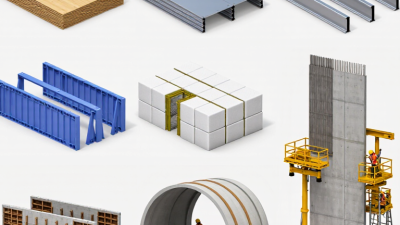
China’s concrete formwork sector covers modular aluminum panels, steel frames, timber systems, plastic components, and climbing forms. Product choice depends on the pour: aluminum suits repeated apartment layouts, while steel handles heavy loads and rugged site conditions. Timber remains flexible for irregular edges, though crews must check panel wear and dimensional consistency. Applications range from housing and bridges to tunnels and industrial foundations.

Technology changes how these systems perform. Engineered panels use standardized connections, adjustable props, and measured load limits; digital modeling can help teams plan sequencing and reduce clashes. McKinsey’s 2017 report, Reinventing Construction, estimated construction productivity had grown about 1% annually over two decades, compared with 3.6% in manufacturing. That gap helps explain growing interest in repeatable systems and better site planning. Still, digital drawings cannot correct poor curing practices or rushed inspections.

Tips: Compare panel weight, reuse cycles, tie spacing, and local repair support—not just purchase price. On site, inspect joints for grout leakage and confirm props stand on stable bases. Small details matter. Actual performance varies with crew training, concrete pressure, weather, and maintenance, so published specifications should be checked against project conditions.

China’s Top 10 Concrete Formwork Manufacturers: Product Technologies and Applications

Indicative reuse cycles of major concrete formwork technologies commonly supplied to infrastructure, commercial, residential, and industrial projects.

Typical planning ranges: timber formwork 5–10 uses, plywood systems 10–30 uses, plastic formwork 50–100 uses, steel formwork 100–200 uses, and aluminum formwork 200–300 uses. Actual performance depends on design, concrete pressure, handling, cleaning, storage, and site conditions.

How to Choose the Right Chinese Formwork Manufacturer

China Top 10 Concrete Formwork Manufacturers: How to Choose the Right Chinese Formwork Manufacturer

Choosing a Chinese concrete formwork manufacturer requires more than comparing catalog prices. Start by checking experience with your project type, such as high-rise walls, bridges, tunnels, or repetitive housing units. Request recent project references and inspect completed work when possible. Photos help, but site evidence matters more.

Review the technical details carefully. Ask for steel grade certificates, plywood specifications, welding procedures, load calculations, and dimensional tolerances. A capable engineering team should explain how panels handle pressure, stripping cycles, and uneven site conditions. Request a sample panel or trial assembly before mass production. Small errors become expensive later. They often do.

Audit the factory, either in person or through a live video inspection. Check cutting accuracy, welding quality, surface treatment, storage conditions, and inspection records. Confirm who controls subcontracted processes. A polished presentation is not proof of stable production. I have seen impressive samples hide weak packaging and poor batch consistency. Define acceptance standards, inspection points, replacement duties, delivery dates, packaging methods, and spare-part support in the contract. Compare total cost, including design changes, shipping, installation guidance, and maintenance. Clear communication is valuable, especially when drawings, measurements, and construction practices differ across countries.