How to Choose Circular Column Formwork?

Choosing circular column formwork is not just a matter of matching a diameter. The right system must suit the column height, concrete pressure, pour method, and finish required. A mismatch can lead to visible seams, difficult stripping, or delays while crews adjust panels on site.

Start with accurate dimensions. Check the column diameter, pour height, and any changes in section shown on the drawings. Then compare available systems, such as reusable steel or lightweight modular forms. Consider how the form will reach the work area, how many workers are needed to position it, and whether lifting equipment is available. Details matter. A form that looks simple in a product photo may be awkward beside a crowded scaffold or in a narrow work zone.

Pay attention to the connection system, joint tightness, cleaning needs, and expected reuse. Ask the supplier for technical data and follow the manufacturer’s instructions for assembly, bracing, and stripping. The project engineer should verify that the selected system suits the planned pour and site conditions. Price deserves attention, but it should not be the only comparison. A low purchase cost may become less attractive if setup takes longer or the finished surface needs extra repair. That shortcut can be misleading. Even careful planning leaves room for surprises, so confirm access and handling requirements before delivery. This guide explains how to choose circular column formwork with practical criteria, while recognizing that the best option depends on the project.
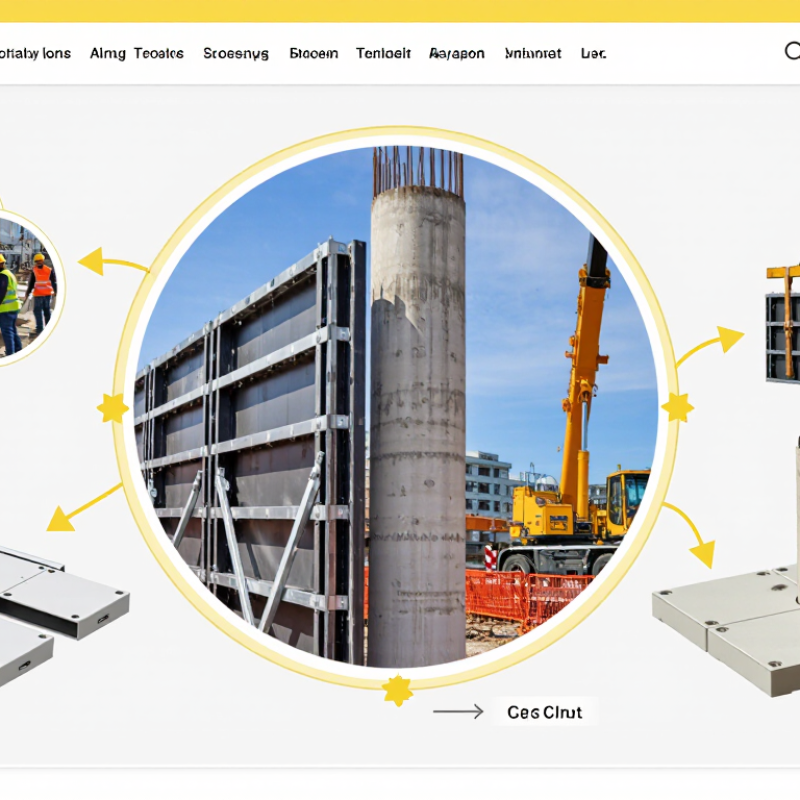
How to Choose Circular Column Formwork?

Define Column Dimensions and Concrete Requirements

Start with the column’s required finished diameter and height. Check the drawings against site measurements, especially where the base meets a slab or footing. A small diameter error can affect cover, alignment, and connections to nearby beams. Measure at several points; existing reinforcement can make access awkward. Field measurements are rarely perfect. Record the tolerance your project can accept, and confirm whether the form’s stated diameter refers to its inside face.

Concrete requirements matter just as much. Note the mix’s workability, expected pour rate, placement temperature, and planned lift height. These factors influence the pressure on the form, while vibration and congested reinforcement can complicate placement. A slow, controlled pour may behave differently from a rapid placement. Check the formwork’s rated capacity against the project’s actual conditions, using technical documentation and an appropriate design review. Don’t guess. I have seen plans look clear on paper, yet site access changes the pouring sequence. Recheck dimensions and assumptions before ordering, and allow for practical handling without changing the specified column size.

Compare Circular Formwork Types and Materials

Circular column formwork should match the column diameter, pour rate, surface finish, and number of planned pours. Steel systems suit repeated work: they hold a consistent radius and resist wear, but need lifting equipment and thorough cleaning. Modular plastic panels are lighter and resist corrosion; check their joint stiffness and pressure limits before a tall pour. Flexible plywood or adjustable ribs can handle changing radii, though setup may take longer and seams can leak. That trade-off is easy to underestimate.

ACI 347R-14, Guide to Formwork for Concrete, gives a minimum construction live-load allowance of 50 lb/ft² (2.4 kPa), rising to 75 lb/ft² (3.6 kPa) when motorized carts are used. These figures concern formwork design loads; they do not replace checks for fresh-concrete pressure, bracing, or the specific system’s rated capacity. Compare supplier data with the actual pour height and placement rate.

Tips: Check the inside diameter at several points before pouring. Look for tight joints, secure clamps, and accessible ties. A small gap can leave a visible ridge in the finished column. If the surface finish matters, test one panel or liner first; results can vary with concrete mix and vibration.

Check Load Capacity and Pouring Conditions

Circular column formwork must resist fresh-concrete pressure, not just the weight of the finished column. ACI 347R-14, Guide to Formwork for Concrete, identifies factors such as placement rate, concrete temperature, slump, and vibration as influences on lateral pressure.

A useful screening estimate is hydrostatic pressure: at a typical fresh-concrete unit weight of 24 kN/m³, a 3 m pour can create about 72 kPa at the base. Treat this as a check, not a final design value. Actual pressure depends on the mix and placing method.

Check the rated capacity of the shell, joints, clamps, and ties as one system. A strong panel can still fail at a poorly secured seam. Note the planned lift height and pour rate, then confirm that the supplier’s capacity applies to those conditions. Watch for deep internal-vibrator insertion, which can increase pressure locally. Keep the base clean and level; small gaps can leak grout and weaken the concrete surface. Check the ties.

ACI guidance supports considering placement conditions, but site conditions rarely match a neat calculation perfectly. Temperature can shift during a long pour, and crews may pour faster than planned. Allow for that uncertainty in the design review, and verify tie spacing and connections before concrete arrives. A quick visual check helps, but it does not replace documented load capacity.

Assess Surface Finish, Reuse, and Ease of Installation

How to Choose Circular Column Formwork?

Assess Surface Finish, Reuse, and Ease of Installation

The formwork’s inner face largely determines how the finished column looks. Check a sample for dents, rough seams, and gaps where concrete paste could escape. A smooth panel can still leave visible marks if its joints do not align. Inspect the closure points, too. Small steps matter.

Ask how many pours the system can reasonably handle under your site conditions. Reuse depends on careful stripping, cleaning, and storage, not just the panel material. Dried concrete around a joint can damage the next pour’s finish. Follow the supplier’s cleaning guidance, and record each use. Cycle estimates can be optimistic.

Installation affects both labor and alignment. Compare panel weight, fastening steps, and how easily crews can adjust the form around a vertical line. Check the available lifting equipment and access space before delivery. A quick assembly on a clear yard may take longer beside congested reinforcement. That difference is easy to miss. If possible, have the crew assemble one section before committing to a full set; the trial may reveal awkward fasteners or unclear instructions.

Compare Costs, Availability, and Supplier Support

Choosing circular column formwork is not only a price comparison. The lowest quote can look attractive until freight, cleaning, ties, and storage are counted. Ask suppliers to price the same column diameter, height, pour rate, and expected reuse. Otherwise, the numbers are not comparable. Check whether panels are available for your actual pour dates, not merely listed in a catalog. A two-week delay can cost more than a modest difference in rental or purchase price. Small detail, big effect.

Supplier support deserves equal weight. Request setup drawings, load guidance, and clear information about replacement parts. Ask how quickly damaged sections can be exchanged and whether technical help is available during erection. For a one-off pour, rental may reduce storage and maintenance work; repeated projects may favor purchase, if the crew can maintain the system. It depends. Compare delivery terms, cleaning expectations, and return conditions in writing. I would also check one awkward point: quotes sometimes assume ideal site access. That assumption may fail when a truck cannot reach the pour area. No spreadsheet catches every site surprise, so leave room for a practical contingency.

How to Choose Circular Column Formwork? - Compare Costs, Availability, and Supplier Support

The comparisons below are general, qualitative guidance. Actual cost and availability depend on column dimensions, project quantity, local market, transport, and rental or purchase terms.

Formwork option Typical initial cost Availability Reuse potential Supplier support to check Often suits
Timber or plywood-built forms Low to moderate; depends on labor, material grade, and fabrication Usually easy to source where construction timber and plywood are available Limited to moderate; affected by moisture, stripping, and handling Cutting details, bracing guidance, and advice on preventing grout leakage One-off work, unusual diameters, or sites with skilled carpentry labor
Steel circular forms High purchase cost; rental may reduce upfront expenditure Often available through specialist formwork suppliers, but sizes and rental stock vary locally High when maintained and handled according to the supplier’s instructions Load limits, compatible clamps, delivery, inspection, and repair service Repeated pours, standardized dimensions, and projects needing a robust reusable system
Aluminum circular forms High purchase cost; compare rental and transport costs as well May be less readily stocked than common timber; availability depends on the supplier network High with correct cleaning, storage, and handling Assembly training, panel compatibility, technical documentation, and replacement-part access Projects where low handling weight and repeated use justify the higher initial cost
Plastic or fiberglass forms Moderate to high; product design and diameter range affect pricing Specialist products may require advance ordering; check local stock and lead time Moderate to high, depending on product design and care Permitted pour pressure, cleaning method, handling limits, and repair or replacement options Projects seeking lightweight handling and a smooth concrete finish
Single-use cardboard or fiber tubes Often economical per column for limited reuse; compare delivered cost and disposal Common sizes may be stocked locally; nonstandard diameters can require lead time Generally intended for one use Diameter and length confirmation, moisture protection, delivery timing, and stripping instructions A small number of uniform columns where rapid installation is important
Before ordering: Confirm the required inside diameter, column height, concrete placement method, allowable pour rate or pressure, joint details, delivery date, rental terms, and total cost including transport, labor, cleaning, and storage.