How Scaffolding and Formwork Have Transformed Construction
When humans first emerged from the safety of caves to occupy shelters of their own making, the available building materials were limited to branches, reeds, and mud. Nevertheless, although these early dwellings were not of the sturdiest construction, it was a relatively quick and simple matter to repair or replace them.
In time, and with the help of scaffolding and formwork, improved new building materials such as bricks and concrete would enable humans to build larger, more durable, and more complex structures. Together, these new materials and the tools to work with them would transform the builder’s art for millennia to come.
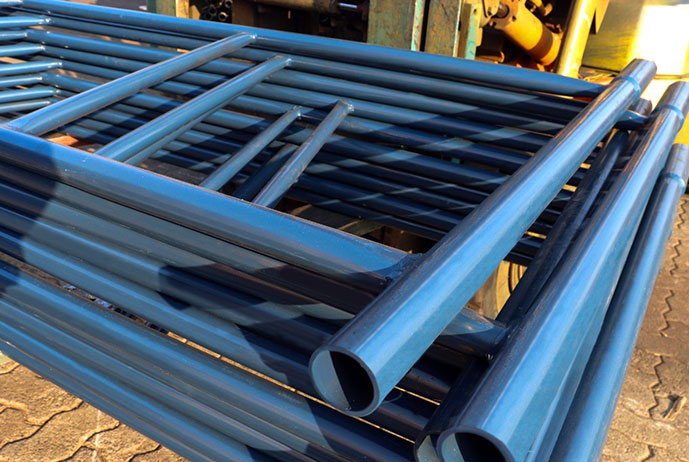
Armed only with an extending ladder to access the upper floor, it is quite possible to build a two-storey brick home, but the constant need to reposition the ladder would make it a somewhat slow and awkward process. However, building ornamental concrete arches and columns would be impossible without suitable shuttering to mould them. Thanks to scaffolding and formwork, respectively, any builder with the appropriate skills can now accomplish each of these tasks with ease.
The purpose of a scaffold is to provide bricklayers, plasterers, painters, and other artisans with a stable platform from which it is both safe and convenient to access the upper reaches of a building during its construction. Alternatively known as staging, the scaffold is also invaluable when conducting repairs and alterations to existing tall structures or when redecorating.
Scaffolding and formwork have been around for millennia. In practice, there is compelling evidence that the former was first used more than 17 000 years ago by palaeolithic artists when decorating the walls of their cave dwellings. By contrast, concrete structures only appeared around 10 000 years later, in Syria and Jordan, where its purpose was mainly to construct floors and cisterns. Though often accredited with its invention, the Romans merely perfected the nature of concrete and extended its uses. That so many of Rome’s iconic concrete structures have survived to this day is a clear testament to their success.
While modern scaffolding and formwork still perform much the same functions as their ancient counterparts, their design has improved. So have the materials now used to manufacture them. Although bamboo poles are still used to construct staging in some parts of the world, and wooden boards are often used as shuttering, the use of steel now offers builders the benefits of unprecedented durability and versatility.
Disc-O-Scaff is widely recognised as a leader in the design and manufacture of world-class steel scaffolding and formwork and related accessories.