A Range of Scaffolding Components that Ensures Safety and Versatility
Evidence that construction companies are active in urban areas is clear from the number of buildings and other structures encased in scaffolding. While the individual components of a scaffold may mean little to the layperson, these additions to the basic work platform are vital to its construction, its function, and the safety of those who must operate from it.
The nature of staging, as it is alternatively known, has advanced considerably since its first use some seventeen millennia ago. Then, and for thousands of years after, it consisted of bamboo or wooden poles bound by rope or strips of animal hide to form a simple framework. Their structure lacked the stability and versatility of modern scaffolding and its numerous components.
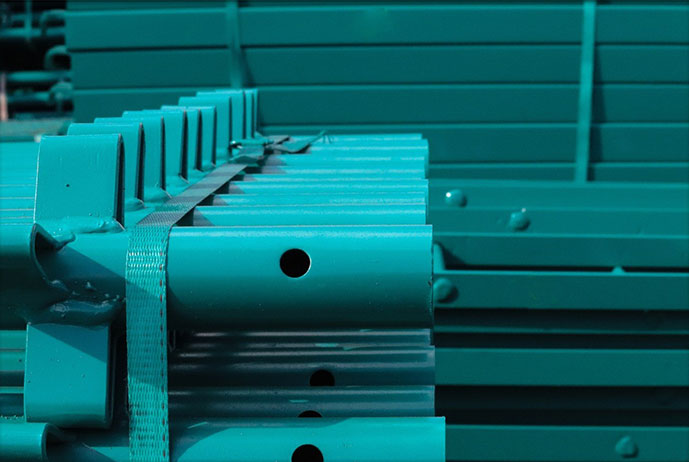
Today, those who design and manufacture staging have several goals. They aim to create products that are stable, versatile, and long-lasting, yet quick to assemble and dismantle, and which ensure the safety of the end-user. Let us take a closer look at the various parts that, when assembled, produce these invaluable work platforms, and examine the role that each plays in meeting the user’s needs.
Like most tools, scaffolding has one or two key components. In this case, these are “standards” and “ledgers”. The first term refers to the upright poles that transfer the overall weight of the structure to the ground. There, it is then distributed more evenly through the square base plates on which they stand. The ledgers are the horizontal strips that serve to connect adjacent standards. The platform’s rigidity can then be further reinforced with the use of diagonal braces to form a series of triangles. The various joints are then secured with special couplers while the standards are joined end-to-end using external sleeve connectors.
With the basic tower in place, other scaffolding components are necessary to create the platform that will support the workers, their tools, and the building materials. Metal boards that hook on to the ledgers are used for this purpose, while toe boards are secured to the standards with special clips to prevent any loose objects from falling off the platform’s edge. On occasions, the platform may need to extend over an area that offers no support from below. In such cases, cantilever brackets can provide builders with an alternative means of support.
Ladders are essential to access the platform, while additional scaffolding components such as staircases and handrails contribute to the safety of those who work from these temporary platforms. All the preceding items, together with stillages, hook-on-ladders, trapdoors, castor wheels, and pallets form part of the Kwikstage system manufactured and supplied in South Africa by Disc-O-Scaff.