Scaffolding in Construction and Other Roles
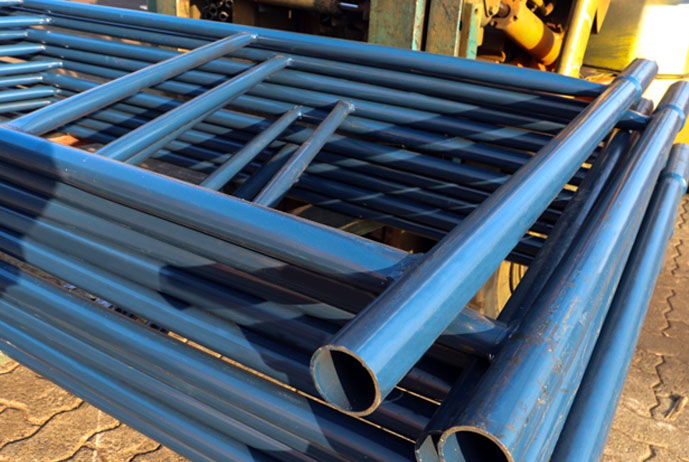
The temporary support structures assembled from steel poles and wooden planks, and that we know as scaffolding or staging, are a familiar sight in most urban areas. One is most likely to encounter this type of assembly on construction sites where they have a long history of use by workers engaged in the erection, demolition, and renovation of buildings and other tall structures. In this capacity, the role of staging is to provide a stable working platform from which to perform tasks at height, and that would be impractical, unsafe, or both with a ladder alone.
That said, the first known use of scaffolding was not for construction purposes but to assist the efforts of prehistoric artists. Holes found in the walls of cave systems in the south-western region of France appear to have housed the poles to support a platform from which the occupants were able to decorate the ceilings with primitive artwork estimated to be 17 000 years old.
In 21st century Britain, an anonymous but talented street artist known only as “Banksy” has been responsible for graffiti subsequently sold for millions. Last month, scaffolding spotted by a prison wall failed to foretell the overnight appearance of his latest iconic work; an escaping prisoner. While their work may be less artistic and unlikely to earn them untold wealth, many painters and decorators also rely on some form of staging to do their jobs. That said, painting, whether artistic or merely functional, is only one of many uses for these platforms besides the more conventional applications typical of the construction industry.
In addition to acting as a work platform for artists and artisans, scaffolding also offers a means to create temporary structures where erecting something more permanent may not be justified. For example, where a waterproof working area is required, the standards, braces, ledgers, and couplings can be used to create walls. These can then be draped with plastic sheeting to provide the required shelter from the weather. As it happens, builders often erect something similar to protect the interior of a building whilst the roofing is incomplete or under repair.
The entertainment industry also has some uses for scaffolding. Movie companies often use it to create a stable support framework for their more elaborate sets. There may also be a good reason why this building aid is sometimes known as staging. It is often used as a framework for the stage at outdoor venues and even to create temporary seating.
In each of the scenarios described, the safety of the users must always be a prime concern. So, even for temporary structures, new staging should always be favoured over second-hand equipment.