The Crucial Role of Scaffolding and Formwork
Since humans first abandoned the comparative security of their cave dwellings, they have strived to build increasingly more elaborate shelters. While reeds, branches, and mud were adequate building materials for their simple homes, as settlements became more permanent, the need for other forms of accommodation soon followed. The move to taller structures created a demand for scaffolding, and formwork became necessary soon after the invention of concrete.
Thanks mainly to the efforts of ancient Roman and Greek builders, concrete has become the most widely used building material in the world. Today, it is the mainstay of some of the planet’s largest and most imposing construction projects, such as Dubai’s Burj Al Arab and Japan’s Tatara bridge – the longest concrete bridge of its kind. On a more modest scale, even repainting a double-storey home or repointing its brickwork requires an elevated work platform, while one cannot erect a concrete column without the means to shape it. Consequently, scaffolding and formwork are now seen as indispensable tools by most 21st-century construction companies. Incidentally, these building aids are also known as staging and shuttering, respectively.
While shuttering first made its appearance during Roman times, staging was a considerably older idea. Archaeologists have found evidence to suggests that an early form of elevated work platform may have been used by Palaeolithic cave dwellers in south-western France more than 17,000 years ago. In each case, artisans were limited to the materials of the time. Consequently, early scaffolding and formwork was constructed from bamboo poles and wooden slats, respectively, and bound together with vines or rope.
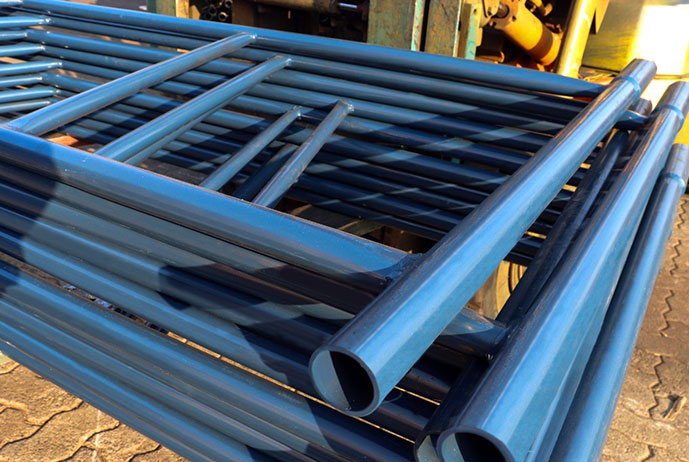
Interestingly, due to its high strength-to-weight ratio, bamboo is still used to construct staging and as an economical building material in many parts of the world. It has even been used as an eco-friendly alternative to steel for reinforcing concrete. That said, even when one considers the higher initial cost, many benefits derive from the use of steel in the manufacture of modern scaffolding and formwork.
Until relatively recently, with the advent of stringent regulations, workers’ safety was seldom a matter of concern among builders. The risk of accidents was considered part of the job. Today, an elevated work platform must support workers, tools, and building materials and guarantee the safety of those who work on them and the public below. While as much about economics as safety, metal shuttering is more durable, versatile, and easier to use than the cheaper plywood products.
To explore an extensive range of high-quality steel scaffolding and formwork and receive sound guidance regarding their use, talk to the nation’s experts at Disc-O-Scaff.