How Concrete and Shuttering Have Changed Architecture Forever
While structures composed predominately of bricks remain popular, these rectangular building blocks have their limitations. Though undeniably attractive, they are useful mainly for relatively straight-walled constructions, such as simplex and duplex homes. A less rigid building material and special handling techniques were necessary to create rounded structures, such as arches, domes, and columns.
For ancient Roman and Greek architects, the solution was a semi-liquid composite known as concrete and the wooden shuttering used to mould it into various non-linear shapes.
One only has to look at the fluted columns of the Parthenon in Athens or the majestic dome of Rome’s Pantheon for proof of the exceptional versatility and durability of this ancient concoction of water, quicklime, siliceous ash, and pumice. The precise ingredients and their relative proportions varied over the years. However, Portland cement was introduced as the binder during the early 19th-century and is used almost universally today. Not long after, metal rods and girders were first used as reinforcement. However, concrete shuttering, also known as formwork, remains the means to mould those seemingly impossible shapes that have become a common feature of modern architecture.
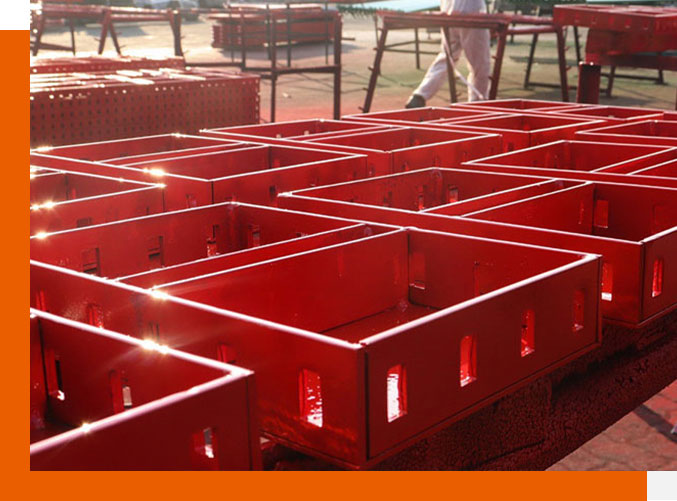
When first used, formwork consisted of strips of wood, warped to the required shapes where necessary, and bound together with ropes. The liquid composite was poured into the resulting mould and left until sufficiently hardened to be self-supporting. Timber is still used for this purpose today, although mainly in the form of plywood, which is markedly cheaper. Wooden formwork can generally be reused several times if treated with care. However, modern concrete shuttering tends to employ correspondingly modern materials, such as steel and plastics.
While the latter may be lighter, metal formwork offers builders the advantage of a far more robust option with an almost indefinite lifespan. The individual components are designed for quick assembly to form the required shapes. The parts are held securely with clips and wedge sets to ensure a rigid, leak-free mould. Once the structure is set, removal is an equally simple procedure, and the parts are easily cleaned and readied for reuse or storage.
Typically, suppliers of modular concrete shuttering will offer moulds for square, rectangular, and circular columns, as well as beams and decking in a range of standard sizes. However, a more specialised and experienced company will have the skill to design and manufacture non-standard sizes and bespoke shapes to a customer’s specifications. One such company is Disc-O-Scaff. Working exclusively with top-quality, SABS-approved materials; our company has become the preferred manufacturer and supplier of standard and bespoke scaffolding and concrete formwork to many of South Africa’s foremost constriction companies.