7 Best Circle Formwork Suppliers for Global Buyers
Choosing reliable circle formwork suppliers requires more than comparing prices, catalog sizes, or delivery promises. Global buyers must examine engineering quality, material traceability, production consistency, technical support, and export experience. A curved wall project can expose weak systems quickly. Misaligned panels, uneven joints, or poor adjustment hardware may create costly delays on site.
Dr. Christian Hofstadler, a recognized formwork researcher and author, emphasizes, “Formwork quality is measured by the concrete result, not by the equipment alone.” This principle guides our selection of the seven best circle formwork suppliers. Each supplier should demonstrate practical knowledge of circular tanks, silos, shafts, stadium structures, and architectural concrete. Strong candidates also provide load data, assembly instructions, project references, and responsive engineering support. Certifications matter, but they should never replace site-based evidence.
The right supplier depends on radius, height, concrete pressure, repetition cycles, labor skills, and local logistics. A system that performs well in Germany may need adjustment for a remote African project or a humid Southeast Asian site. That detail is easy to overlook. It should not be.
This guide compares suppliers through an international buyer’s lens. It considers product design, customization, durability, documentation, pricing transparency, and after-sales service. No ranking is perfect. Product availability can change, and some supplier claims require independent verification. Buyers should request current drawings, test records, references, and delivery terms before placing an order. A careful decision begins with questions, not attractive photographs.
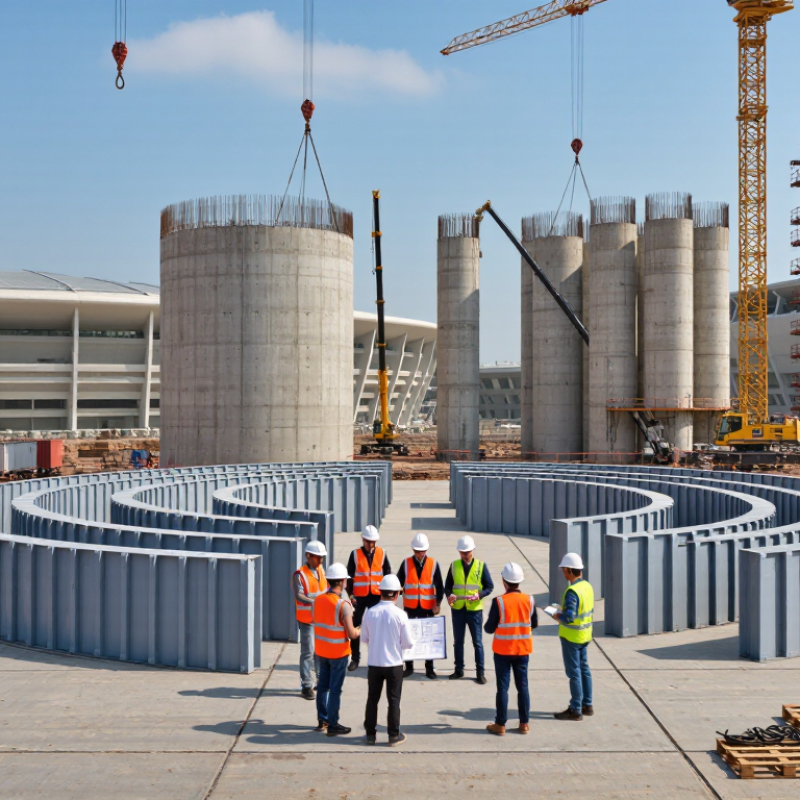
What Circle Formwork Is and Why Global Buyers Use It
Circle formwork creates curved concrete walls, tanks, shafts, and columns with controlled geometry. Unlike flat panels, it uses adjustable or pre-shaped segments around a radius. The system transfers fresh-concrete pressure through aligned joints, ties, and supporting frames. That sounds simple. On site, it is not. Small radius errors can produce visible steps, leakage paths, or difficult stripping.
Global buyers often choose it when projects demand repeatable circular pours and faster assembly. It can reduce cutting, improvised bracing, and labor on repeated structures. However, productivity depends on the radius range, panel stiffness, tie layout, and crew training. A supplier’s drawing should show tolerances, lifting points, compatible ties, and cleaning requirements. Ask for load data and test records. Do not rely on attractive photographs.
Before purchasing, compare shipping dimensions, corrosion protection, spare parts, and local technical support. A modular system may suit several diameters, while fixed-radius equipment can deliver smoother repetition. The cheaper option may create higher handling costs. This is easy to miss. I would also request a trial assembly using the intended concrete pressure and pour height. Some published capacity figures assume ideal conditions, which crews rarely have. Weather, uneven foundations, and rushed alignment can change results. That honest check often matters more than a polished catalogue.
7 Best Circle Formwork Suppliers for Global Buyers - What Circle Formwork Is and Why Global Buyers Use It
Circle formwork is a reusable formwork system designed to create curved or circular reinforced-concrete structures. The profiles below represent common supplier categories and purchasing specifications used by international buyers; company names and brand information are intentionally omitted.
| Supplier Profile | Typical Supplier Type | Main Circle Formwork Offering | Typical Diameter Range | Common Materials | Best-Fit Applications | Documents Global Buyers Commonly Request |
|---|---|---|---|---|---|---|
| Profile 1 | Specialist circular-formwork manufacturer | Adjustable steel panels with radial adjustment and reusable walers | 2.5–12 m | Painted or galvanized steel, plywood or coated steel facing | Circular tanks, silos, shafts, retaining walls and industrial structures | Layout drawings, radius-adjustment details, load calculations and operating instructions |
| Profile 2 | Modular formwork-system producer | Curved panels assembled from standardized modules with adjustable connectors | 3–15 m | Steel frames, plastic or phenolic plywood facing, steel clamps | Projects requiring different radii, repeated wall sections and mixed straight-curved layouts | Panel schedules, component lists, assembly drawings and concrete-pressure limits |
| Profile 3 | Heavy-duty steel formwork fabricator | Rigid circular forms for high repetition and high concrete-pressure conditions | 4–20 m | Structural steel frames, steel skins, welded stiffeners and adjustable braces | Large tanks, water-treatment facilities, bridge piers and large-diameter infrastructure | Welding records, steel grade information, design calculations, inspection reports and lifting instructions |
| Profile 4 | Custom-engineered formwork contractor | Project-specific circular formwork engineered around drawings, radius and pour sequence | 1.5–30 m+ | Steel, aluminum, plywood, composite facing and custom reinforcement ribs | Unique architectural structures, curved cores, tunnels and non-standard geometry | Shop drawings, 3D models, engineering calculations, method statements and installation plans |
| Profile 5 | Rental and project-support provider | Reusable circular panels supplied with delivery, technical support and return logistics | 2–14 m | Reusable steel frames, coated plywood facing, braces and climbing accessories | Short-term projects, contractors seeking lower capital cost and multi-site construction programs | Rental inventory, condition reports, replacement-part lists, transport dimensions and site instructions |
| Profile 6 | Lightweight aluminum or hybrid-formwork producer | Manually handled curved panels for projects with limited crane access | 2–8 m | Aluminum frames, plywood or plastic facing and lightweight steel accessories | Low-rise structures, smaller tanks, residential developments and restricted-access sites | Panel weights, manual-handling instructions, radius settings, connection details and safety guidance |
| Profile 7 | Export-oriented formwork manufacturer | Containerized, knock-down circular formwork prepared for international shipment | 2.5–16 m | Galvanized or painted steel, film-faced plywood, clamps and adjustable braces | International infrastructure projects, remote sites and buyers prioritizing shipping efficiency | Packing list, commercial invoice, country-of-origin documents, installation manual and spare-parts schedule |
Note: Diameter ranges are representative market ranges rather than guaranteed product limits. Actual capacity depends on panel geometry, concrete pressure, pour rate, temperature, bracing, tie spacing and the supplier’s engineering calculations.
Related Posts
-
How to Choose the Right Bracing Formwork System?
-
How to Choose the Best Cement Formwork for Your Construction Project?
-
How to Choose the Best China Shuttering Formwork Supplier?
-
How to Choose the Best Building Formwork in 2026?
-

Top Round Column Formwork Solutions for Global Buyers?
-

2026 Best Circle Formwork Solutions for Efficient Construction Projects?