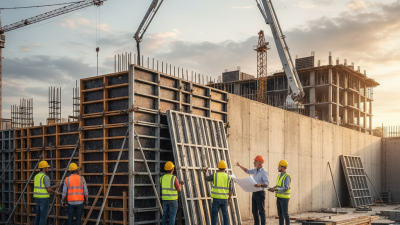
How to Choose the Best Building Formwork in 2026?
In 2026, choosing building formwork requires more than comparing rental prices. The right system affects concrete quality, worker safety, cycle time, and project waste. A tower floor, bridge pier, and basement wall demand different solutions. Treating them alike can become an expensive mistake.
Experienced contractors usually begin with the structure, not the catalog. They examine wall thickness, slab spans, concrete pressure, repetition, access, and lifting equipment. Steel panels may suit repeated high-rise cycles, while aluminum systems can reduce handling weight. Timber remains useful for irregular shapes and smaller projects. Modular plastic systems also deserve attention where corrosion resistance and fast cleaning matter. Yet every option has limits. Lightweight panels can flex when bracing is poor. Reusable systems may become uneconomical when layouts change frequently.
Reliable selection depends on verified load data, manufacturer instructions, local safety requirements, and the crew’s actual skill level. Ask for connection details, allowable pour rates, repair procedures, and evidence from comparable projects. A polished brochure is not proof. Site trials, inspections, and supervisor feedback often reveal more. I would leave room for doubt: productivity estimates frequently assume perfect weather, complete equipment, and an experienced crew. Real sites are messier. This guide compares cost, durability, safety, assembly speed, surface finish, and environmental impact. It helps project teams choose building formwork with clearer evidence and fewer costly surprises.
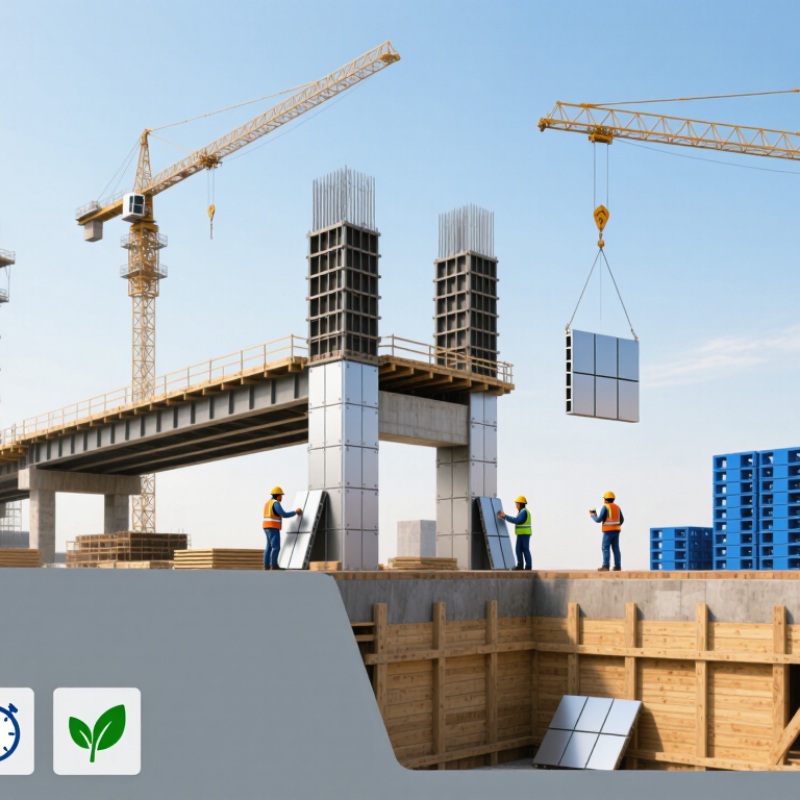
Building Formwork: Definition, Purpose, and Main System Types
How to Choose the Best Building Formwork in 2026?
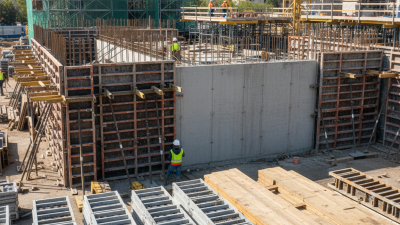
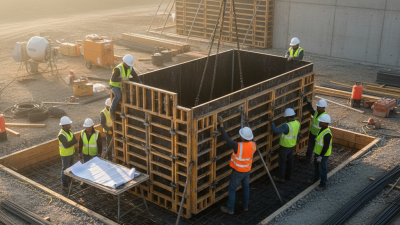
Building formwork is a temporary mold that shapes and supports fresh concrete. It must resist pressure, vibration, workers, and construction loads. Its purpose is practical: create accurate walls, slabs, columns, and foundations while concrete gains strength.
The World Economic Forum reports that construction contributes about 6% of global GDP and employs nearly 7% of the world’s workforce. Small formwork decisions can therefore affect safety, labor, waste, and project speed. A 2024 MarketsandMarkets report estimates the global formwork system market will grow at approximately 6% annually through 2029. These figures show rising demand for efficient systems, but forecasts vary.
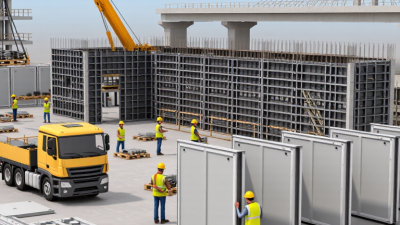
Timber formwork remains flexible and useful for irregular shapes. Steel provides durability and a smoother concrete finish. Aluminum reduces handling weight and supports repeated cycles. Plastic systems resist moisture and can reduce cleaning work. Modular, climbing, tunnel, and table systems suit repetitive structures and taller projects. Reusable panels often reduce waste, though transport can weaken their environmental advantage. That part deserves closer checking.
In practice, I would compare load capacity, panel weight, assembly time, reuse cycles, storage space, and local labor skills. Digital modeling can identify clashes before panels reach the site. Still, software cannot correct poor bracing or rushed inspections. The best system is not always the newest one. It is the system that safely matches the structure, schedule, finish requirement, and crew experience.
Key Factors for Comparing Building Formwork in 2026
Choosing building formwork in 2026 requires more than comparing purchase prices. Start with load capacity, dimensional accuracy, assembly time, and reuse potential. ACI 347R highlights the need to consider concrete pressure, bracing, access, and stripping procedures during formwork planning. These details affect both site safety and concrete quality.
Labor efficiency deserves serious attention. The Associated General Contractors 2024 Workforce Survey reported that 94% of contractors struggled to fill craft positions. A system requiring fewer workers may therefore reduce schedule risk. McKinsey Global Institute also reported that construction productivity has grown by about 1% annually, compared with 2.8% across the wider economy. Faster cycles matter. However, I would not assume the most automated option always performs best. Complex adjustments can create new delays on irregular floor plans.
Tips:
Build a comparison table before ordering. Record panel weight, crew size, average cycle time, cleaning hours, storage needs, and expected reuse cycles. Ask suppliers for tested load data and project references. Check whether the system fits local lifting equipment and weather conditions. Small compatibility problems become expensive quickly. A cheaper solution may still win on a low-rise project, while repetitive high-rise work may justify a higher initial cost. Always review the numbers after the first pour; site reality often challenges the spreadsheet.
How to Match Formwork Systems With Project Requirements
How to Choose the Best Building Formwork in 2026?
Choosing building formwork in 2026 means matching the system to project requirements. Do not select equipment only because it looks modern. Review wall geometry, pour rate, repetition, access, and finish quality. Repeated wall sections may suit modular panels. Irregular cores need adjustable components and careful surveying. Check slab thickness, column spacing, crane capacity, and local load requirements. On a crowded urban site, lighter panels can reduce handling delays. However, lighter systems may create more joints. That trade-off needs an honest review.
Tips: Measure access routes before delivery. Confirm storage space and lifting limits. Ask crews to test panel handling. Use a small trial pour when surface appearance matters. Keep it practical.
Compare total cycle cost, not only purchase or rental price. Include labor, cleaning, repairs, transport, storage, and waiting time. Experienced supervisors should review drawings before installation. Their observations often reveal risks that software misses. Record stripping time, alignment corrections, and concrete leakage after each cycle. Results may challenge the original choice. That is useful evidence, not failure. Require documented inspections for ties, braces, platforms, and connections before every pour. A perfect system rarely exists, and project conditions can change faster than the plan.
Safety, Quality, Labor, and Environmental Considerations
How to Choose the Best Building Formwork in 2026?
Safety and quality should guide formwork selection before price. OSHA recorded 1,069 construction deaths in 2022, with falls remaining a leading hazard. Choose systems with guarded edges, stable access, clear load data, and simple inspection points. A qualified engineer should verify pressure, bracing, ties, and stripping time for each pour. No formwork system is perfect. A wet deck, missing pin, or rushed release can defeat good design.
Quality depends on geometry, joints, and repeatability. Tight panels reduce grout leakage and honeycombing, while documented dimensional checks protect the finished surface. Labor shortages also influence the decision. The Associated Builders and Contractors estimated that construction needed 342,000 additional workers in 2024 and 454,000 in 2025. Select systems that crews can assemble safely with fewer adjustments. Short training helps. Supervised practice matters more.
Environmental performance requires a life-cycle view. UNEP reports that buildings and construction used 34% of global energy and produced 37% of energy- and process-related carbon dioxide emissions in 2022. Reusable formwork can distribute embodied impacts across many pours. However, transport, cleaning, repairs, release agents, and disposal still matter. A lighter system may reduce lifting effort but fail sooner. That trade-off is easy to miss. Ask for test records, maintenance history, and disposal routes before approval.
Cost, Reuse, and Long-Term Value of Formwork Choices
How to Choose the Best Building Formwork in 2026?
Cost, Reuse, and Long-Term Value of Formwork Choices
Choosing formwork in 2026 means looking beyond the first quotation. Purchase price matters, but it rarely tells the whole financial story. Labor hours, transport, cleaning, repairs, storage, and disposal can reshape the budget. On a recent mid-rise project, a cheaper system required frequent panel adjustments. Crews lost time at corners and around service openings. That saving disappeared. Compare the installed cost, not the catalogue price.
Reuse potential depends on design discipline and site conditions. Count realistic cycles, not optimistic estimates. Panels exposed to rough stripping, wet storage, or careless handling may fail early. A durable system can justify a higher initial cost when several phases share the same dimensions. However, repeated use is not automatically efficient. Moving heavy panels may require extra lifting equipment and trained labor. That operational burden needs a number. Record cycle time, repair frequency, and crew size during trials. Small field records often challenge office assumptions.
For long-term value, evaluate schedule reliability, finish quality, worker safety, and adaptability. Accurate panels can reduce patching and protect later trades from avoidable delays. Modular dimensions also help when floor plans change. Still, no formwork choice is perfect. Engineers should verify load capacity, tolerances, connections, and maintenance needs against applicable structural standards. Independent inspection and clear technical documentation strengthen the decision. Leave room for uncertainty. Weather, subcontractor skill, and one damaged panel can alter the forecast. Use a whole-life spreadsheet, then challenge its assumptions with site evidence.
Indicative 2026 comparison of common formwork systems for reinforced-concrete construction
Data basis and interpretation: Cost ranges are indicative 2026 planning benchmarks in USD and exclude concrete, reinforcement, cranes, taxes, financing, and major site-specific engineering. Lifecycle cost includes the amortized formwork system, normal repairs, handling, cleaning, and labor over repeated use. Actual results vary with project scale, labor rates, geometry, logistics, rental terms, and quality requirements. For low reuse, plywood or timber can be more economical; for repetitive high-volume work, steel or aluminum generally delivers the lowest cost per completed cycle.