China Best Building Formwork Suppliers and Manufacturers?
Choosing among China’s best building formwork suppliers and manufacturers requires more than comparing prices. Project conditions, material quality, engineering support, and delivery reliability all affect the final result. A supplier may offer attractive quotations, yet weak technical documentation can create costly delays on site.
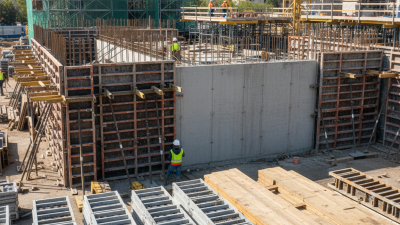
This guide examines manufacturers serving residential, commercial, industrial, and infrastructure projects. It considers steel, aluminum, timber, and plastic formwork systems, along with modular and customized solutions. Practical evaluation includes factory capabilities, production controls, welding quality, surface treatment, load calculations, and dimensional accuracy. These details matter when panels must align around columns, walls, slabs, and tight construction schedules.
Real project experience also deserves attention. Reliable companies can explain previous applications, provide inspection records, and share clear installation guidance. They should communicate honestly about lead times, tolerances, maintenance, and replacement parts. Certifications can support confidence, but certificates alone cannot prove consistent performance. Factory visits, sample checks, and reference-project reviews remain valuable.
No supplier is perfect. Even experienced manufacturers may face material shortages, design changes, or shipment disruptions. The better question is how openly they respond and correct problems. Buyers should compare complete costs, not only the initial quotation. This includes transport, accessories, labor, storage, reuse cycles, and technical service. With a careful, evidence-based approach, contractors and distributors can identify a dependable partner for safer, faster, and more efficient formwork operations. Small details often decide success.
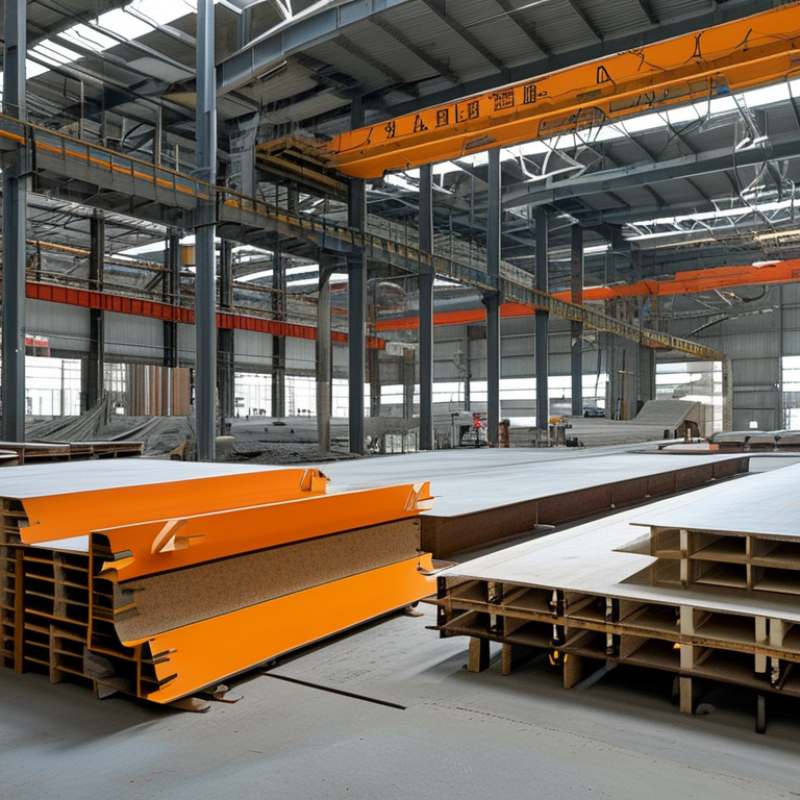
Formwork Materials in China: 15–18 mm Plywood, Steel, and Aluminum Systems
China’s formwork market covers three practical material choices: 15–18 mm plywood, steel, and aluminum systems. The correct option depends on pour pressure, reuse cycles, surface requirements, and handling capacity. Plywood remains common for walls, slabs, and columns because it is easy to cut and replace. However, thickness alone proves little. Core quality, glue performance, moisture resistance, and edge sealing deserve closer inspection.
World Steel Association data shows China produced about 1,005 million tonnes of crude steel in 2024. That scale supports broad steel-formwork capacity and stable fabrication access. Steel panels tolerate repeated use and high pressure, but they need accurate welding and corrosion control. The USGS Mineral Commodity Summaries 2024 reported China as the leading primary aluminum producer, supplying roughly 59% of global output in 2023. Aluminum systems are lighter, which can reduce crane use and manual handling. Yet, lighter does not always mean better. Poorly designed frames may deflect under pressure.
A reliable supplier should provide panel dimensions, material grades, weld inspection records, plywood test results, and load calculations. Ask for samples, not only certificates. On site, check warped sheets, damaged edges, pin fit, and release-agent compatibility. Construction teams often focus on the quoted price. That can be a costly blind spot. I would also review the supplier’s replacement policy, because one damaged 18 mm panel can disrupt an entire pour. Supplier claims still require independent verification.
China Best Building Formwork Suppliers and Manufacturers? - Formwork Materials in China: 15–18 mm Plywood, Steel, and Aluminum Systems
| Formwork Material / System | Common Thickness or Section | Typical Density or Weight | Typical Reuse Potential | Main Advantages | Common Limitations | Best-Fit Applications | Key Procurement Checks |
|---|---|---|---|---|---|---|---|
| Film-Faced Plywood | 15–18 mm panel thickness; 18 mm is widely used for general concrete formwork | Usually approximately 500–750 kg/m³, depending on the wood species, core construction, and moisture content | Approximately 5–15 uses | Lightweight, easy to cut, relatively economical, and suitable for standard wall, slab, beam, and column forms | Edges and faces can be damaged by moisture, impact, poor storage, or excessive release-agent use | Low- to medium-rise buildings, residential projects, slabs, beams, walls, and short-to-medium project cycles | Panel thickness tolerance, core gaps, veneer quality, edge sealing, film weight, bonding quality, and formaldehyde-emission documentation |
| High-Density Hardwood Plywood | 15–18 mm commonly specified; thicker panels may be selected for higher loading or longer spans | Typically approximately 600–800 kg/m³, depending on the hardwood species and manufacturing process | Approximately 10–25 uses | Higher stiffness and better wear resistance than many low-density plywood alternatives; provides a more consistent concrete finish | Higher purchase weight and cost; performance depends strongly on core bonding and surface protection | Repeated-use slab and wall formwork, commercial buildings, infrastructure, and projects requiring a smoother finish | Static bending strength, modulus of elasticity, thickness swelling, water resistance, face-film adhesion, and panel flatness |
| Steel Panel Formwork | Panel face plates commonly use approximately 3–6 mm steel; framing and stiffeners are designed according to load requirements | Steel density is approximately 7,850 kg/m³; complete panel weight varies by dimensions and reinforcement | Approximately 100–300+ uses | High strength, good dimensional stability, strong resistance to impact, and suitable for repetitive construction cycles | Heavy handling, higher transport and lifting requirements, possible corrosion, and greater initial fabrication cost | High-rise construction, bridges, tunnels, retaining walls, foundations, and repetitive structural layouts | Steel grade, weld quality, flatness, corner alignment, coating or corrosion protection, lifting points, and design load capacity |
| Aluminum Panel Formwork | Panel thickness and profiles are system-designed; aluminum face sheets and extruded frames are commonly used | Aluminum density is approximately 2,700 kg/m³; complete panel weight depends on the profile and reinforcement layout | Approximately 200–500+ uses | Much lighter than steel, corrosion-resistant, reusable, and efficient for standardized floor plans and repetitive floor cycles | Higher design and tooling cost; field modifications can be more difficult, and damaged profiles may require specialized repair | Repetitive apartment buildings, hotels, residential towers, walls, slabs, columns, stairs, and integrated room-forming systems | Aluminum alloy and temper, profile dimensions, connection strength, panel tolerances, system cycle time, and repair-service capability |
| Plastic or Polymer Formwork | Common modular panels are often approximately 10–25 mm thick, depending on the structural design | Generally approximately 900–1,500 kg/m³, depending on the polymer formulation and reinforcement | Approximately 50–100+ uses | Low water absorption, easy cleaning, lightweight handling, and good resistance to many site-weather conditions | Lower stiffness than steel for some systems, temperature-related dimensional changes, and limited suitability for very high loads | Small- to medium-sized walls, columns, foundations, low-rise housing, and projects requiring rapid manual assembly | Impact resistance, load-deflection data, dimensional stability, connection durability, temperature limits, and recyclability |
| Timber Beam and Plywood System | Typical components include engineered timber beams, 15–18 mm plywood, walers, soldiers, and tie systems | Timber components commonly range from approximately 450–650 kg/m³; total system weight depends on spacing and accessories | Approximately 10–30 uses | Flexible dimensions, straightforward site modification, comparatively low equipment requirements, and good adaptability to irregular geometry | More labor-intensive, sensitive to moisture and storage conditions, and less durable than steel or aluminum for intensive reuse | Custom-shaped walls, beams, slabs, foundations, and projects with changing dimensions or limited crane access | Timber moisture content, beam straightness, plywood bonding, tie-rod layout, allowable deflection, and protection against ground contact |
| Modular Wall and Slab System | Panel sizes and thicknesses are system-specific; plywood, steel, aluminum, or composite faces may be integrated | System weight varies widely; manual-handling panels are commonly designed around practical site lifting limits | Approximately 50–300+ uses | Fast assembly, standardized accessories, consistent dimensions, and reduced measuring and cutting work on site | Less economical for highly irregular structures; compatibility between panels, ties, corners, and props must be verified | Repeated walls, slabs, columns, cores, and projects requiring predictable formwork cycle times | Panel modularity, allowable concrete pressure, tie spacing, prop capacity, connection interchangeability, and replacement-part availability |
Note: Reuse figures are practical indicative ranges rather than guaranteed values. Actual service life depends on concrete pressure, panel design, release-agent application, cleaning, storage, handling, weather exposure, and site workmanship. Structural capacity and compliance should be confirmed through project-specific engineering calculations and applicable local standards.
Related Posts
-

Top 5 Best Shuttering Formwork Solutions for Construction Projects?
-

Top 10 Bracing Formwork Solutions for Global Buyers?
-
Top 10 Things You Should Know About Formwork for Construction Projects
-
How to Choose the Right Bracing Formwork for Your Construction Project
-
Top Guide to Understanding Formwork in Construction Industry?
-
How to Choose the Best Cement Formwork for Your Construction Project?