China has become an important sourcing base for cardboard formwork, serving contractors, distributors, and concrete specialists worldwide. Its manufacturers offer round, square, and customized tubes for columns, piers, and architectural structures. Yet product quality can vary between suppliers. Careful evaluation remains essential.
“Good cardboard formwork begins with predictable performance, not attractive pricing,” says Li Wei, a cardboard formwork quality consultant. His comment reflects a practical concern. A tube may appear strong in a warehouse but weaken after poor storage. Moisture exposure, uneven winding, and inaccurate dimensions can affect concrete placement. These details matter on busy construction sites.
This guide examines China’s leading cardboard formwork manufacturers and suppliers through useful purchasing criteria. We consider paper strength, inner coatings, dimensional accuracy, customization, production capacity, packaging, and technical support. Factory experience also deserves attention. Ask for test reports, sample pieces, project references, and clear delivery terms. Do not rely on catalogs alone.
A good supplier should explain how its products handle vibration, pressure, stripping, and transport. It should also identify realistic limitations. That honesty is valuable. No ranking is flawless, because project conditions differ. A supplier serving high-rise columns may not suit decorative concrete work. Likewise, the lowest quotation may create higher labor costs later.
The companies discussed here are selected for their manufacturing capability, product consistency, export experience, and responsiveness. However, buyers should verify current certifications and specifications independently. Cardboard formwork is lightweight and efficient, but it still requires disciplined handling. Small mistakes can leave large marks.
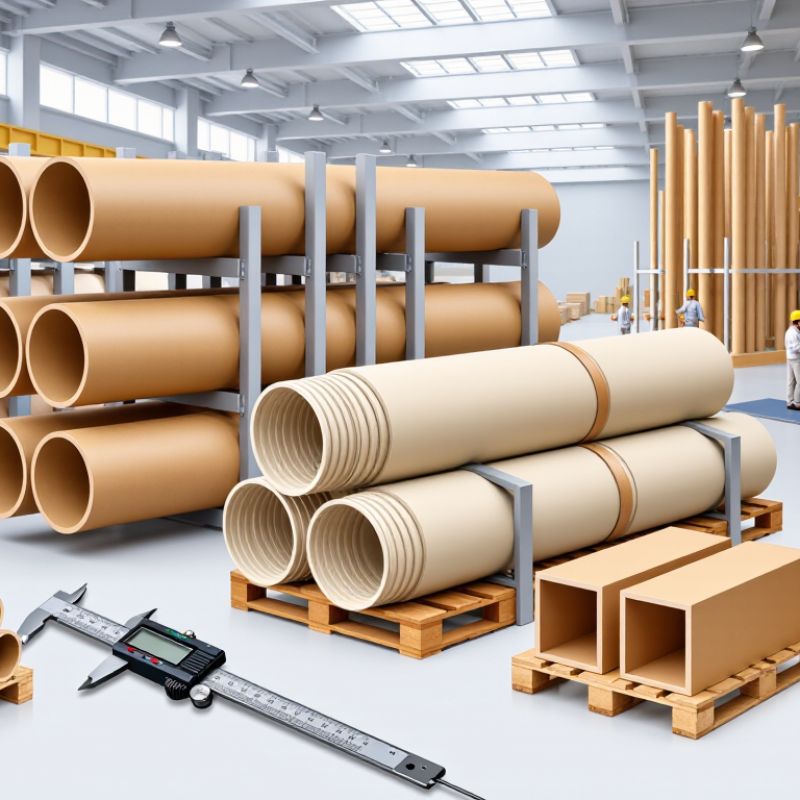
Cardboard formwork is a temporary or stay-in-place mold for concrete columns, walls, and foundations.
Most systems use spiral-wound kraft paper layers, bonded with adhesives, then protected by a moisture-resistant coating. Internal reinforcement controls shape, while an outer jacket resists handling and concrete pressure. Some tubes include plastic or fiber end caps.
Construction teams value the round finish and quick stripping process. A tube can arrive cut to length, stand vertically, and receive concrete with limited site preparation. It also reduces manual assembly around repetitive columns. The U.S. Environmental Protection Agency reported about 600 million tons of construction and demolition debris in 2018. Concrete represented roughly 455 million tons. Lightweight formwork may help reduce transport and handling impacts, but its total benefit depends on recycling and disposal practices.
Moisture remains the weak point. A damaged coating can soften during a slow pour.
Engineers should check tube diameter, wall thickness, pour rate, vibration, and temporary bracing. The 2022 Global Status Report for Buildings and Construction linked the sector to 34% of global energy demand and 37% of energy-related carbon emissions. Cardboard formwork cannot solve that problem alone. It can support leaner site operations. In practice, however, claims about zero waste are often too simple. Real projects need verified material specifications and a documented end-of-use plan.
Cardboard formwork systems offer a practical method for creating round concrete columns. Their lightweight tubes are easy to carry, cut, and position on crowded sites. Compared with steel forms, they usually require less storage space and simpler handling equipment. The inner liner can produce a clean surface, reducing plastering work after stripping. Some systems also support efficient scheduling because installation takes little time. However, performance depends heavily on dry storage and accurate alignment.
Moisture is the main weakness. Rain, wet ground, or leaking concrete can soften the tube and distort the column shape. Cardboard forms are generally intended for one concrete pour, so disposal and replacement costs require careful planning. They may also be unsuitable for unusual column sizes, long exposure periods, or repeated formwork cycles. I have seen teams focus on purchase price, then overlook bracing, waste handling, and delivery protection. That calculation is incomplete. When comparing manufacturers and suppliers, request verified load data, dimensional tolerances, liner specifications, and installation guidance. Reliable technical support matters when site conditions change.
Tips: Store tubes vertically on raised pallets, covered but ventilated. Check every tube before use. Keep reinforcement centered with proper spacers. Add firm bracing, especially near openings or windy edges. Confirm the required height and diameter before ordering. A small measurement error can create expensive rework. Test one column first when the finish standard is strict.
General characteristics of cardboard formwork systems used for concrete column construction
The chart uses a binary indicator: 1 means the characteristic is generally applicable to cardboard formwork systems, while 0 means it is generally not available without special treatment or project-specific design. Cardboard formwork is typically lightweight, suitable for circular or customized column shapes, and recyclable when clean and accepted by local recycling facilities. Common limitations include single-use application, sensitivity to prolonged moisture exposure, and the need for proper bracing during concrete placement.
How to Evaluate Chinese Cardboard Formwork Manufacturers
Evaluating Chinese cardboard formwork manufacturers requires more than comparing online prices. Visit the factory, if possible, and inspect its cutting, winding, and bonding equipment. Ask how it controls tube diameter, wall thickness, moisture resistance, and load performance. A reliable supplier should provide recent test reports, material specifications, and clear production records. Vague answers are warning signs.
Request physical samples before placing a large order. Measure the inner diameter with a caliper and check whether the surface remains firm after exposure to humid air. Pour concrete into a sample tube and observe deformation, leakage, and removal after curing. The paper layers should bond evenly. Small wrinkles may reveal weak tension control. They should not.
Experience is also visible in practical support. Ask whether the manufacturer can adjust lengths, cutting tolerances, packaging, and delivery schedules for your project. Contact previous customers and ask about repeated orders, damaged cartons, and response times. A professional team will discuss limitations instead of promising everything. Still, factory visits can create a polished impression, and one sample cannot prove stable quality. I would inspect several batches and record the results. Language differences may slow technical discussions, so drawings, photographs, and written specifications are useful. Reliable cooperation grows from evidence, not confident sales language.
| Evaluation Dimension | Recommended Data Point | Practical Benchmark | Evidence to Request | Suggested Weight |
|---|---|---|---|---|
| Product Application | Intended use, including round columns, square columns, walls, beams, or decorative concrete | The supplier should offer a product specifically designed for the required concrete geometry and casting method. | Technical datasheet, application drawings, installation instructions, and completed project references with customer details withheld if confidential | 8% |
| Dimensional Capability | Available internal diameters, lengths, wall thicknesses, and dimensional tolerances | The supplier should confirm dimensions in millimetres and state the allowable tolerance for each product size instead of providing only nominal dimensions. | Dimension chart, calibrated inspection records, sample measurements, and approved production drawings | 10% |
| Paper and Board Construction | Paper grade, total board thickness, grammage, winding or lamination structure, and adhesive type | Material specifications should be consistent from batch to batch and suitable for the expected concrete pressure and handling conditions. | Raw-material specifications, batch records, adhesive technical data, and incoming-material inspection reports | 10% |
| Moisture Resistance | Resistance to wet concrete, rain, storage humidity, and accidental water exposure | The supplier should provide a defined exposure time, storage condition, and test method. “Waterproof” should not be accepted without test evidence. | Water-resistance test report, coating or treatment specification, storage instructions, and production sample test results | 12% |
| Concrete Pressure Performance | Maximum recommended pour height, concrete placement rate, temperature, vibration method, and support spacing | The supplier should define operating limits and provide a site-specific installation method. These limits must be checked by the project engineer. | Load or pressure test results, installation calculations, method statement, and signed technical approval | 15% |
| Surface Finish | Concrete appearance after stripping, seam visibility, texture transfer, and release-agent requirements | A full-size sample or representative casting should be reviewed before mass production, especially for exposed architectural concrete. | Finished-concrete photographs, sample casting, acceptance criteria, and defect classification procedure | 10% |
| Installation Efficiency | Product weight, cutting requirements, jointing method, handling method, and estimated installation time | The supplier should provide a repeatable installation procedure and identify all accessories required for safe placement and bracing. | Installation manual, packing list, tool list, training material, and time study from a comparable project | 8% |
| Quality Management | Quality-control system, process controls, nonconformance handling, and traceability | An independently verifiable ISO 9001 certificate is useful, but it should be supported by product-specific inspection records. | Valid ISO 9001 certificate, audit scope, inspection plan, corrective-action records, and batch traceability samples | 10% |
| Factory Capability | Production equipment, in-house processes, monthly capacity, inspection equipment, and subcontracting controls | The supplier should demonstrate that its capacity covers the required quantity without reducing inspection or lead-time performance. | Factory audit, equipment list, production-flow photographs or video, capacity statement, and calibration certificates | 8% |
| Sampling and Pre-Shipment Inspection | Sample approval process, inspection frequency, acceptance criteria, and independent inspection option | A production sample should be approved before shipment, with dimensional and visual checks documented for each batch or agreed inspection lot. | Inspection and test plan, approved sample, pre-shipment inspection report, packing photographs, and lot identification | 8% |
| Packaging and Logistics | Protection against crushing and humidity, pallet configuration, container utilization, and shipping marks | Packaging should prevent deformation during handling and clearly state quantity, dimensions, batch number, and storage requirements. | Packaging specification, loading plan, carton or pallet photographs, commercial packing list, and storage instructions | 6% |
| Lead Time and Minimum Order Quantity | Sample lead time, mass-production lead time, minimum order quantity, and peak-season capacity | Lead times and minimum quantities should be stated in writing and linked to product size, customization, order quantity, and shipping method. | Formal quotation, production schedule, capacity reservation, sample timeline, and delay-management terms | 5% |
| Environmental Documentation | Recycled content, responsible-fibre sourcing, recyclability, coatings, waste handling, and environmental management | Environmental claims should identify the material percentage, applicable certification scope, and whether coatings or adhesives affect recycling. | Recycled-content declaration, valid FSC chain-of-custody certificate where applicable, ISO 14001 certificate, and material safety documentation | 5% |
| Total Evaluation Weight | Use a 100-point supplier scorecard | Prioritize verified technical performance over price alone. | Score each dimension from 0 to 5, then multiply by the assigned weight. | 100% |
Selecting a cardboard formwork supplier requires more than comparing unit prices. Field experience shows that paper strength, spiral winding quality, and moisture resistance affect concrete finish. A capable supplier should provide compression data, dimensional tolerances, raw material details, and batch traceability. It should also explain performance differences between standard tubes, coated tubes, and custom shapes. Ask for sample sections, not only catalog photographs.
Product selection should match the column diameter, pour height, concrete pressure, curing time, and removal method. A tube stored on a wet site may soften before installation. That detail is easy to miss. Suppliers should offer clear packaging, dry storage guidance, and replacement procedures. Trial installation matters. A small mock-up can reveal bulging, seam marks, or difficult stripping before a large project begins.
Industry data supports careful evaluation. McKinsey’s Reinventing Construction report found construction productivity grew about 1% annually over two decades, far below manufacturing. Reliable formwork can reduce rework, but it cannot repair poor site planning. UNEP’s 2024 Global Status Report for Buildings and Construction reported that buildings and construction consumed 32% of global energy and produced 34% of global carbon dioxide emissions in 2023. Recyclable paper cores may support waste reduction, yet disposal conditions vary locally. No checklist is perfect. A supplier’s willingness to discuss failures may be more valuable than polished claims.
China’s cardboard formwork suppliers are commonly assessed through measurable quality controls. Buyers should request production samples, dimensional records, and recent test reports. Check the tube’s internal diameter, wall thickness, roundness, and cutting accuracy. Moisture resistance matters during concrete placement and ocean transport. A reliable factory should explain its paper grade, adhesive system, and coating process clearly. On-site inspections can reveal loose winding, uneven edges, or crushed packaging. Small defects become visible on finished concrete.
Pricing depends on more than raw paper costs. Diameter, length, wall thickness, surface treatment, and order quantity directly influence the quotation. Custom tooling may add an initial charge. Packaging also affects the final cost. Strong cartons and moisture barriers cost more, but reduce damage claims. Freight changes with loading efficiency, destination, and delivery terms. Ask whether the price includes export packing, documentation, and inland transport. A low quote can hide important exclusions.
Export purchasing requires careful preparation. Confirm the product classification, labeling rules, pallet requirements, and import documents with the destination customs authority. Suppliers should provide commercial invoices, packing lists, and agreed shipping records. Moisture-proof wrapping is essential for humid routes. Container loading photos improve traceability. Lead times can shift during peak construction seasons. That is easy to underestimate. I would also allow time for a pre-shipment inspection, even when previous orders performed well. A perfect quotation is rare, so written specifications should control every revision.