7 Cement Formwork Buying Tips for Global Buyers
Global buyers evaluate cement formwork against demanding project schedules, freight routes, and site conditions. The scale is substantial: the U.S. Geological Survey’s Mineral Commodity Summaries 2024 estimated global cement production at about 4.1 billion metric tons in 2023. That figure does not measure formwork demand, but it shows the vast construction supply chain buyers operate within. Small purchasing errors can travel a long way.
Reliable selection starts with verified performance, not a low unit price. Check panel dimensions, stated load capacity, tie compatibility, surface finish, and repair requirements against the project drawings. Ask suppliers for current technical data, inspection records, and clear installation guidance. The International Energy Agency’s cement-sector analysis identifies cement production as responsible for roughly 7% of global CO₂ emissions. For buyers, this makes reuse, durability, and transport efficiency worth examining alongside initial cost. Request evidence for reuse claims; a brochure alone is not proof. Details matter.
Compare complete landed costs, including packaging, shipping, customs handling, spare parts, and expected replacement rates. Confirm lead times in writing, especially when projects span multiple countries or rely on seasonal shipping. Inspect sample panels when feasible. Check how edges, corners, and connection points behave under real site handling. Even experienced teams miss fit details. A quote can still mislead. No checklist removes every risk, but documented specifications and responsive technical support make problems easier to catch before the first pour. These seven buying tips help global purchasers ask better questions and choose cement formwork suited to actual project conditions.
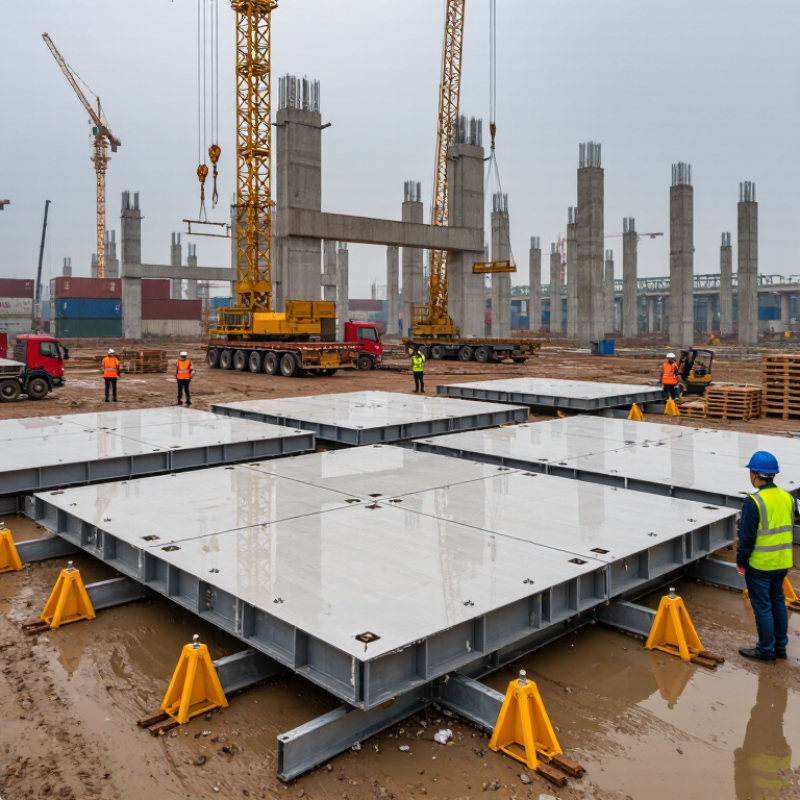
Define Project Requirements Before Selecting Cement Formwork
Before comparing cement formwork, turn the project into measurable requirements. Record wall and column dimensions, pour height, concrete pressure, daily pour rate, and expected reuse cycles. A 3-meter wall poured slowly is not the same job as a taller wall filled quickly. Include slab edges, corners, openings, and unusual geometry; these details often determine whether standard panels fit. Note crane capacity, site access width, and available labor. A panel that works well on paper may be awkward beside a narrow access road.
Set acceptable tolerances for alignment and surface finish. Confirm how the crew will brace, tie, clean, and strip the system. Request load data, assembly drawings, and clear use limits, then have a qualified site engineer review them against the pour plan. Check delivery batches, replacement-part availability, and storage needs, especially if equipment will move between projects. Small details matter. Crews may focus on purchase price and underestimate cleaning time; that cost returns with every pour. Be honest about unknowns. Early estimates are often wrong, so mark assumptions and revise them after a site visit.
| No. | Buying Tip | Project Requirements to Define | Information to Confirm | Why It Matters |
|---|---|---|---|---|
| 1 | Define the structure and dimensions | List the element type, wall or slab thickness, height, length, shape, openings, corners, and required pour sequence. Include the latest drawings and revision dates. | Panel sizes, corner pieces, fillers, tie locations, and the number of formwork sets needed for the planned cycle. | A layout matched to the structure can reduce cutting, infill work, and unnecessary components. |
| 2 | Establish the concrete placement conditions | Specify concrete density, mix type, slump or workability, placement rate, pour height, and expected concrete temperature. Fresh-concrete pressure depends on these conditions and the formwork design. | Ask for the stated design pressure and the assumptions used to calculate it; have the formwork design checked for the actual pour method. | Pressure assumptions affect panel capacity, tie spacing, and safe placement limits. |
| 3 | Set surface-finish and tolerance needs | Define whether the concrete will be concealed, receive a coating, or remain exposed. State project tolerances and any requirements for panel joints, tie holes, and surface texture. | Facing material, joint details, tie-hole arrangement, and maintenance or replacement options for the contact surface. | The facing and joint system influence the finished concrete appearance and the amount of patching required. |
| 4 | Check structural capacity and deflection | Identify the maximum loads, support conditions, bracing arrangement, working platforms, and any site-specific wind or construction loads that the system must accommodate. | Request design calculations or capacity tables for the proposed configuration, including panel spans, supports, ties, and connections. | Capacity depends on the complete assembled arrangement, not just the strength of an individual panel. |
| 5 | Match the system to site handling and labor | Confirm crane availability, lifting capacity, access routes, storage space, crew experience, and whether assembly must be done manually or with lifting equipment. | Component weights and dimensions, lifting points, assembly sequence, required accessories, and installation documentation. | Handling constraints affect cycle time, equipment needs, and the practicality of larger panels. |
| 6 | Plan reuse, maintenance, and total quantity | Estimate the number of pours, project duration, reuse frequency, cleaning method, storage conditions, and expected repair or replacement needs. | Clarify which components are reusable, what routine maintenance is required, and which parts are replaceable separately. | Purchase quantity and lifecycle cost depend on the planned reuse cycle, not only the initial unit price. |
| 7 | Confirm delivery, compliance, and site compatibility | Set the delivery location and date, unloading arrangements, applicable project or local requirements, preferred measurement units, and the documents required for review. | Check packing dimensions and weights, component lists, drawings, material information, installation instructions, and any required inspection or conformity documents. | Early coordination helps prevent shipping delays, document gaps, and incompatibility with local site practices. |
Related Posts
-
2026 Top Shuttering Formwork Suppliers for Global Buyers
-

China Best Building Formwork Suppliers and Manufacturers?
-

China Best Shuttering Formwork Suppliers How to Choose?
-
Top 10 Things You Should Know About Formwork for Construction Projects
-

How to Choose the Right Bracing Formwork for Your Construction Project
-
How to Choose the Best Cement Formwork for Your Construction Project?