7 Best Timber for Concrete Formwork Types?

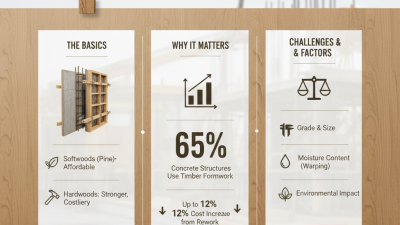
Choosing timber for concrete formwork is not a simple matter of selecting the cheapest boards. Timber must resist wet concrete pressure, repeated handling, impact, and dimensional change. A warped panel can leave ridges, leakage marks, or an uneven wall surface.

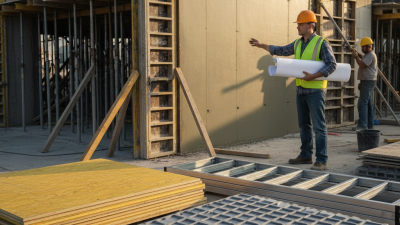
ACI 347R-14, Guide to Formwork for Concrete, stresses that formwork must support fresh concrete safely and maintain the required shape. The USDA Forest Products Laboratory’s Wood Handbook also explains how species, moisture content, grain direction, knots, and defects influence wood strength. These details matter on site. A damp, twisted 50-millimeter board behaves differently from a straight, well-stored panel.

M. K. Hurd, author of Formwork for Concrete, described the practical purpose clearly: “Formwork is a means to an end—the finished concrete.” Her observation remains useful, although it can sound too simple. The formwork also affects labor time, concrete appearance, waste, and project risk.

This guide compares seven timber types commonly considered for concrete formwork. It examines strength, surface quality, reuse potential, availability, and cost. Softwood may be light and workable. Hardwood may offer greater durability, but it can be heavier and more expensive. Marine plywood can deliver smoother faces, yet its performance depends on edge sealing and careful storage.

There is no universally perfect timber. That assumption needs challenging. The best choice depends on pressure, panel size, exposure, reuse cycles, local standards, and workmanship. Even a strong species can fail when joints leak or supports are poorly spaced.
7 Best Timber for Concrete Formwork Types?

Timber Formwork Criteria: EN 338 Strength Classes and Moisture Limits

Choosing timber for concrete formwork starts with strength, moisture, and surface quality. EN 338 provides a useful structural classification system. Softwood classes commonly range from C16 to C50. Hardwood classes use D designations. Higher classes usually provide better bending resistance and stiffness. They do not guarantee suitable formwork performance. Check the grade stamp.

Site inspections often reveal weak points after wet concrete is placed. Knots, splits, and warped edges can create fins or uneven concrete faces. C24 timber may suit many regularly supported panels. However, engineers must verify spans, supports, and construction loads. C16 can work for short spans with close supports. Longer spans may require a higher strength class. Habit alone is not enough.

EN 338 does not establish one universal moisture limit for formwork timber. Moisture content should be measured and compared with the project specification. A common site control keeps timber near 20% moisture or below before installation. EN 1995-1-1 and local requirements may affect that value. Timber that is too dry can swell against wet concrete. Timber that is too wet may shrink and lose alignment. Store boards off the ground, under cover, and with airflow. Seal cut ends where practical. A moisture meter helps, but readings can mislead near metal or standing water. I would not approve timber from appearance alone. That shortcut is tempting, and sometimes wrong. Record the class, moisture reading, visible defects, and expected reuse.

7 Best Timber for Concrete Formwork Types? – Timber Formwork Criteria: EN 338 Strength Classes and Moisture Limits
The following selection compares commonly available timber types for concrete formwork. Strength classes are indicative representative grades under EN 338; the actual class depends on species, origin, grading method, defects, and the requirements of EN 14081.
Timber Type Typical EN 338 Class Characteristic Bending Strength
fm,k (N/mm²)
Mean Modulus of Elasticity
E0,mean (N/mm²)
Characteristic Density
ρk (kg/m³)
Recommended Moisture Condition Formwork Suitability Important Selection Criteria
Spruce C24 24 11,000 350 Preferably 12–20%; protect from prolonged exposure above 20% Excellent for standard wall, column, beam, and slab framing Light, easy to cut, widely available, and suitable where straight grain and low knot content are specified.
Scots Pine C24–C30 24–30 11,000–12,000 350–380 Preferably 12–20%; seal or cover end grain to reduce moisture uptake Very good for reusable walers, studs, joists, and general-purpose formwork Good strength-to-weight ratio and workable surface; resin pockets and knots should be checked.
Douglas Fir C24–C30 24–30 11,000–12,000 380–460 Preferably 12–20%; avoid wet storage and direct ground contact Excellent for heavily loaded studs, walers, and repeated-use frames Higher stiffness and density than many softwoods; select graded, straight, and dimensionally stable pieces.
European Larch C24–C30 24–30 11,000–12,000 410–470 Preferably 12–20%; allow drainage and ventilation during storage Very good for outdoor formwork supports and components exposed to wet conditions Dense and relatively durable; greater density can increase handling weight and fastener resistance.
Silver Fir C18–C24 18–24 9,000–11,000 320–350 Keep close to 12–20%; reject pieces with excessive wetness, decay, or distortion Good for light-duty, single-use, and temporary formwork Light and easy to work, but lower-grade material may have reduced stiffness and weaker connection performance.
Hemlock C18–C24 18–24 9,000–11,000 300–350 Preferably 12–20%; keep covered and separated from standing water Suitable for light framing, studs, and low-to-moderate pressure formwork Uniform texture and easy machining; use higher graded material for long spans or high concrete pressure.
Poplar C18 or D18 18 9,000–10,000 280–320 Keep near 12–18%; provide strong protection against wetting and swelling Acceptable for light-duty blocking, secondary members, and single-use applications Very light and easy to handle, but lower density and stiffness limit its use in heavily loaded or reusable formwork.
Technical notes: EN 338 assigns strength classes and characteristic mechanical properties; it does not establish a universal “formwork moisture limit.” For most structural timber applications, approximately 12% moisture is the reference condition for published properties, while timber is commonly kept at or below 20% moisture for service use. Moisture above 20% can increase swelling, shrinkage, distortion, slipping, fungal risk, and loss of dimensional accuracy. Formwork members must still be checked for concrete pressure, bending, shear, deflection, buckling, bearing, connections, reuse cycles, and site exposure.

Seven Best Timber Types: Pine, Spruce, Fir, Larch, Douglas Fir, Birch, and Poplar

Choosing timber for concrete formwork requires more than comparing price and availability. The boards must resist wet concrete pressure, remain reasonably straight, and release cleanly after curing.

Pine is practical, easy to cut, and widely available.

Spruce is lighter, making repeated handling less tiring.

Fir offers straight grain and dependable stiffness for wall panels and beams.

Larch performs well where moisture exposure is frequent, although its resin and movement need attention. Douglas fir provides strong, stable members for larger forms, but its quality varies with knots and grain direction. Birch has a dense surface that can produce a smoother concrete finish. It is heavier and may require sharper tools. Poplar is light and easy to shape, yet its softer fibers can dent under clamps or fasteners.

Grain matters.

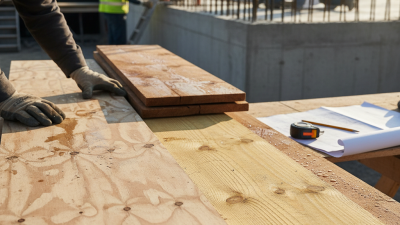
On site, inspect every board before assembly. Reject pieces with deep cracks, loose knots, twisting, or swollen edges.

Moisture changes everything. A wet board may shrink after stripping, while unevenly damp timber can distort the form face. Use straight boards, suitable structural grades, and consistent thicknesses. Apply release agent sparingly, avoiding puddles that stain concrete.

Pine and spruce may suit ordinary, short-use forms, while larch and Douglas fir can justify selection for demanding conditions. Birch and poplar need more careful support. This is not a perfect ranking; span, reuse cycles, concrete temperature, and local timber quality can change the decision.

Strength Comparison: C24 Timber Provides 24 N/mm² Characteristic Bending Strength

When choosing timber for concrete formwork, C24 is often a practical benchmark. Its characteristic bending strength is 24 N/mm². This value describes a tested lower-bound performance, not an automatic site capacity. Design still depends on span, load, moisture, and support spacing. A wet, poorly braced joist may perform worse than its grade suggests. I have seen sound timber deflect because workers spaced the props too widely. That mistake leaves curved slab edges and difficult finishing work.

C24 timber usually offers more predictable strength than lower-grade C16 material. Hardwood can provide higher density, but weight and cost may complicate handling. Douglas fir, spruce, pine, and larch are common choices, while laminated timber can improve dimensional consistency. Plywood-faced panels also need strong timber frames behind them. Check knots, splits, crushed ends, and twisted edges before assembly. Small defects matter near concentrated loads. Keep the grain direction aligned with the main bending force. Short spans help, but they do not replace proper calculations. Do not trust the label alone. Engineers should verify bending, shear, deflection, connections, and temporary bracing for each pour. Concrete pressure changes quickly during placement, especially near deep beams or columns. A careful inspection before pouring remains essential, even when C24 timber appears flawless.

7 Timber Strength Classes for Concrete Formwork

Characteristic bending strength values for structural softwood timber classes defined in EN 338. C24 timber provides a characteristic bending strength of 24 N/mm².

Higher characteristic bending strength can support more demanding formwork designs, but the final selection must also consider span, moisture, deflection, load duration, timber dimensions, bracing and local design requirements.

Durability and Reuse: EN 335 Exposure Classes for Concrete Formwork Selection

7 Best Timber for Concrete Formwork Types?

Concrete formwork faces water, cement paste, pressure, and repeated stripping. The right timber must stay stable after several wet cycles. Spruce and pine are light, affordable, and easy to cut. Fir offers useful stiffness for studs and walers. Larch and Douglas fir resist moisture better, making them suitable for demanding site conditions. Poplar is easy to machine and works well for lighter panels. Birch-based structural plywood provides a smooth face and strong reuse potential. Eucalyptus can offer high strength, but its movement must be checked carefully.

EN 335 exposure classes help describe moisture risk, not formwork quality alone. Class 1 covers dry indoor conditions, while Class 2 allows occasional wetting. Most outdoor formwork behaves closer to Class 3, where timber faces weather and repeated moisture above ground. Classes 4 and 5 involve ground contact, freshwater, or seawater, and usually exceed normal formwork needs. Still, poorly stored panels can briefly experience harsher exposure.

Keep panels raised from muddy ground. Cover them, but allow airflow underneath. Inspect swollen edges, open veneers, fungal marks, and bowed boards before reuse. A release agent reduces sticking, yet it cannot repair damaged timber. In practice, a Class 3-oriented selection often balances durability and cost. That choice is not universal. Mix design, stripping time, rainfall, and handling can change the result. I would rather reject one doubtful panel than trust a perfect-looking surface with hidden damage.

Cost and Application Matrix: Match Timber Species to Loads, Finishes, and Reuse Cycles

7 Best Timber for Concrete Formwork Types?

Timber choice should follow load, finish, and reuse cycles, not price alone. Spruce is low-cost and easy to cut for light walls and small pours. Pine offers better stiffness and works well for slabs, beams, and repeated framing. Fir provides reliable strength with moderate cost. It suits medium-load applications and general site work. Douglas fir costs more, but its higher strength supports larger panels and deeper beams. Larch resists moisture better, making it useful for exposed or changing site conditions. Eucalyptus is dense and durable, though heavier and harder to handle. Birch-faced plywood gives the smoothest finish and can deliver many reuse cycles when edges stay sealed.

Think of the matrix this way: low-cost spruce fits one to three uses and basic finishes. Pine and fir usually occupy the medium-cost range, with roughly three to six uses. Douglas fir and larch suit higher loads and repeated work. Their cost per cycle may become lower. Eucalyptus serves demanding, damp conditions, while birch-faced plywood prioritizes finish quality over the lowest purchase price. Actual figures depend on grading, moisture, cutting, and cleaning.

Tips: Inspect every sheet before pouring. Reject twisted edges and deep splits. Apply release agent evenly, but avoid puddles. Store timber flat and covered. I have seen careful storage double reuse life. Still, my first cost sheet underestimated labor. That mistake matters. Confirm load capacity, deflection limits, and local requirements with a qualified engineer before construction.