What is the Difference Between Shuttering and Formwork?
Have you ever looked at a building and wondered how they got the walls to curve or look so beautifully rounded? After all, aren’t the main building blocks cement, concrete, and bricks? Technology has enabled man to turn the basic square building design into one that is unique and oftentimes quirky through the techniques of shuttering and formwork.
Aren’t Shuttering and Formwork the Same?
Although formwork covers this entire technique, it is sometimes interchangeable with shuttering as they are both common terms in the construction industry. Where reusable plywood is used in the shuttering technique, metal as well as plastic is used in formwork. However, they are both used for the same end purpose and that is creating a mould into which concrete can be poured and contained, so that it can set and harden. In some cases, shuttering is referred to as a type of formwork.
When it comes to large-scale building projects, builders prefer shuttering as it is easy to use and can be built in a way that allows for a significant amount of concrete to be poured at once. As plywood is relatively inexpensive and can be repurposed, more builders are turning to this method for their formwork requirements. A special grade of water-resistant plywood is used as most concrete projects are done outdoors.
The Materials Determine the Build
Even though these two techniques are sometimes blanketed under the same function, there are subtle differences between the two. Where shuttering is a really good format to build vertically, formwork can be used in other areas, for example, a construction project that does not necessarily have to use shuttering is the laying of a concrete pavement (or sidewalk). In this instance, instead of using plywood or timber, a mould can be formed by using a structure of metal beams. This structure is also known as Roadform.
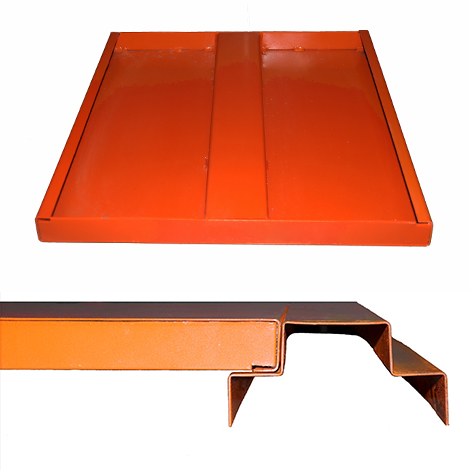
These metal beams have a feature of one flat face, so that when the concrete is poured, it makes a clean edge. In order to connect the Roadforms together, the beams feature connecting tongues and grooves so that one can be connected to another. By creating a system of longer forms, larger construction projects can be undertaken. Again, this type of formwork can also be used as shuttering by stacking and pinning them together but because of the additional weight, builders tend to rely on the latter.
Having been in the scaffolding industry for over ten years, Disc-O-Scaff is able to provide scaffolding and formwork solutions to the construction industry. We pride ourselves on delivering quality SABS-approved products to our customers. Contact us to find out more about the products and services that we have on offer.