The Difference between Shuttering and Formwork
In practice, the terms shuttering and formwork are generally used interchangeably. Both words refer to the use of a template or mould to shape various parts of a building during its construction. While it is likely that the first use of wooden frames was to maintain the form of clay bricks as they dried in the sun, the subsequent invention of concrete led to many more uses for this simple but effective moulding technique.
Although the Romans are often cited as the inventors of concrete, the ancient Egyptians first introduced it about a thousand years earlier. That said, the Roman builders’ innovative use of this so-called shuttering or formwork, combined with their improvements to the durability of concrete, made possible such incredible architectural feats as the Colosseum and Pantheon.
Apart from the Romans and Greeks, other European civilizations were slow to adopt this versatile building material. It was only with the invention of the modern product known as Portland cement during the early 19th-century that concrete usage became more widespread. A period of rapid development followed, leading to the world’s first reinforced concrete bridge, road surface, and high-rise office block. The first concrete home appeared in 1908 in New Jersey, fueling a need for more versatile shuttering or formwork.
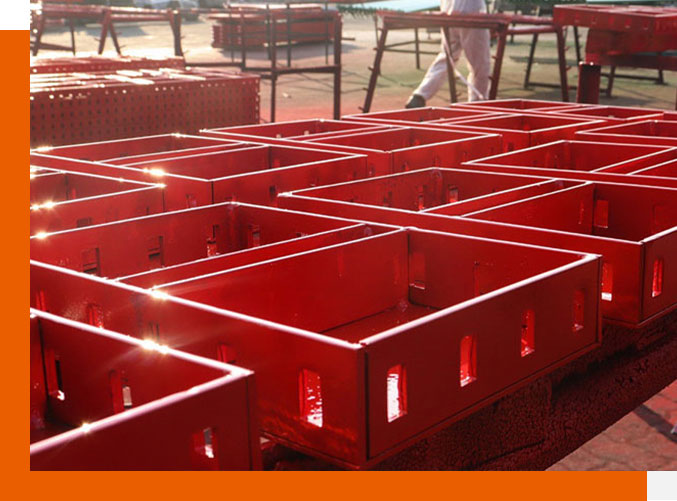
However, although greater versatility was necessary, durability was also a concern. While timber was used for this purpose for millennia and remains in use today, it has some significant limitations. It is susceptible to water damage and requires careful handling when removing it from a formed structure. Plywood offers a cheaper alternative to other wood products but cannot compete with the greater durability of the steel products introduced in the early part of the 20th century.
In practice, the use of steel to create moulds provides a basis for differentiating between shuttering and formwork, terms that are widely regarded and used as synonyms. However, the former word is often used to describe the use of the waterproof plywood moulds usually constructed on-site. The latter term tends to be used more generically. For example, when referring to forming in general, and irrespective of the material used to create the moulds. While steel remains a popular option, other metals, glass-fibre reinforced plastics, and even special fabrics are also employed for this purpose.
Whatever you may choose to call this invaluable building aid, you should be looking for a high-quality product backed by expert service. To guarantee both, contact Disc-O-Scaff, South Africa’s leading manufacturer and distributor of durable steel shuttering or, if you prefer, formwork.