Scaffolding is an Indispensable Aid to the Construction Industry
Take a relatively short walk through the average modern city. You are almost guaranteed to encounter at least one building concealed behind row upon row of crisscrossed scaffolding poles and other components. While some observers might consider these metal frameworks an eyesore, others will recognise their intricate design as an art form in its own right.
Occasionally, one may be forced to walk in the road to bypass such a building or perhaps choose to do so due to fears regarding one’s safety. In practice, such fears are largely unfounded. When assembled with due care, those intricate structures provide a stable platform that should also guarantee the security of both workers and passers-by.
In practice, the world would be a very different place without scaffolding. This type of work platform has its origin in the stone age. It has influenced not only builders but also the cave-dwelling artists of the palaeolithic era. While they just made holes in the rock walls and inserted wooden poles to support them and their tolls, the same principle remains in use today.
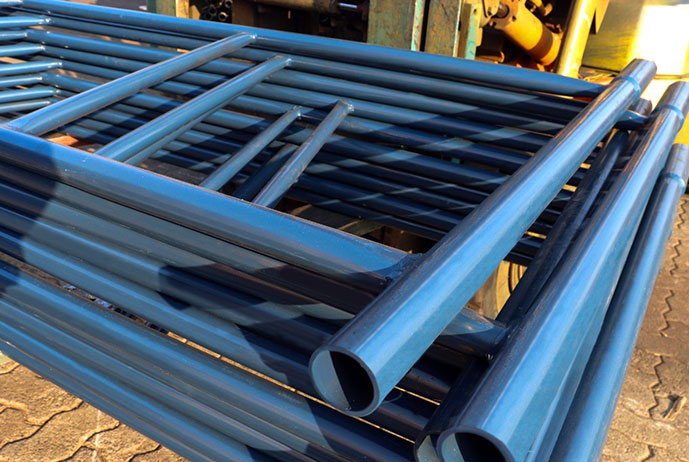
Surprisingly, wooden and bamboo poles are still widely used by builders in many of the world’s less affluent countries. At the same time, elsewhere, metals such as steel have long replaced them.
Nevertheless, scaffolding made from bamboo poles bound together with hessian or strips of animal hide was effective. It enabled the builders of ancient Egypt, Greece, and Rome to create many of those iconic buildings and monuments for which those countries are famed today.
Multi-storey structures have been a standard feature of western architecture for several centuries. Even though cranes now do almost all of the heavy lifting, the construction work is still performed mainly by artisans working at height. Technically, it is more accurate to describe the various components required to assemble these work platforms as scaffolding and refer to the assembled components as staging. The latter name is also rather descriptive. The same parts are frequently used to create temporary structures, such as a stage for outdoor performances or some multi-tiered seating to accommodate the spectators at a one-off event.
Ultimately, whatever the extent and intended purpose of these temporary structures, their prime objective is to ensure safety. Well-designed components ensure ease of assembly, while their durable metal composition guarantees stability when used within the recommended performance parameters. Every scaffolding manufacturer is responsible for the safety of workers and the general public. Many leading South African construction companies rely on Disc-O-Scaff products to ensure their workers’ safety. The guarantee that each component is created entirely from SABS-approved materials is the source of their trust.