What are the Common Types of Formwork?
Modern builders can thank the ingenuity of their counterparts in ancient Rome for the various types of formwork on which many of them rely today. This invaluable construction aid is alternatively known as falsework or shuttering, and its underlying principle is a simple one. It involves using a temporary structure to act as a mould or a support platform for a permanent one. While there have been some significant improvements in the materials and methods used to manufacture these temporary structures and some additional architectural challenges for them to meet, the underlying concept remains unchanged.
The Roman builders used two main types of formwork. The first was to support the brickwork utilised to create structures, such as an arch. Without a suitably shaped wooden support structure, the bricks would have collapsed before the mortar had time to set. Later, following the invention of concrete, an alternative form of falsework, which could mould the liquid concrete into specific shapes, such as columns, slabs and, of course, arches, became necessary.
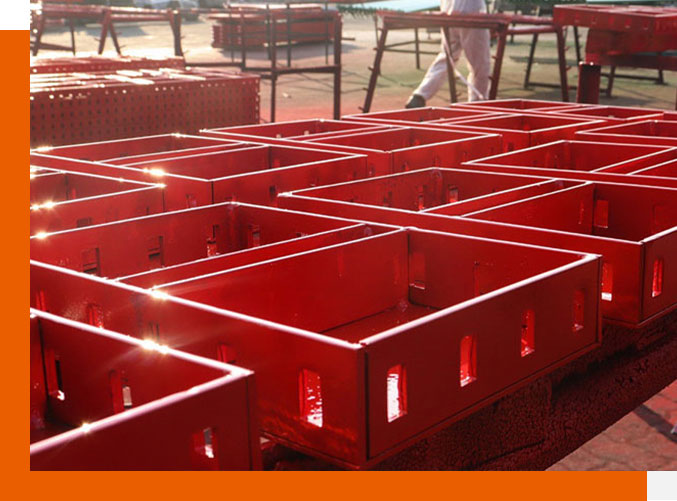
Today, there is still a need to provide support for complex brickwork projects. However, the greater demand by far is for the various types of formwork used to shape the, sometimes bizarre, concrete structures that have become typical of the 20th and 21st centuries. As in Roman times, the modern shuttering used to mould concrete is typically made from timber or sometimes from plywood, which has been rendered water-resistant, and the builder will generally assemble it on site. However, where a more durable product suitable for repeated use may be necessary, steel will usually be the preferred choice of material.
Both the materials from which they are made and the design of the types of formwork used for this purpose must be capable of supporting the dead weight of the wet concrete until it cures, at which point it is safe to remove the shuttering. Typical applications include the construction of concrete walls, floors, columns, beams, and footings. Moulds for most of these common forms are available in standard sizes. However, some products may allow a degree of adjustment. For use in specialised structures of non-standard dimensions, a competent manufacturer will undertake to construct bespoke shuttering based on a builder’s or architect’s specifications.
For all types of formwork manufactured to the highest international standards and backed by in-depth knowledge of construction companies’ needs, many of South Africa’s industry leaders have chosen to place their trust in Disc-O-Scaff. In addition to our range of world-class shuttering products, we also produce the popular Kwikstage and selflock scaffolding ranges.