What are the common Types of Formwork?
Before the invention of concrete, permanent buildings depended on the skills of the brickmaker and bricklayer for their construction. Although the Romans were the first to employ concrete on a vast scale and for complex structures, Bedouins in Syria and Jordan, in around 750 BC, were the first to construct floors and underground cisterns from concrete. By contrast, Roman engineers built more elaborate concrete structures that needed various types of formwork to complete.
Wooden Formwork
When freshly prepared, concrete is a viscous liquid that can be poured into moulds to create rigid structures of a given shape once it “cures”. The moulds used at that time were all made from wood, making them easy to construct and remove once they were no longer required. The practice of using wooden moulds for this purpose continues to the present day, and while some builders now refer to them as shuttering, they are most commonly described as various types of formwork.
Classification
One can roughly classify the various forms of shuttering by applying three main criteria. The first of these is the material from which it is made. The second is its shape, and the third is whether it is designed to be removed or to remain in place once the concrete has cured.
Materials
As stated earlier, wooden shuttering is still widely used. Its continued popularity is because it is easy both to produce and remove while also being relatively light, inexpensive and flexible enough to be easily shaped. Among the other materials used to construct the various types of formwork today are plywood, metals such as steel, and plastics. Each of these has characteristics that contribute to its perceived benefits. Though still in its infancy, sheets of tough, lightweight fabric are showing promise where more complex, irregular shapes are required.
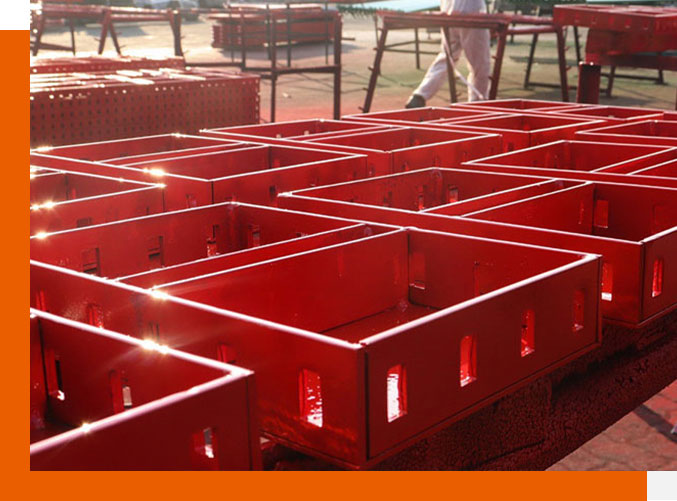
To produce the more commonly used shapes such as rectangular blocks, rounded columns and beams, the available types of formwork include ready-made products of standard dimensions. In contrast, others are of a design that allows the user a degree of adjustment to make them more flexible. In other cases, where the need may be for an odd or unusually large shape, a manufacturer will generally be able to produce a bespoke product to meet the client’s specification.
Formwork with Disc-O-Scaff
In addition to its world-class Kwikstage and Selflock scaffolding products, Disc-O-Scaff is recognised within South Africa’s construction industry as a leading manufacturer of several types of formwork. If you need to form simple or complex structures from concrete, be sure that you talk to us first.