Selflock Scaffolding | Selflock or Kwikstage?

Selflock Scaffolding or Kwikstage – Which Might Best Suit Your Project Needs?

Want to streamline your next construction project? Selflock scaffolding has gained traction among South African construction companies that require speed, safety, and versatility on-site. But how does it compare with the tried-and-tested Kwikstage scaffolding system?

Exploring their comparative benefits should help you make the right choice for your specific building needs.

Selflock Scaffolding Offers Simplicity for Small- to Mid-Sized Projects

Ideal for renovations, maintenance, painting, decorating, and electrical work, Selflock scaffolding is characterised by its easy assembly. No specialised tools or skills are required.

The core design utilises interlocking steel frames, braces, and tie bars, allowing just two workers to erect a stable scaffold tower within minutes—a potential game-changer for smaller teams or projects where minimal downtime is crucial.

Key features include:

  • Lightweight yet robust frames that interlock effortlessly
  • Minimal components, including hook-on boards, access ladders, toe boards, and clips for all-around safety
  • Compliance with local regulatory standards for peace of mind
  • Maximum permissible load of 150kg/m², making it perfect for lighter duties, such as refurbishments, inspections, or indoor upgrades

Selflock scaffolding is both cost-effective and highly mobile, thanks to lockable swivel casters that enable easy access throughout the site.

Kwikstage Scaffolding – Heavy-Duty Strength Plus Versatility

When tackling larger or more complex projects, Kwikstage scaffolding is hard to beat. Designed for premium strength and adaptability, its features include an innovative wedge locking mechanism that ensures rapid setup without compromising safety.

Kwikstage is particularly valuable for new builds, brickwork, blockwork, and extensive cladding projects, especially where speed and high load-bearing capacity are essential.

Other advantages include:

  • Rapid assembly and disassembly, even by semi-skilled workers
  • SABS-certified steel components for superior durability
  • Modular parts like cantilever brackets, handrails, staircases, and trapdoors for enhanced convenience and protection
  • High load capacity to support demanding activities and heavier equipment
  • Customisable for irregular building shapes and complex facades, offering seamless integration on challenging architectural jobs

An Extensive Component Range to Meet Every Construction Challenge

Whether you opt for Selflock or Kwikstage scaffolding, having access to a comprehensive range of components is critical. Both systems are available in a variety of sizes and configurations, catering to everything from residential renovations to major commercial builds.

Interchangeable elements, such as adjustable base jacks, hook-on boards and ladders, and safety accessories, ensure your scaffolding adapts seamlessly as site demands evolve.

The Right Choice for South African Builders

The decision between Kwikstage and Selflock scaffolding all comes down to your project’s scale, budget, and complexity. Selflock suits quick-turnaround or interior jobs, while Kwikstage is the go-to for heavy-duty, large-scale projects.

Ask about the latest advances in scaffolding design and enhance your site’s efficiency and safety. Your projects deserve nothing less.
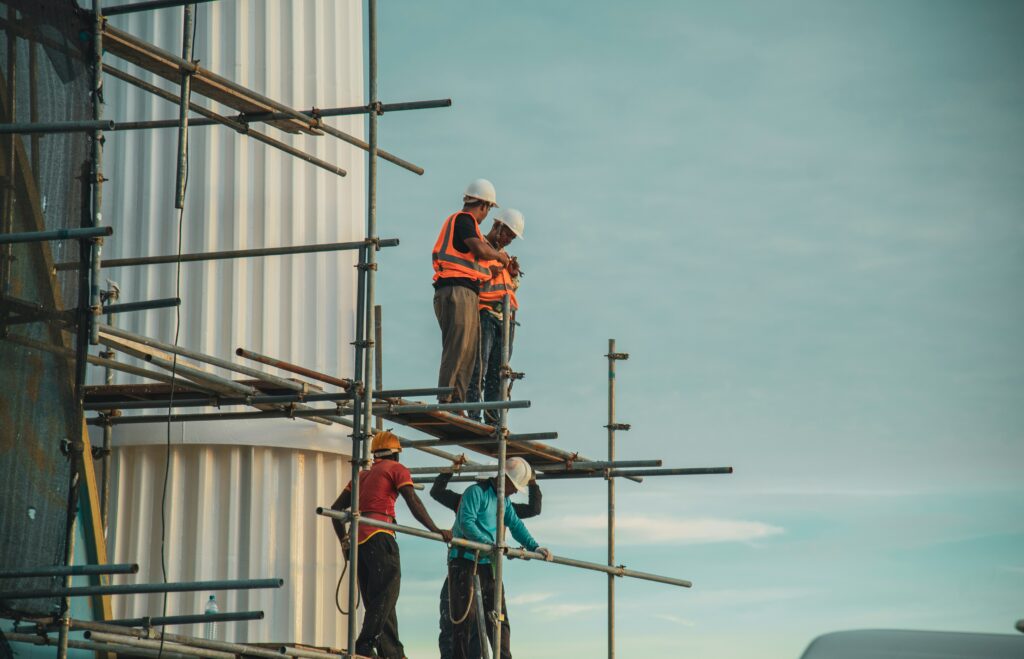
Scaffolding | Construction Benefits

Modern Scaffolding Smashes Setup Times for Construction Companies

In a competitive industry like construction, time equals money, so every minute counts. Modern scaffolding systems are revolutionising the way construction companies tackle projects, delivering unprecedented speed advantages that more traditional systems can’t match.

Modern Scaffold Tower Systems Enable Faster Completion Times

Modern scaffold tower systems, such as Selflock, represent a significant advance over conventional products. Unlike those traditional tube-and-clamp systems that require skilled labour and extensive assembly time, modern modular towers can be erected in a fraction of the time by labourers with no previous experience.

The Selflock system exemplifies this revolution. Its innovative interlocking frames eliminate the need for specialised tools, allowing even unskilled workers to assemble a secure structure rapidly. This quick-locking mechanism creates rock-solid platforms whilst dramatically reducing labour costs and setup times.

The Kwikstage Advantage

Kwikstage, South Africa’s most popular system, demonstrates why modern systems offer superior efficiency. Its modular design features innovative “V” pressings at 500 mm intervals along vertical standards, enabling rapid connection of horizontal ledgers without complex fastening procedures.

Key Kwikstage features include:

  • Wedge-shaped components that lock automatically into position
  • Minimal components that reduce transport and handling time
  • Intuitive assembly process that requires less training
  • Quick disassembly for rapid site clearance

Beyond Speed – Safety and Versatility Combined

Modern scaffold tower systems don’t just sacrifice safety for speed. SABS-approved materials ensure structural integrity, while integrated safety features, such as toe boards, secure access ladders, and anti-slip platforms, provide comprehensive protection.

The robust locking mechanisms create a stable work environment that meets stringent South African occupational health and safety regulations.

These systems excel across diverse applications from residential building projects to industrial maintenance, mining operations, and commercial construction. Their modular nature allows customisation for use on irregular surfaces and at challenging heights, while maintaining rapid assembly characteristics.

The Business Case for Modern Scaffolding

Construction companies that invest in advanced scaffold tower systems report significant gains in project efficiency. Reduced assembly time translates directly into lower labour costs, faster project completion, and increased profits.

The need for fewer workers during setup and takedown operations, whilst meeting all local safety standards, is a compelling advantage.

For time-sensitive projects where traditional scaffolding might create bottlenecks, a modern tower system offers the flexibility to adapt quickly to changing requirements without compromising safety or structural integrity.

Streamline Your Construction Timelines

Construction companies face increasing pressure to deliver projects faster while maintaining worker safety, and are finding that modern scaffolding provides both advantages simultaneously. The combination of rapid assembly, superior protection, and exceptional versatility makes these systems indispensable for competitive construction operations.

Ready to streamline your next project? Enquire about professional-grade scaffolding solutions to boost your company’s on-site efficiency and safety standards.

Scaffolding | Safe Construction Solutions

How Industry-Leading Scaffolding is Raising the Bar for Safety in Construction

In today’s busy South African construction industry, scaffolding is more than just a support platform. It’s a lifeline for workers and a cornerstone of site safety. As projects grow in scale and complexity, the demand for reliable, compliant, and efficient scaffolding solutions has never been higher.

Why Scaffolding Safety Standards Matter

Construction sites are inherently hazardous, with working at height posing some of the greatest risks. Adhering to rigorous safety standards isn’t just a regulatory box-ticking exercise; it’s essential to protect lives and ensure project success. Scaffolding companies at the forefront of the industry prioritise systems that meet or exceed these standards, offering peace of mind to both contractors and workers.

Selflock: Simplicity Meets Security

The Selflock system stands out for its intuitive design, making it a favourite among scaffolding companies seeking both speed and safety. With its self-locking mechanism, assembly and dismantling are straightforward, reducing the margin for human error. Key benefits include:

  • Minimal loose components, lowering the risk of lost parts and potential hazards
  • Quick, tool-free assembly, saving valuable time on site
  • Stable, secure platforms that comply with the latest safety protocols

For construction companies, this translates into fewer delays, improved worker confidence, and a safer working environment from the ground up.

Kwikstage: Versatility and Compliance in One Package

Kwikstage scaffolds are renowned for their modularity and adaptability, making them suitable for everything from high-rise buildings to complex infrastructure projects. Its robust steel construction and galvanised finish ensure durability, while the system’s built-in safety features, such as guardrails, toe boards, and non-slip surfaces, help prevent falls and accidents.

Notable advantages include:

  • Rapid assembly and dismantling, reducing labour costs and site downtime
  • Configurable layouts to suit unique building shapes and project requirements
  • High load-bearing capacity, supporting workers, tools, and materials with ease
  • Compact storage and transport, streamlining logistics for busy contractors

These features make Kwikstage a preferred choice for scaffolding companies seeking to strike a balance between efficiency, safety, and cost-effectiveness.

Choosing the Right Partner

Not all scaffolding companies are equal. When selecting a supplier, construction firms should seek out those with a proven track record, stringent quality control, and a comprehensive understanding of South African safety regulations. Look for:

  • Systems tested to local and international standards
  • Expert support and guidance from initial planning to project completion
  • Flexible solutions tailored to the unique demands of your site

Raising Your Site’s Safety Standards

Investing in industry-leading scaffolding systems, such as Selflock and Kwikstage, is a proactive step towards safer and more productive construction sites. Don’t leave safety to chance. Talk to a leading local manufacturer whose products and expertise will help you build with confidence.

Formwork in Construction | Types Used

A Builder’s Guide to Formwork in Construction

Local construction companies face the challenges of ensuring precision and durability. Understanding the available types of formwork in construction can significantly impact project outcomes, safety standards, and long-term costs. Today’s products combine flexibility with efficiency.

Traditional vs Modern Formwork

Let’s take a look at traditional vs modern formwork:

Timber: Whilst timber remains popular for small-scale projects, its limitations become apparent in South Africa’s climate:

  • Vulnerable to warping and rotting from moisture exposure
  • Requires frequent maintenance and replacement
  • Limited reusability compared to modern alternatives

Steel: Steel formwork systems manufactured from SABS-approved materials offer superior performance characteristics:

  • Exceptional Durability: Resists warping, moisture damage, and pest damage
  • Accuracy: Maintains precise measurements throughout multiple uses
  • Superior Finish: Delivers smooth concrete surfaces, reducing finishing requirements

Advanced Types of Formwork

Now let’s explore a few advanced types of formwork:

Modular Formwork: Modular systems consist of prefabricated components that interlock securely:

  • Rapid assembly and dismantling capabilities
  • Adaptable to various project scales and geometries
  • Reduced setup times and labour costs

Self-Climbing Formwork: Revolutionary for high-rise construction, these systems eliminate crane dependency:

  • Enhanced safety through reduced manual handling at height
  • Continuous vertical construction without external lifting equipment
  • Ideal for buildings exceeding 20 floors

Beam Formwork: This type creates horizontal support structures essential for load transfer:

  • Shapes concrete beams during curing
  • Provides various configurations for different architectural requirements
  • Critical for the structural integrity of bridges and commercial buildings
  • Simplifies complex architectural designs whilst maintaining safety

The Evolution of Formwork

Modern formwork has evolved dramatically from basic timber systems. Today’s integrated solutions combine multiple construction elements, including insulated concrete forms for energy-efficient buildings and reinforcement integration for streamlined processes.

Selecting the Right Formwork

There are a few things you need to consider when selecting formwork:

Project-Specific Considerations

  • Structure Height: Self-climbing systems excel for high-rise projects
  • Geometric Complexity: Modular systems adapt to varied architectural requirements
  • Environmental Conditions: Steel formwork withstands South Africa’s diverse climate

Safety and Efficiency Factors

Proper formwork selection has a direct impact on construction safety. Key practices include inspecting all components before use, ensuring correct assembly procedures, and mechanisms to facilitate removal.

Best Practices for Formwork Use

Steel formwork requires minimal maintenance when handled correctly:

Clean components thoroughly after each use, store in dry conditions, and apply protective coatings as necessary. Steel systems offer long-term reusability, reducing waste and environmental impact compared to other alternatives.

The Future of Formwork in Construction

Technological advances continue to drive formwork innovation, while Building Information Modelling enables precise planning and minimises waste. These developments ensure local construction companies can deliver projects that meet international standards.

The industry’s evolution demands formwork in construction that combines traditional reliability with modern efficiency. Whether tackling residential developments or commercial high-rises, the right types of formwork can dramatically improve project outcomes, safety, and profitability.

Discover how formwork in construction can boost your project outcomes today.

Scaffolding for Sale | Guidelines for Buyers

Scaffolding for Sale – A Guide to Buying Durable Steel Frames

Searching for scaffolding for sale that guarantees safety, adaptability, and value? Whether you’re tackling a high-rise build or a complex renovation, choosing the correct scaffolding is vital for a project’s success, and the nation’s construction sector demands nothing less.

Why Steel Scaffolding Remains the Gold Standard

Steel scaffolding frames are the backbone of modern construction. Their robust design ensures stability, even on the most demanding sites. Unlike lighter alternatives, steel frames withstand heavy loads and harsh weather, making them ideal for both large-scale developments and smaller projects. Their longevity means less frequent replacement, resulting in long-term cost savings.

Adaptability – One System, Multiple Applications

The best scaffolding for sale in South Africa offers exceptional adaptability. Leading systems, such as the Kwikstage range, combine a modular design with a wide array of components and accessories, including cantilever brackets. This flexibility allows builders to:

  • Configure platforms for unique project requirements
  • Adjust heights and spans quickly
  • Tackle complex architectural challenges with ease

With the right scaffolding, your team can move seamlessly from each phase of construction to the next, minimising downtime and boosting productivity.

Safety First – Built-In Protection for Your Crew

Safety is non-negotiable on any construction site. High-quality steel scaffolding is engineered with features that reduce risk, including:

  • Secure locking mechanisms to prevent accidental disassembly
  • Slip-resistant platforms for stable footing
  • Integrated guardrails and toe boards for fall protection

Regular inspections, proper assembly, and adherence to South African safety standards further ensure that your team can work confidently at height.

Ease of Assembly: Save Time, Cut Costs

Time is money in construction. The best scaffolding for sale is designed for rapid assembly and dismantling, often requiring just a few workers and basic tools. This simplicity means:

Scaffolding for Sale | Guidelines for Buyers
  • Faster project turnaround
  • Reduced labour costs
  • Minimal disruption to other site activities

Clear instructions and intuitive connections make even complex setups straightforward, allowing your crew to spend less time on logistics and more on building.

Efficient Storage and Transportation

Construction companies value scaffolding systems that are easily stored and transported. Steel frames stack compactly, and modular components fit neatly into standard vehicles or containers. This efficient design helps:

  • Maximise warehouse space
  • Reduce transport costs between sites
  • Keep your equipment organised and ready for the next job

Make the Right Choice for Your Next Project

When seeking scaffolding for sale, prioritise systems that offer durability, adaptability, and built-in safety. Look for suppliers who understand the unique demands of South African construction and can provide expert guidance on the best solution for your needs.

Want to ace your next build? Enquire about top-quality scaffolding and set your team up for success, because your project deserves nothing less.

Scaffolding | Bridge Construction

Best Scaffolding for Bridge Construction Projects

For companies undertaking bridge construction in South Africa, the choice of scaffolding can make or break the project timeline, budget, and safety record. As infrastructure renewal demands soar nationwide, construction companies are discovering that innovative modular systems can revolutionise how they approach these complex engineering tasks.

Scaffolding Types for Bridge Projects

Here are a few scaffolding types for bridge projects:

 1.     Modular Systems:

Kwikstage modular systems are a frequent choice for South African bridge construction projects. Their unparalleled versatility stems from the comprehensive range of components. These include standards, ledgers, base jacks, and cantilever brackets that readily adapt to diverse architectural requirements.

SABS-approved materials ensure exceptional durability whilst the galvanised finish provides crucial corrosion resistance – essential when working near water or in wet weather. The modular design enables rapid assembly and disassembly, significantly reducing labour costs and project timelines.

 2.     Suspended Systems:

When spanning water or busy roadways, traditional standing scaffolding isn’t feasible. Suspended systems excel in these scenarios, requiring no floor space whilst providing safe access to great heights with minimal components. These systems prove invaluable for accessing difficult areas like bridge substructures, where conventional methods fall short.

For renovation projects and minor corrosion protection work, traditional facade scaffolding remains relevant. However, due to cost and time considerations, modular systems dominate bridge-building projects.

Overcoming Challenges

Bridge-building projects present unique obstacles requiring specialised solutions:

  • Limited Ground Access: Bridges spanning water bodies or busy transport routes require systems that don’t rely on ground-based support structures.
  • Extreme Heights: Multi-storey operations demand exceptional load-bearing capacity and stability to support heavy construction materials.
  • Complex Architecture: Modern bridge designs often feature intricate geometries requiring flexible, adaptable access options.
  • Material Transportation: Remote or inaccessible locations necessitate efficient, modular components to simplify logistics.
  • Environmental Considerations: Water protection, noise reduction, and minimising traffic disruption require careful planning.

Key Components

Essential scaffolding components include diagonal braces for additional stability, toe boards for safety compliance, hook-on boards creating secure working platforms, and specialised accessories like trap doors and staircases. The interlocking mechanism minimises collapse risks whilst ensuring maximum stability in high-risk environments.

Safety remains paramount, with robust steel standards, reinforced ledgers, and comprehensive handrail systems protecting workers and the public. The system’s simplicity enables workers with minimal training to assemble structures quickly, ensuring uninterrupted project progress.

The Local Advantage

Local construction companies benefit from systems specifically designed to address regional challenges. Modularity facilitates easy transportation and storage, simplifying logistics whilst saving on-site space. This flexibility accommodates the diverse architectural styles and project requirements prevalent across South Africa’s infrastructure landscape.

Bridge construction demands access solutions that combine safety, efficiency, and adaptability. To ensure your next infrastructure project achieves optimal levels of productivity whilst maintaining the highest safety standards, consult a leading supplier today.

Scaffolding Companies | Selection Criteria

Scaffolding Companies: The Essential Selection Criteria

When tackling a major construction project, choosing between scaffolding companies is a decision that can make or break site safety, efficiency, and a builder’s bottom line. The steady growth of South Africa’s construction sector has led to a demand for suppliers who can offer quality, reliability, and innovation.

Here’s what every building and construction company should consider and why Kwikstage and Selflock systems are the gold standard.

Experience and Reputation are the Foundations of Trust in Scaffolding Companies

Not all scaffolding companies are the same. The most reputable suppliers have years of experience and a proven track record with the nation’s foremost builders. Longevity indicates not only expertise but also a commitment to quality and client satisfaction.

Always check a company’s history, client testimonials, and portfolio of completed projects to ensure you’re partnering with a supplier that prioritises quality products.

Why Kwikstage and Selflock Are Market Leaders

South African builders consistently choose Kwikstage and Selflock systems for their unrivalled robustness and adaptability. Kwikstage, the nation’s most trusted modular scaffolding, is manufactured locally using high-grade steel and meets stringent SABS standards. Its modular design means fewer components, enabling faster assembly, easier transport, and lower long-term costs.

Selflock scaffolding is prized for its simplicity and speedy assembly. With intuitive locking mechanisms and lightweight frames, Selflock is ideal for projects where time and labour efficiency are paramount.

Both systems offer:

Safety and Compliance

Safety is the cornerstone of reputable scaffolding companies. Responsible manufacturers use only SABS-approved materials and exercise rigorous quality control measures. Look for this assurance in all scaffolding components and insist on strong after-sales support should you require technical advice.

Ideally, training should also be part of the package to ensure your crew can assemble and dismantle your scaffolding safely and efficiently.

Technical Support and After-Sales Service

Even the best scaffolders can encounter challenges on site. That’s why leading scaffolding companies offer responsive technical support and swift assistance when needed. Whether it’s troubleshooting, replacement parts, or expert advice, your supplier should be ready to keep your project on schedule and your site compliant.

Cost-Effectiveness without Compromising Quality

While price matters, cutting corners on scaffolding is a false economy. High-quality Kwikstage and Selflock systems offer long-term savings thanks to their durability, ease of use, and low maintenance requirements. Investing in superior products from a reputable supplier ensures fewer delays, reduced risk, and a smoother build from start to finish.

To uplift your next project, talk to one of the nation’s leading scaffolding companies for solutions that set the benchmark for safety, reliability, and innovation in South Africa’s construction industry.

Scaffold Tower | Traditional Scaffolding

How to Choose the Right Scaffold Tower

The right scaffold tower is indispensable for safe and efficient access at height. For building and construction companies, selecting the right system can make the difference between project success and costly setbacks.

These towers are more than just temporary structures; they’re fundamental to safety and productivity on site. With the right scaffold tower, your team can work at height securely, adapt to changing project needs, and meet stringent safety standards without compromise.

Kwikstage Scaffolding

Kwikstage is South Africa’s most popular scaffolding system, and for several good reasons. Its modular design means it can be quickly assembled and dismantled, saving valuable time. Key features include:

  • Versatility: Easily configured for various building shapes and heights, including complex facades and cantilevered sections.
  • Safety: Robust locking mechanisms and SABS-approved steel components ensure stability and durability.
  • Efficiency: Minimal components and a clever coupling system allow even inexperienced workers to erect it quickly and safely.

Kwikstage is ideal for large-scale projects, like high-rise buildings and bridges, where adaptability and load-bearing capacity are crucial.

Selflock Scaffold Tower

For smaller projects or workers with limited scaffolding experience, Selflock is a standout choice. Its quick-locking frames require no special tools and can be assembled by a single worker, making them perfect for light construction, maintenance, and decorating. The system offers:

  • Compact Design: Fewer components simplify transport and storage.
  • Rapid Assembly: Interlocking frames speed setup, even for unskilled labour.
  • Cost-Effectiveness: An economical solution for projects with tight budgets or limited scaffolding requirements.

Formwork

Few concrete structures are possible without the use of reliable formwork. Modern shuttering systems, whether modular steel or custom timber, ensure poured concrete retains its shape and strength as it cures. Key considerations include:

  • Project Suitability: Choose formwork based on slab size, thickness, and required propping.
  • Ease of Use: The modular panels can be installed by hand, reducing labour costs and improving safety.
  • Reusability: Durable shuttering can be reused across multiple projects, enhancing long-term value.

Safety Standards

Every scaffold tower and formwork solution should meet or exceed local safety standards. Look for SABS-approved materials to ensure all components are of the highest quality. Regular inspections, proper training, and adherence to best practices are vital to keep personnel safe and projects on track.

Making the Right Choice for Your Project

Whether you need the adaptability of Kwikstage, the simplicity of Selflock, or the reliability of advanced formwork, choosing the right system is crucial for project success. Assess your site’s unique requirements, prioritise safety certifications, and invest in systems designed for South Africa’s demanding construction environment.

Want to smash your next project? Explore our premium scaffold tower solutions and discover how the right system can transform your site’s safety and efficiency.

How Selflock Scaffolding Can Benefit Construction Companies in South Africa

When it comes to efficient and safe construction solutions, Selflock scaffolding stands head and shoulders above the more traditional options. This innovative system has transformed the way South African construction companies approach projects of all sizes, offering unmatched versatility coupled with superior safety features.

The Remarkable Advantages of Selflock Scaffolding

The Selflock system provides exceptional stability through its unique design, featuring wedge-shaped heads that lock into position automatically. This system eliminates dangerous wobbling and creates a rock-solid platform for workers.

Made entirely from SABS-approved materials, including high-grade steel, this widely popular scaffolding system meets the most stringent quality standards in the industry.

The lightning-fast assembly process sets this locally manufactured product apart from rival systems. With its interlocking mechanism, construction teams can erect platforms in a fraction of the time, requiring fewer workers and no specialised tools. These features result in significant cost savings while maintaining optimal safety standards.

Versatility Across Multiple Construction Applications

South African construction companies utilise this type of scaffolding in numerous applications, including:

The modular nature of this system enables it to be easily customised to meet specific project requirements. Whether working on irregular surfaces or at challenging heights, the system can be configured to provide safe access to any work area.

Essential Safety Features of Selflock Scaffolding

Safety remains paramount in construction, and the Selflock system incorporates numerous protective elements. These include integrated guardrails, toe boards, and secure access ladders that dramatically reduce the risk of falls. The system’s built-in safety mechanisms comply with all South African occupational health and safety regulations.

The robust Selflock scaffolding access ladders deserve a special mention, as they provide secure pathways for workers moving between different levels. These ladders include anti-slip rungs and sturdy attachment points to ensure safe climbing conditions.

Best Practices when Using Selflock

To reap the full benefits of this scaffolding system, construction workers need to:

  • Ensure proper training for all assembly team members
  • Conduct regular inspections of all components
  • Never exceed the recommended load capacities
  • Always use appropriate personal protective equipment
  • Keep platforms clean and free from unnecessary materials

The Future of Construction Safety

South African construction companies are facing increasing pressure to improve efficiency while maintaining worker safety, and Selflock scaffolding can provide both. Its combination of rapid assembly, durability, and comprehensive safety features makes it the preferred choice for construction professionals nationwide.

For your next building project, invest in a system that will prioritise both productivity and protection. Talk to South Africa’s scaffolding experts about a versatile system that is guaranteed to meet all your construction needs.

Formwork | Concrete Shuttering

A Brief Guide to Formwork and Its Uses

Modern construction demands speed, precision, and safety – three crucial qualities that hinge on choosing the right formwork. Whether you’re building a high-rise in Johannesburg or a bridge in Cape Town, understanding the latest innovations in this field could be a game-changer.

The Evolution of Formwork

The roots of this system, also known as concrete shuttering, date back to the time of the Roman Empire. Rome’s early builders crafted shutters from reeds to shape concrete foundations and walls. This development enabled the Romans to create enduring structures like aqueducts and the Pantheon dome, unleashing new architectural possibilities and setting the stage for today’s more advanced systems.

Types of Formwork in Modern Construction

Selecting the right type is crucial to project efficiency, cost control, and safety. Here’s a breakdown of the types used in South African construction:

  1. Traditional Timber:
  • Cost-effective for small-scale or bespoke projects
  • Easy to assemble and adapt on-site
  • Requires regular maintenance and has a shorter lifespan compared to modern alternatives as it is subject to warping and rotting.
  • Steel:
  • Highly durable and reusable, ideal for large-scale developments
  • Delivers a superior finish and maintains dimensional accuracy
  • Resistant to warping, moisture, and pests, making it perfect for South African climates
  • Requires minimal maintenance when cleaned and stored correctly
  • Sliding Formwork
  • This system is perfect for continuous pours in tall structures, such as silos and towers, boosting construction speed and reducing the number of joints

Best Practices for Selection and Implementation

To maximise efficiency and safety, follow these expert recommendations:

  • Project Scope: Match your shuttering to the complexity and scale of your build. Steel systems are excellent for large-scale, repetitive projects, while timber may suit intricate or one-off designs.
  • Safety: Always inspect it for damage before use and ensure correct assembly to prevent collapse or leaks.
  • Maintenance: Clean steel components thoroughly after each use, store it in dry conditions, and apply protective coatings to prolong lifespan and maintain performance.
  • Sustainability: Opt for reusable systems to reduce waste and environmental impact, aligning with modern green building standards.

Concrete Shuttering: The Backbone of Architectural Flexibility

Concrete shuttering remains at the heart of every successful pour. Advanced systems now offer not just strength and precision but also flexibility for complex architectural forms. With innovative modular panels, dismantling and repositioning are now faster than ever, ensuring your project remains on schedule.

Are You Ready to Transform Your Next Project?

Stay ahead of the competition with cutting-edge formwork solutions designed for South Africa’s unique construction challenges. To discover how the right system can save you time, money, and headaches, talk to South Africa’s experts today about how to ace your next construction project.