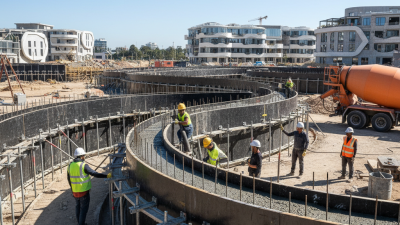
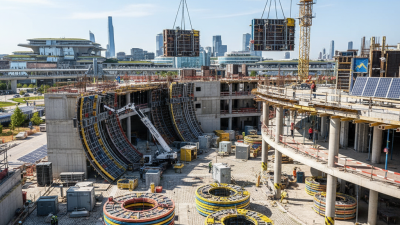
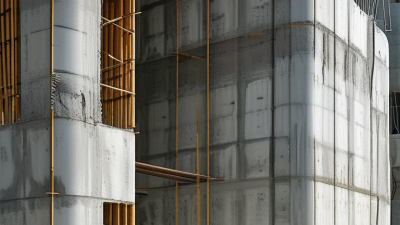
Global buyers entering the 2026 market need more than a supplier catalogue. They need evidence, fit, and repeatable site performance. Column clamps formwork supports concrete columns while controlling panel alignment, pressure, labor time, and surface quality. Small differences matter. A loose clamp can create a visible joint, a bulged corner, or costly rework.
Market evidence points toward continued demand for modular construction equipment. Grand View Research’s Concrete Formwork Market report identifies infrastructure growth, urban housing, and faster project cycles as major demand drivers. Mordor Intelligence also reports expanding adoption of reusable formwork systems through 2030. These reports do not guarantee every product’s quality. They show market direction, not job-site certainty.
R. L. Peurifoy, a respected formwork author, wrote, “The primary function of formwork is to support the concrete until it becomes self-supporting.” That principle still matters. A clamp must resist fresh-concrete pressure, maintain spacing, and release without damaging edges. The best choice may be wedge clamps, rapid-action clamps, adjustable steel clamps, or heavy-duty systems. It depends on column dimensions, pour height, concrete slump, and reuse targets.
Buyers should request load data, steel grade, coating details, dimensional tolerances, and independent test records. Ask for installation photographs. Ask harder questions. A low price can hide slow adjustment, weak pins, or inconsistent welds. EN 1090, ACI 347 guidance, and local engineering requirements should be checked before approval. This 2026 comparison will examine practical types, not just impressive specifications. Some recommendations may remain conditional. That is more honest.
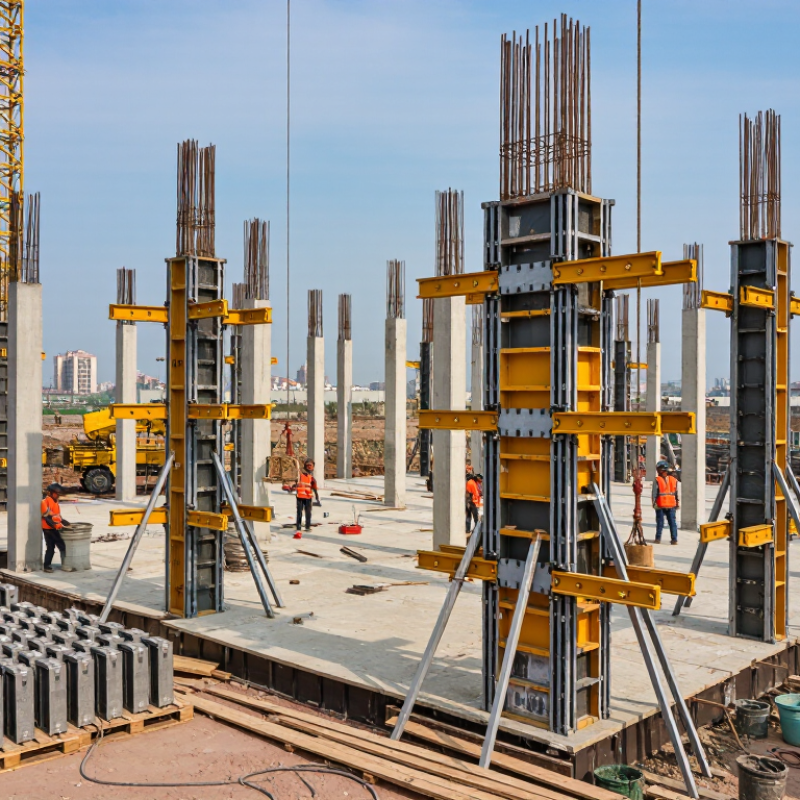
In 2026, column clamp formwork is commonly divided into adjustable steel clamps, hinged clamps, wedge-lock systems, and hydraulic or high-capacity assemblies. Adjustable clamps suit varied column sizes and repeated projects. Hinged models reduce installation time around dense reinforcement. Wedge systems provide fast tightening, but poor alignment can leave visible concrete marks. Hydraulic assemblies fit large commercial columns, where pressure control matters.
The European standard EN 12812 addresses falsework performance, stability, and design principles. ACI 347R also guides formwork planning, pressure evaluation, and construction safety in concrete work. Buyers should request verified load tables, steel grade certificates, weld inspection records, and dimensional tolerances. Clamp capacity must match fresh-concrete pressure, pour speed, vibration, column height, and temperature. A strong-looking clamp can still fail under poor spacing.
McKinsey’s construction productivity research indicates that industrialized and modular methods may reduce project schedules by 20–50% in suitable applications. The World Economic Forum also links standardized construction systems with better productivity and less material waste. These figures do not measure column clamps alone, so interpretation needs care. Global buyers should compare cycle time, reuse rating, adjustment range, corrosion protection, spare-part access, and operator training. A 600 mm clamp may not fit a 610 mm column safely. Small gaps become expensive defects. Insist on project-specific calculations, local engineering review, and documented trial assembly before volume purchasing.
The chart compares representative square-column size ranges commonly covered by major column-clamp formwork categories. Actual dimensions depend on the system design, panel configuration, tie arrangement, and project requirements. Buyers should verify structural capacity, dimensional tolerances, applicable standards such as EN 12812 or ACI 347, corrosion protection, reuse cycles, and local compliance documentation before procurement.
For 2,400 kg/m³ concrete, column-clamp selection must begin with pressure, not appearance. EN 206 classifies normal-weight concrete within roughly 2,000–2,600 kg/m³. A 2,400 kg/m³ mix therefore creates substantial lateral loading while still fresh. ACI 347R-14 identifies placement rate, concrete temperature, slump, vibration, and setting time as key pressure factors. Density alone is not enough.
Steel column clamps provide rigid restraint and suit repeated construction cycles. Their compact jaws work well around standard column forms, but alignment must remain accurate. Waler clamps distribute force through horizontal walers, reducing local pressure on plywood or steel panels. They are practical for larger dimensions. Adjustable clamps offer wider size coverage and faster setup. However, their moving parts need careful locking and inspection. Small gaps can become visible bulges.
Field experience shows that a clamp rated for load may still perform poorly when spacing is excessive. ACI 347R-14 recommends designing formwork for expected fresh-concrete pressure and construction effects, including vibration. Buyers should compare tested capacity, adjustment range, corrosion protection, pin security, and replacement access. Ask for test certificates and installation limits. Do not accept vague “heavy-duty” claims. One weakness remains: published capacity may assume ideal alignment, which rarely exists on a busy site.
2026 Best Column Clamps Formwork Types for Global Buyers?
Concrete pressure governs clamp selection more than appearance. At a 2.4 m pour height, fresh concrete can create 57.6 kPa of lateral pressure. This uses 24 kN/m³, a common design unit weight. The calculation is simple. Site conditions are not.
ACI 347R-14 explains that formwork pressure depends on placement rate, concrete temperature, slump, admixtures, and setting time. CIRIA Report 108 also highlights the need to assess fresh-concrete pressure rather than relying on nominal clamp spacing. For column formwork, adjustable steel clamps suit repeated sizes, while stronger systems may be needed for high-pressure pours. Spacing should follow panel stiffness, clamp capacity, corner details, and allowable deflection. Lower zones often need tighter spacing. A universal spacing chart can mislead.
Tips: Confirm pressure first. Check clamp capacity next. Keep the lower 600 mm under close review. Use calibrated torque tools where required. Inspect corners before pouring.
From field practice, a 57.6 kPa assumption is useful but conservative only when full hydrostatic pressure can develop. A slow pour may reduce pressure, yet temperature changes can extend setting time. That changes the risk. I would document pour rate, slump, and concrete temperature before finalizing the layout. One missed variable can distort the entire design. Independent review remains valuable for unusual column sizes, tall lifts, or congested reinforcement.
| Formwork Clamp Type | Operating Mechanism | Typical Column Size Range | Typical Adjustment Method | Common Material | Best-Fit Application | Key Buying Consideration |
|---|---|---|---|---|---|---|
| Column Clamp Type Comparison | ||||||
| Adjustable steel column clamp | Steel frames or bars tighten around four-sided column panels. | Approximately 150–900 mm per side, depending on the system configuration. | Pin holes, threaded adjustment, or sliding members. | Painted or galvanized structural steel. | Repeated rectangular and square columns on general building projects. | Check rated capacity, adjustment increments, weld quality, and compatibility with the form panel thickness. |
| Wedge-action column clamp | Wedges create rapid clamping force without separate threaded nuts. | Approximately 200–750 mm per side, depending on the frame length. | Hammer-driven wedge or locking key. | High-strength steel with replaceable wedges. | Projects requiring fast installation and frequent formwork cycling. | Confirm wedge retention, release procedure, allowable impact during tightening, and corrosion protection. |
| Bolted steel clamp | Opposing steel members are connected and tightened with bolts or threaded rods. | Approximately 200–1,200 mm per side with suitable extensions. | Threaded bolts, nuts, and spacer or extension components. | Structural steel, often galvanized for outdoor use. | Large columns, irregular dimensions, and applications needing precise tightening control. | Review bolt grade, thread condition, washer arrangement, tightening method, and extension capacity. |
| Modular clamp with interchangeable extensions | Standard clamp bodies connect to extension bars or corner pieces. | Approximately 300–1,500 mm per side, subject to the approved configuration. | Replaceable extension bars and locking pins or bolts. | Steel clamp body with steel extensions. | Global contractors handling multiple column dimensions. | Verify that every extension combination has a published load rating; do not extrapolate beyond the approved configuration. |
| Timber-form tie-and-waler arrangement | Through-ties, walers, and strongbacks restrain timber or plywood column forms. | Custom-built; commonly used for nonstandard or oversized columns. | Threaded tie rods, nuts, walers, and timber or steel strongbacks. | Steel ties with timber, plywood, or steel walers. | One-off columns, complex geometry, and locally fabricated formwork. | Design the complete load path, including plywood bending, waler bending, tie capacity, bearing, and edge distances. |
| Concrete Pressure Reference for a 2.4 m Pour Height | ||||||
| Reference Level Below Top of Pour | Hydrostatic Pressure Calculation | Calculated Pressure | Pressure in kN/m² | Pressure in kPa | Pressure in psf, Approx. | Interpretation |
| 0.0 m | 24 kN/m³ × 0.0 m | 0.0 kN/m² | 0.0 | 0.0 | 0 | Top reference level before considering dynamic placement effects. |
| 0.6 m | 24 kN/m³ × 0.6 m | 14.4 kN/m² | 14.4 | 14.4 | 301 | Hydrostatic reference pressure at 0.6 m below the concrete surface. |
| 1.2 m | 24 kN/m³ × 1.2 m | 28.8 kN/m² | 28.8 | 28.8 | 601 | Hydrostatic reference pressure at mid-height. |
| 1.8 m | 24 kN/m³ × 1.8 m | 43.2 kN/m² | 43.2 | 43.2 | 902 | High-pressure zone requiring close attention to clamp spacing and panel stiffness. |
| 2.4 m | 24 kN/m³ × 2.4 m | 57.6 kN/m² | 57.6 | 57.6 | 1,203 | Maximum hydrostatic reference pressure at the base of a 2.4 m pour. |
| Illustrative Clamp Spacing Layout for Engineering Review | ||||||
| Vertical Zone | Approximate Depth Below Top | Hydrostatic Reference Pressure | Illustrative Maximum Vertical Clamp Spacing | Primary Reason | Required Verification | Buyer Note |
| Base zone | 1.8–2.4 m | 43.2–57.6 kPa | 150–200 mm | Highest lateral pressure occurs near the base. | Clamp capacity, panel bending, waler stiffness, bearing, and local crushing. | Use the tighter end of the range where placement is rapid or vibration is significant. |
| Lower-middle zone | 1.2–1.8 m | 28.8–43.2 kPa | 200–250 mm | Pressure remains high and can govern panel deflection. | Form-face deflection, clamp slip, and load transfer into corners. | Do not increase spacing solely because the nominal concrete height is below 2.4 m. |
| Upper-middle zone | 0.6–1.2 m | 14.4–28.8 kPa | 250–300 mm | Moderate hydrostatic pressure during a controlled pour. | Placement rate, concrete temperature, slump, and setting time. | Confirm the selected clamp system remains stable during internal vibration. |
| Top zone | 0.0–0.6 m | 0–14.4 kPa | 300–450 mm | Lower static pressure, subject to fresh-concrete impact. | Top-edge restraint, alignment, pour impact, and temporary bracing. | Provide additional restraint at corners, openings, and pour-start locations when required. |
| Global Buyer Inspection Checklist | ||||||
| Inspection Dimension | Recommended Requirement | Typical Acceptance Evidence | Why It Matters | Applicable Units | Risk if Omitted | Purchasing Action |
| Rated clamp capacity | Capacity must exceed the calculated design demand with the applicable project safety factors. | Manufacturer test data, engineering calculation, or certified product documentation. | Prevents clamp opening, slip, or permanent deformation. | kN, kN/m, or project-specific design units. | Bulging, blowout, misalignment, or unsafe release of stored energy. | Request capacity by approved spacing and configuration, not only a single headline load. |
| Corrosion protection | Finish should match the exposure, storage, cleaning, and transport conditions. | Galvanizing specification, coating information, or surface inspection record. | Corrosion can reduce section thickness and impair threads or wedges. | Micrometres for coating thickness where specified. | Reduced service life, seized components, and inconsistent tightening. | Specify finish, repair method for damaged coating, and storage requirements. |
| Dimensional compatibility | Clamp opening, extension length, panel thickness, and corner geometry must fit the form system. | Dimensional drawing and site trial assembly. | Prevents eccentric loading and incomplete engagement. | mm. | Local crushing, unstable corners, and excessive form deflection. | Provide the complete column size schedule before ordering. |
| Concrete placement conditions | Design pressure must consider concrete density, temperature, slump, placement rate, vibration, and admixtures. | Approved pour plan and project-specific formwork calculation. | Actual fresh-concrete pressure may differ from a simple hydrostatic assumption. | kN/m³, m/h, °C, and kPa. | Under-designed clamps or unnecessarily slow construction. | Use 57.6 kPa as the stated hydrostatic reference only when the project design basis permits it. |
Engineering note: The 57.6 kPa value is calculated from a fresh-concrete unit weight of 24 kN/m³ multiplied by a 2.4 m concrete depth. The spacing ranges shown are indicative starting values for comparison and procurement planning, not a universal design approval. Final clamp spacing and capacity must be checked against the complete formwork system, concrete placement conditions, applicable local standards, and a qualified formwork engineer’s calculations.
For global buyers, column clamps should be selected from verified load data, not appearance. Check axial capacity, lateral resistance, clamp spacing, and possible eccentric loading. A wet concrete pour creates pressure that changes with height, temperature, and placement speed. Ask for tested values and calculation assumptions. A simple load table is not enough.
EN 12812 helps assess temporary works, stability, design principles, and execution controls. It is useful when clamps form part of a supporting system.
ACI 347 provides practical guidance for concrete formwork, including pressure, bracing, tolerances, and inspection. These references are not interchangeable.
Local project rules may add stricter requirements. That detail is easy to miss.
Request ISO-related documentation covering quality procedures, material traceability, inspection records, and corrective actions. Check whether certificates match the actual steel grade, batch, coating, and production site. Photos of stamped components can support verification, but they cannot replace independent inspection. On real projects, missing torque records or unclear revision numbers often create more risk than visible damage. A polished document package may still contain gaps. I would also review assembly drawings with the site crew, because a compliant design can fail through incorrect spacing, loose pins, or uneven tightening. That practical review is sometimes skipped. It should not be.
Global Procurement Guide: Compare Reuse Cycles, Sizes, Coatings, and Total Cost
Column clamps look simple, yet procurement decisions affect labor, safety, and concrete quality. For global buyers, compare reuse cycles before comparing unit prices. A light steel clamp may support 80 to 150 pours with careful handling. Poor alignment, over-tightening, and wet storage can reduce that figure sharply. Request cycle evidence, load data, and clear repair limits. Do not trust an impressive number alone.
Measure column width, height, corner shape, and tie spacing before selecting a size. Adjustable systems suit varied projects, while fixed sizes often assemble faster. For humid ports and coastal sites, galvanized or properly painted surfaces resist early corrosion. Coating thickness matters, but edge damage matters more during daily handling. Inspect bolt threads, clamp plates, and weld areas after major pours. Small rust spots are warnings. Not decoration.
Total cost includes freight, spare bolts, cleaning, storage, labor, and rejected panels. Calculate cost per successful pour, not cost per delivered clamp. A cheap set can become expensive after repeated adjustments and frequent replacement. Request packing dimensions and weight; shipping surprises can erase a narrow price advantage. Local repair capability also deserves a line in the tender. Experienced site teams record actual cycle performance after the first ten pours. Our first estimate was too optimistic. That mistake matters.