Sesame Grey Granite can look uniform in a showroom, yet a full container may reveal different grain, tone, and mineral patterns. Buyers need more than a polished sample. They need to check quarry consistency, finish, dimensions, packing, and inspection terms before approving an order.
The USGS Mineral Commodity Summaries and its dimension-stone reporting provide useful context on production and trade, while the Natural Stone Institute’s Dimension Stone Design Manual offers practical guidance on stone selection and installation. These sources do not certify any particular Sesame Grey Granite shipment. That distinction matters. Ask suppliers for current, lot-specific photographs, test documentation, and clearly stated tolerances—not just a brochure image.
Architect Frank Lloyd Wright advised, “Study nature, love nature, stay close to nature. It will never fail you.” His words are not a granite purchasing rule, but they suit a material shaped by natural variation. One sample can mislead. A buyer should compare several slabs under consistent lighting and confirm the approved lot before shipment. This guide presents seven checks for global buyers, from verifying origin and finish to reviewing inspection records and protective packaging. Small details count: a chipped corner, mixed finish, or unclear crate label can become an expensive surprise. Even careful checks have limits; natural stone is never perfectly identical, and no checklist can remove every uncertainty.
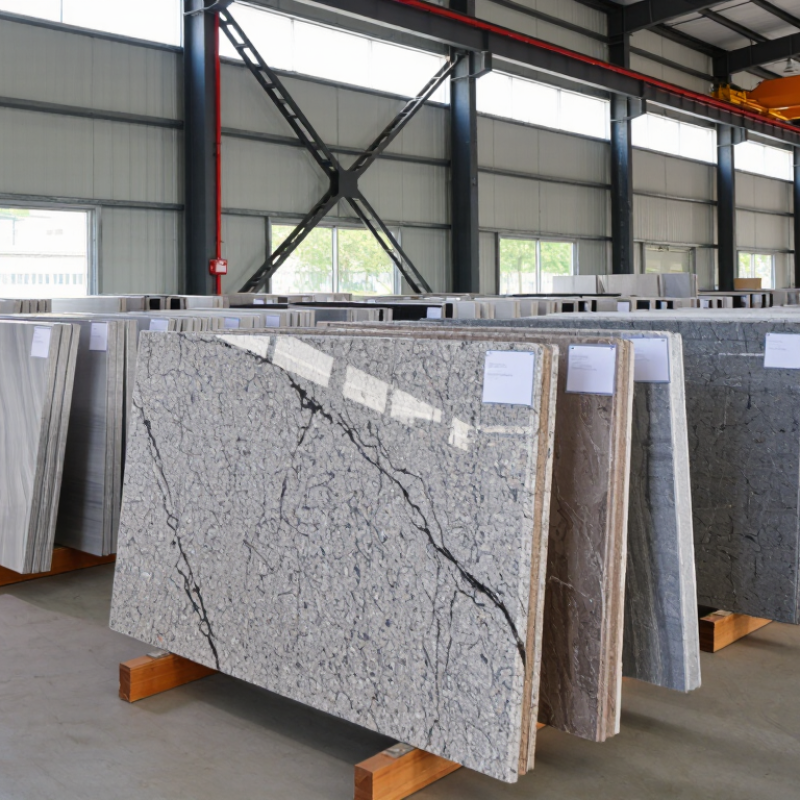
Sesame grey granite usually shows a medium-grey background with small black, white, and sometimes muted brown mineral grains. The pattern is granular, not evenly printed. View a dry slab in natural daylight, then inspect it under the lighting planned for the finished space. A wet surface can look darker and hide subtle color shifts. Check polished and flamed samples separately; their textures change how the same stone reads.
Tip: Request a current quarry-block or production-lot sample. Compare several pieces side by side. Look for changes in grain density, background tone, veins, and rusty mineral spots. Small differences are normal. A tiny sample cannot represent every slab.
For batch consistency, ask the supplier to identify the quarry source, block numbers, and intended production lot in writing. Review full slabs or clear, dated photographs before approving fabrication. Keep an approved reference piece, and confirm that reserved material comes from the same batch. If slabs will meet across a large floor or countertop, arrange their sequence before cutting. The stone is natural, so perfect uniformity is unrealistic; still, noticeable shifts should be discussed before shipment. I have seen buyers rely on one attractive sample and regret it later. It happens. A simple inspection record with slab numbers and visible defects makes disagreements easier to resolve.
Sesame Grey granite can shift from cool silver to warm charcoal across one shipment. View the full batch together, dry and under consistent neutral lighting. Photos can mislead. Check several slabs side by side, including their edges, where mineral flecks and veins may appear stronger. Record each slab’s color range and grain pattern, then compare them against an approved physical sample. One small sample rarely shows the whole story.
Specify the finish in writing: polished surfaces deepen grey tones, while honed surfaces can look softer and more muted. Compare actual finish samples, not just catalog images. For a performance check, ASTM C615/C615M sets granite requirements including maximum water absorption of 0.40% and minimum density of 2,560 kg/m³. These figures assess material properties, not visual consistency. Measure every slab’s length, width, and thickness, and agree on acceptable tolerances before production. I have seen buyers focus on color and miss a few millimeters of thickness variation. Ask for a slab-by-slab schedule with identification numbers, finish, dimensions, and clear photographs taken in the same light. Don’t assume the batch is uniform.
Compare slab color, grain, finish, and dimensions across the full batch before approval.
How to use this chart: The percentages are illustrative—not supplier or market data—and represent the share of a hypothetical 100-slab batch meeting each check. Inspect slabs under consistent lighting, compare grain and finish across the full batch, and confirm dimensions and acceptance tolerances with your supplier.
For global buyers, sesame grey granite should be judged by test results, not color alone. ASTM C615/C615M sets a maximum water absorption of 0.40% and a minimum compressive strength of 19,000 psi for granite dimension stone. These benchmarks help screen material for floors, stairs, and exterior applications. Check the laboratory methods too: ASTM C97/C97M measures absorption, while ASTM C170/C170M measures compressive strength. Small details matter. Confirm that the report identifies the quarry lot and sample condition, since moisture and specimen preparation can affect results.
Request recent reports from the same production lot as your order, not just a general quarry certificate. Compare reported values with the ASTM limits and ask how close the results came to each threshold. A stone at 0.39% absorption technically meets the limit, but offers little margin. Ask for the raw results. Also inspect a full-size slab under consistent lighting; grey tones and mineral flecks can vary between blocks. One weakness in routine purchasing is relying on a single test sheet. Where shipment size or use warrants it, arrange independent sampling and testing before final approval.
Sesame Grey granite can look calm in a showroom, yet its grain and shade may shift across slabs. Match slab thickness to the structure beneath it, not only to a preferred edge profile. For kitchen counters, 20 or 30 mm may suit many projects, but cabinet support, overhangs, sink cutouts, and fabrication practices matter. A long unsupported span may need reinforcement or a thicker build-up. Check the fabricator’s drawings before approving the order. Small details matter.
Tip: Request a finished sample with the exact surface treatment, then inspect it under daylight and warm indoor lighting. Polished stone reflects more light and may show fingerprints. Honed or leathered surfaces feel quieter, but can hold dirt differently. For floors or wet areas, ask for slip-performance information rather than judging roughness by touch. One sample is not the whole slab.
Before purchase, confirm finished thickness, tolerance, edge detail, and whether laminated edges affect the quoted dimensions. Ask how the chosen finish responds to routine cleaning, and test a spare offcut if possible. I would not assume every Sesame Grey lot will match a small sample perfectly; natural stone varies. That is easy to overlook. Photograph and label selected slabs before fabrication, especially when several pieces need visual continuity.
| Tip | Project Use | Thickness to Consider | Surface Finish to Consider | What to Confirm Before Ordering |
|---|---|---|---|---|
| 1 | Interior floors in homes, offices, and other indoor spaces | Common tile thicknesses are approximately 10–20 mm; select the finished thickness to suit the substrate, format, and installation method. | Polished for a reflective appearance; honed for a smoother, lower-sheen look. | Confirm actual thickness, calibration, tile dimensions, and batch consistency. Request a sample because sesame grey granite can vary in shade and grain. |
| 2 | Kitchen countertops and vanity tops | Approximately 20 mm and 30 mm are common countertop options. Edge profiles and unsupported spans can affect the required support. | Polished is commonly selected for a glossy surface; honed provides a matte appearance. Either finish still needs appropriate cleaning and maintenance. | Check slab dimensions, cut-out locations, edge details, support requirements, and whether the stone will receive a sealer. Sealing needs depend on the stone and product instructions. |
| 3 | Outdoor paving, patios, and walkways | Choose a thickness suited to the base, installation method, expected pedestrian or vehicle loading, and local engineering requirements; exterior paving is often thicker than interior tile. | Flamed, bush-hammered, or another textured finish may provide more grip than a polished surface when wet. | Ask for project-appropriate slip-resistance test data and confirm drainage, freeze-thaw suitability where relevant, and the proposed installation system. |
| 4 | Stairs, steps, and landings | Thickness depends on the tread design, span, support, and whether the nosing is formed from the same piece or added separately. | Honed or textured finishes can be considered for walking surfaces; polished stone may be slippery when wet. | Specify tread and riser dimensions, edge treatment, nosing details, and any required slip-resistance criteria for the site. |
| 5 | Wall cladding and decorative interior walls | Lightweight panels may be thinner than flooring or countertop pieces, but the safe choice depends on panel size, anchoring system, and design loads. | Polished, honed, or leathered finishes can be selected to match the desired appearance and lighting. | Confirm the cladding system, fixing method, panel weight, and suitability of the substrate. Obtain technical approval for exterior or elevated installations. |
| 6 | Commercial floors and high-traffic public areas | Do not choose thickness by appearance alone; match it to the floor build-up, stone format, support, traffic, and project specification. | A honed or suitable textured finish can reduce visible glare; select slip performance according to the conditions and applicable local standards. | Review relevant test reports, wear expectations, cleaning methods, and replacement availability. Approve a representative sample under the project’s lighting. |
| 7 | Any order involving multiple slabs, tiles, or production batches | State the required nominal and minimum finished thickness, plus tolerances, in the purchase specification. | Define the finish precisely and approve a physical sample; finish names and appearance can differ between producers. | Request current lot photos or slab selection, agree on shade and pattern variation, verify packing and export dimensions, and inspect delivered material before installation. |
Before payment, ask for an inspection plan tied to the actual Sesame Grey Granite batch. Request recent photos in natural light, plus close-ups of veining, edges, and any filled areas. Check slab thickness and dimensions with a calibrated tool, not a handwritten estimate. Small differences matter. A third-party inspection can verify quantity, finish, and visible defects before crates are sealed. Photos help, but they cannot reveal every surface issue.
Packaging needs equal attention. Confirm each slab or tile is separated with suitable padding and secured against movement inside a sturdy crate. Ask for crate dimensions, gross weight, and clear labels matching the packing list. For a long sea journey, moisture protection and careful loading are practical safeguards. I would not assume “export packing” means the same thing to every supplier; spell out what you expect.
Put the shipping terms in writing, including the named place and the applicable Incoterms version. Clarify who pays for loading, freight, insurance, and destination charges. Before sending funds, compare the pro forma invoice with the purchase order and request a packing list, draft bill of lading details, inspection report, and any agreed stone test records. Names, quantities, and dates should match. If a document is missing or a detail feels vague, pause and ask for correction. It may delay the order, but fixing a mismatch after dispatch is harder.