Choosing the right Bunk Bed Frame involves more than matching a room’s color scheme. The frame must support safe sleep, daily movement, and changing family needs. A strong design should feel stable when a child climbs the ladder. It should not wobble, creak, or expose sharp edges.
Safety data deserves attention. The U.S. Consumer Product Safety Commission’s injury surveillance reports identify falls as a recurring bunk-bed hazard. Its guidance emphasizes guardrails, secure ladders, and correct mattress placement. ASTM F1427 also provides a recognized safety standard for bunk beds, including guardrail and structural requirements. These references do not replace careful installation. They create a reliable starting point.
Market research from Grand View Research links bunk-bed demand with smaller homes, shared bedrooms, and multifunctional furniture. That trend explains the popularity of desks, drawers, and convertible lower bunks. Yet added features can complicate inspection. More hardware means more joints to tighten. More storage can also reduce usable clearance.
Measure the room before comparing finishes. Leave practical space above the top mattress and beside the ladder. Check the manufacturer’s maximum mattress thickness. A thick mattress can reduce guardrail protection. Examine slat spacing, fasteners, weight limits, and the frame’s certification information.
Looks can mislead.
A beautiful wood finish cannot correct a weak joint. A low price may also hide thinner materials or vague instructions. I would not choose a frame based only on photographs or customer ratings. Those details help, but they cannot confirm structural quality. This guide will connect professional standards, product evidence, and real household use, while acknowledging one uncomfortable point: even a compliant frame requires regular checks after assembly.
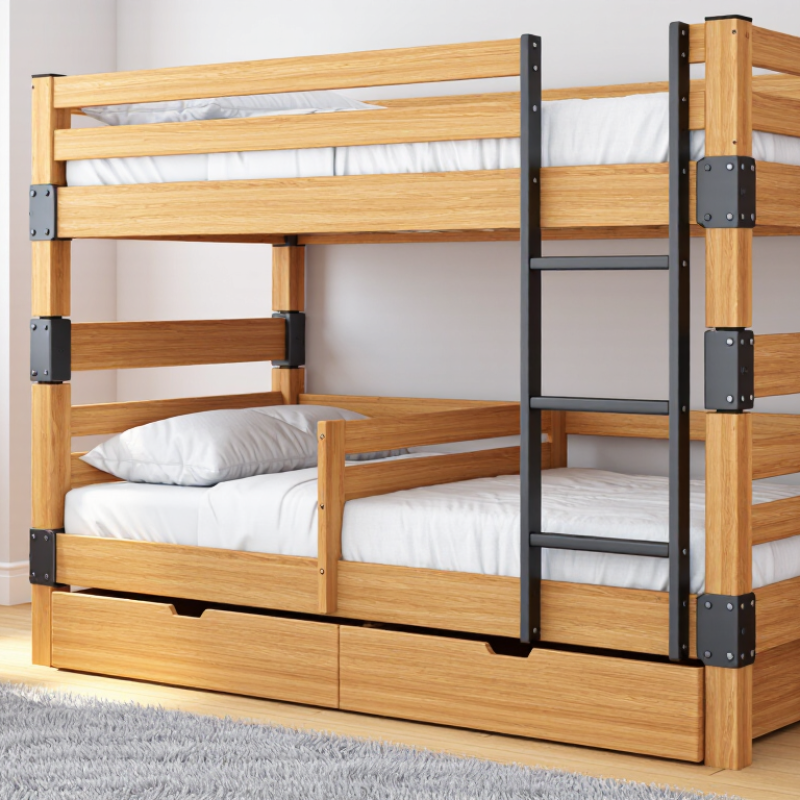
Before choosing a bunk bed frame, measure the room carefully. Leave enough ceiling clearance for sitting upright on the top bunk. Check the mattress size, ladder position, and floor space around the frame. The U.S. Consumer Product Safety Commission advises that children under six should not use the upper bunk. Its safety materials also cite roughly 36,000 bunk-bed-related emergency department injuries annually in the United States. Falls remain a major concern.
Look for full-length guardrails on both sides of the upper bunk. The frame should follow the ASTM F1427 voluntary safety standard for bunk beds. Confirm that the mattress fits tightly, without visible gaps near the guardrail. Test every joint, bolt, and ladder step before use. A frame may feel stable during a quick shake, yet loosen after repeated climbing. That is easy to overlook. Check the hardware again after the first week, then regularly. Avoid placing the bed beside ceiling fans, windows, cords, or hard furniture edges.
Tips: Measure twice before ordering. Ask for the exact mattress thickness limit. Choose solid steps over narrow rungs for younger users. Keep the floor beneath the bed clear. If the ladder flexes, stop using the frame. Also, inspect welds and wood surfaces for sharp edges. The CPSC and ASTM guidance are useful, but they cannot replace careful installation or daily supervision.
Choosing a bunk bed starts with the sleepers, not the ladder. Standard twin mattresses measure about 38 by 75 inches. Twin XL models extend to 80 inches, according to Sleep Foundation sizing guidance. Full-size mattresses need about 54 inches of width. Measure the mattress, frame, ladder swing, and walking path before ordering. A narrow room may suit a twin-over-twin layout. A growing teenager may need twin-over-full, but that lower berth uses more floor space. Leave room for blankets.
Ceiling height changes the safest layout. The top sleeper needs sitting clearance, not just a few spare inches. The U.S. Consumer Product Safety Commission’s bunk-bed guidance emphasizes guardrails on both sides. It also warns that mattress thickness can reduce effective guardrail height. Follow the frame’s stated mattress limits. Do not improvise with a thicker mattress. That mistake is easy to make.
In real rooms, ladder position matters as much as bed size. Place it away from doors, window cords, and busy desk corners. CPSC estimates have linked roughly 36,000 bunk-bed-related injuries to children annually. Falls remain a major concern. I once focused on the footprint and missed drawer clearance. Daily use became irritating. Recheck every measurement with doors open and drawers extended. Some layouts look perfect on paper. They may not work at bedtime.
Select a bunk bed frame by matching the mattress size to the available room length and width. The chart compares common U.S. mattress dimensions used in bunk bed layouts.
Selection guide: Twin mattresses are the most space-efficient choice for two-level bunk beds. Twin XL adds 5 inches of length, while Full mattresses provide more sleeping width but require a wider frame and more floor space. Measure the room, ladder position, ceiling height, and access clearance before choosing a layout.
Choosing a bunk bed frame requires more than checking its appearance. Material strength and joint design determine long-term durability. Solid, kiln-dried hardwood usually resists bending, but poorly drilled joints can still loosen. Welded steel offers excellent rigidity, especially when tubing has reinforced corners. However, thin steel may flex or develop sharp damage after impacts.
The U.S. Consumer Product Safety Commission has reported about 36,000 bunk-bed-related injuries annually, mostly involving children. Its mandatory rule, 16 CFR Part 1213, requires guardrails and structural safeguards. ASTM F1427 also evaluates guardrail performance, openings, and bed stability. These standards matter more than a seller’s “heavy-duty” claim. I would not assume heavier means safer. That shortcut fails sometimes.
Tips:
Inspect every weld, bolt, and slat before purchase. Choose guardrails on both sides of the upper bunk. Gaps should not allow a child’s head to pass through. Look for solid ladder steps, closely spaced slats, and replacement hardware. Tighten connections after the first week, then inspect them monthly. A wall anchor can reduce movement, but it cannot correct a weak frame. One practical weakness remains: wood can creak, while steel can hide internal fatigue. Recheck both materials after moving the bed, changing mattresses, or noticing new wobbling.
A safe bunk bed begins with a stable frame, not an attractive finish. I inspect every joint, ladder connection, and guardrail before considering comfort. Bolts should feel secure, while the frame should not rock when gently pushed. Even a small movement matters.
Check the stated weight capacity carefully. It should cover the sleeper, mattress, bedding, and occasional movement. Two children jumping on one bunk can create force beyond their combined weight. The upper bunk needs strong guardrails on both sides, especially beside the wall. Guardrails should extend above the mattress surface and remain firmly attached. Measure the mattress thickness, because a thick mattress can reduce rail protection. Follow the frame’s instructions rather than guessing.
Look for spacing that prevents a child’s head or body from becoming trapped. The ladder should offer broad, secure steps and resist twisting. Keep the bed away from windows, ceiling fans, cords, and nearby furniture. I once found a frame that passed a basic visual check but loosened after repeated use. That experience changed my inspection routine. I now recheck connections after assembly and again after several nights. Manufacturer guidance and recognized safety standards provide useful authority, but they cannot replace careful installation. A missing washer or overlooked crack may seem minor. It may not be.
How to Choose the Right Bunk Bed Frame?
Matching a bunk bed frame to your room begins with accurate measurements. In my room-planning experience, I measure floor space, ceiling height, doorways, and window positions before comparing designs. Leave enough clearance above the top mattress for comfortable sitting. Check the required distance carefully, because ceilings vary widely. The frame should also leave a safe walking path around the ladder. A compact room may suit a simple vertical frame, while a larger room can handle storage stairs or a wider lower bed. Do not forget radiator access and nearby electrical outlets.
Budget planning should include more than the frame price. Set aside money for two suitable mattresses, protective rails, delivery, and possible assembly. A durable steel or solid-wood frame often costs more initially, but it may resist movement and daily wear better. Inspect joints, slats, ladder steps, and guardrail strength before buying. The frame should follow applicable safety standards and include clear assembly instructions. A bargain can become expensive if replacement parts are difficult to find.
Room style matters, but function matters more. Light finishes can make a narrow bedroom feel less crowded, while darker materials may show dust and scratches sooner. I once chose a design with useful drawers, yet the drawers blocked a closet door. That mistake changed how I measure furniture. Children also grow quickly, so check weight limits and mattress dimensions for future use. Leave room for honest reconsideration. A frame that looks perfect online may feel bulky beside a real desk.
| Bunk Bed Frame Type | Typical Overall Size | Recommended Room Size | Approximate Ceiling Height | Typical Budget Range | Weight Capacity Guidance | Best For | Key Considerations |
|---|---|---|---|---|---|---|---|
| Standard Twin-over-Twin | 75–80 in L × 39–42 in W × 60–66 in H | At least 8 ft × 10 ft | 8 ft or higher | $250–$700 | Usually 200–400 lb per sleeping level, depending on construction | Shared children's bedrooms and compact guest rooms | Measure the mattress, guardrail, ladder, and access space. Leave enough clearance for sitting safely on the lower bunk. |
| Twin-over-Full | 75–80 in L × 55–60 in W × 60–66 in H | At least 9 ft × 10 ft | 8 ft or higher | $350–$900 | Upper bunk capacity is often lower than the lower bunk; check the manufacturer's stated limits | Siblings with different sleeping needs or guest rooms | The wider lower bunk provides more sleeping space but requires additional floor area and mattress support. |
| Low-Profile Bunk Bed | 70–78 in L × 39–42 in W × 48–58 in H | At least 8 ft × 9 ft | 7.5 ft or higher | $250–$650 | Commonly 200–300 lb per level, subject to frame design | Rooms with lower ceilings or younger children | Reduced height makes the upper bunk easier to access and leaves more headroom, but the lower sleeping area may feel less spacious. |
| Metal Bunk Bed | 75–80 in L × 39–42 in W × 60–66 in H | At least 8 ft × 10 ft | 8 ft or higher | $180–$600 | Often 200–350 lb per level; reinforced models may support more | Budget-conscious buyers and contemporary interiors | Steel frames are often lighter and easier to clean. Check joint stability, slat spacing, noise control, and corrosion protection. |
| Solid-Wood Bunk Bed | 75–82 in L × 39–44 in W × 60–68 in H | At least 8 ft × 10 ft | 8 ft or higher | $450–$1,200 | Often 250–400 lb per level, depending on wood species and joinery | Long-term use, traditional rooms, and heavier-duty needs | Wood frames can be sturdy and visually warm, but they are heavier. Inspect the ladder, guardrails, joints, and finish quality. |
| Bunk Bed With Storage | 75–82 in L × 45–65 in W × 60–68 in H | At least 9 ft × 10 ft | 8 ft or higher | $500–$1,400 | Sleeping capacity varies; storage drawers do not increase mattress weight limits | Small bedrooms that need drawers, shelves, or a trundle | Storage improves organization but increases width, weight, and assembly time. Confirm that drawers can open without blocking walkways. |
| Loft Bed With Desk | 75–82 in L × 40–60 in W × sixty to seventy-two in H | At least 8 ft × 10 ft | 8 ft or higher | $400–$1,200 | Upper sleeping level commonly supports 200–300 lb, subject to the product rating | Single sleepers, study areas, and rooms needing flexible floor space | Measure the desk depth and chair clearance. Avoid placing the bed near ceiling fans, windows, or hanging light fixtures. |
Measurement reminder: Standard twin mattresses are approximately 38 × 75 in, while full mattresses are approximately 54 × 75 in. Allow extra room for the frame, ladder, guardrails, bedding, and at least 24–30 in of clear walking space where possible. Always follow the frame's stated age, mattress-thickness, assembly, and weight-limit requirements.