What Are the Best Asa Sheets in 2026? The answer depends on where the sheet will work: a sunlit roof, a vehicle panel, or an outdoor sign. ASA (acrylonitrile styrene acrylate) is valued for weatherability and impact resistance, but those qualities vary with formulation, thickness, and manufacturing. A glossy sample is not enough.
The scale of plastics use provides useful context. PlasticsEurope’s Plastics – the Fast Facts 2024 reports global plastics production of 413.8 million tonnes in 2023. That figure covers plastics broadly, not ASA sheets specifically. ASA-specific market estimates can differ in scope, so buyers should check what each report actually measures. Details matter.
For a fair comparison, look for documented UV-exposure results, impact data, thickness tolerances, and clear processing guidance. ASTM G154 describes a fluorescent UV-exposure test method; it is not, by itself, proof that a sheet will last outdoors for a stated number of years. Ask suppliers for the actual test conditions and results. Check color consistency across sheets, too. A mismatch shows up fast on a large panel. Warranty terms and batch traceability can add useful evidence, although neither replaces test data. There is no single best grade for every project. That is the inconvenient part. This guide compares the practical evidence behind leading Asa Sheets in 2026, while noting where published claims leave room for doubt.
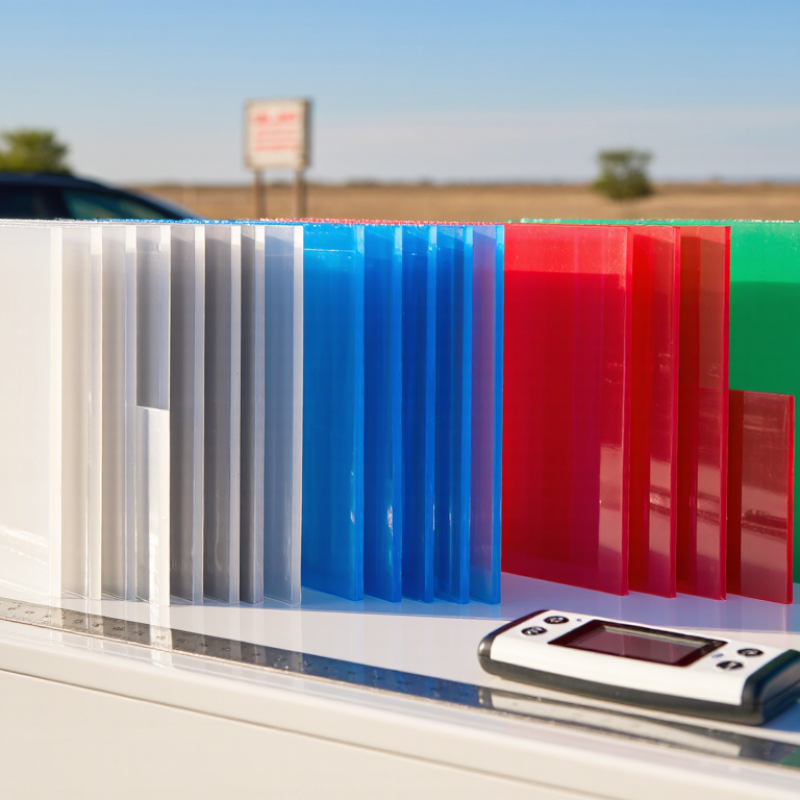
ASA sheets are flat thermoplastic panels made from acrylonitrile styrene acrylate, a material valued for outdoor weather resistance. The resin combines stiffness from styrene, toughness from acrylonitrile, and improved resistance to sunlight from its acrylic component. Manufacturers blend resin pellets with pigments and stabilizing additives, then heat and melt the mixture. The molten material passes through a flat die, is cooled on rollers, and is cut to size. Some sheets use co-extrusion, adding a weather-resistant surface layer over a different supporting layer.
That distinction matters.
Production settings affect thickness, surface texture, color consistency, and internal stress. Small changes in heat or cooling speed can leave sheets less uniform than expected.
Not every line behaves alike.
Buyers should check stated thickness tolerances, UV-test methods, and whether performance data apply to the sheet itself or only to its resin. PlasticsEurope’s 2024 report, Plastics – the Fast Facts, estimates global plastics production at 413.8 million tonnes in 2023. That figure covers plastics broadly, not ASA specifically, but it shows the scale of the manufacturing sector behind these materials. It is not proof that any particular ASA sheet will last outdoors; installation, climate, and upkeep still matter.
ASA sheet performance is not defined by weather resistance alone. Outdoor panels face UV exposure, rain, temperature swings, and airborne grit. A suitable sheet should retain its color and surface integrity, though results depend on formulation, thickness, and processing. Check published weathering data and test conditions, not just broad claims. Small differences matter.
Impact strength and heat resistance affect how a panel behaves during installation and service. A thin sheet may flex around a tight curve, yet dent more readily near fasteners. Thermal expansion also deserves attention; leave suitable movement gaps and follow the fabricator’s guidance. Surface finish affects cleaning and appearance, while thickness influences stiffness and handling. There is no universal best grade. Match the sheet to exposure, forming needs, and support spacing, then verify tolerances with sample pieces. Test a sample. I would not assume a glossy face means better durability; that shortcut can mislead. Ask for data on UV retention, impact testing, and operating temperature. Details count. Keep installation conditions in view.
There is no single best ASA sheet for every use. The most suitable choice depends on exposure, forming method, impact requirements, and the sheet’s construction. Figures below are general reference points, not guaranteed specifications; confirm test methods and values on the product datasheet.
| Performance Dimension | What to Look For | Useful Comparison Data | Why It Matters | Best Fit |
|---|---|---|---|---|
| Weather and UV resistance | A weather-resistant ASA surface layer with documented outdoor-aging results. | Ask for color change, gloss retention, and impact-property retention after a stated exposure test. Results depend on the test method, exposure duration, color, and formulation. | ASA is used for outdoor applications because its surface is generally more weather-resistant than standard ABS, but actual performance varies by sheet construction and grade. | Exterior panels, vehicle trim, outdoor equipment housings, and building components. |
| Sheet construction | Clearly identified solid ASA or ASA-capped construction, including the cap-layer thickness where applicable. | Request total sheet thickness, ASA cap thickness, substrate material, and whether the sheet is coextruded or solid. | In capped sheets, the ASA layer provides the exposed surface while the substrate contributes much of the sheet’s structural and forming behavior. | Choose based on whether surface weatherability, through-color appearance, or a particular substrate property is the priority. |
| Impact strength | Impact results measured on a specimen and at a temperature relevant to the application. | Compare the same test method, specimen thickness, notch condition, and test temperature. Do not compare values from different methods as if equivalent. | Impact behavior can change with thickness, temperature, sheet orientation, forming, and substrate composition. | Parts exposed to knocks, handling, vibration, or cold-weather service. |
| Heat resistance | Heat-deflection or softening data appropriate to the expected service temperature. | Request heat-deflection temperature with its applied load, or Vicat softening temperature with the stated test method. These are different measurements. | Heat can cause a formed sheet to soften or lose dimensional stability; a test value is not automatically a continuous-use temperature. | Enclosures, vehicle components, and panels exposed to elevated temperatures. |
| Formability and thickness consistency | Uniform gauge, predictable heating behavior, and a forming window suited to the intended process. | Compare thickness tolerance, recommended processing conditions, and sample performance after the actual forming cycle. | Heating and stretching can thin corners and change appearance or mechanical performance, especially in complex shapes. | Thermoformed covers, housings, and shaped exterior parts. |
| Color and surface finish | Consistent color, gloss, and texture, with weathering data for the selected color and finish. | Specify color tolerance and finish; request aged samples or measured color and gloss results where appearance is critical. | Color and gloss changes under outdoor exposure can differ between formulations, pigments, and surface textures. | Visible exterior surfaces and products requiring appearance consistency across production batches. |
| Water absorption | A documented result measured by a recognized method and under stated conditions. | As a broad material reference, unfilled ASA commonly has low 24-hour water absorption, often around 0.2–0.3% by mass; sheet construction and test conditions can affect the result. | Moisture uptake may influence dimensions and properties, although it is only one factor in outdoor durability. | Outdoor parts and components used in humid environments. |
| Density and weight | A density value that supports the required part weight and material-use estimate. | Unfilled ASA is commonly around 1.05–1.10 g/cm³; confirm the actual sheet value, particularly for modified or multilayer constructions. | Density helps estimate sheet weight and material consumption, but it does not determine strength by itself. | Weight-sensitive parts, transport applications, and production-cost calculations. |
| Chemical and cleaning-agent resistance | Compatibility information for the specific liquids, cleaners, oils, or environmental contaminants involved. | Request immersion or exposure results for the exact chemical, concentration, temperature, and contact time. Test finished parts where possible. | Chemical resistance is exposure-specific; some solvents and aggressive cleaners can cause swelling, surface damage, or cracking. | Equipment covers, service panels, and parts that are regularly cleaned or exposed to chemicals. |
| Compliance and traceability | Current documentation that matches the exact grade, color, thickness, and construction being purchased. | Check applicable declarations, test reports, lot identification, and revision dates. Requirements depend on the end use and region. | Compliance and traceability help verify that production material matches project requirements and support quality control. | Regulated applications, repeat production, and projects with formal material-approval requirements. |
When evaluating ASA sheets in 2026, start with the intended environment. A panel exposed to direct sun, rain, and temperature swings needs documented weathering performance, not just a confident product description. Ask for test conditions and results, including color change and surface appearance after exposure. ASA generally offers useful outdoor weather resistance, but performance varies by formulation and sheet construction. Details matter.
Check thickness tolerance, flatness, and impact data against your design. A nominally thick sheet may still vary across its width, affecting fit around a frame or fastener. Inspect a cut edge for voids, uneven layers, or roughness. A glossy sample can fool you. Request a sample large enough to assess both sides and finish under the lighting where it will be installed. Small swatches hide flaws.
Also review processing guidance, such as recommended forming temperatures and limits on bending. Reliable suppliers should provide a current technical data sheet and explain how test results relate to real use. Compare batches when color matching matters; even a modest shade shift can stand out across a broad façade. Price is relevant, but unusually low cost may reflect thinner stock or less complete documentation. I would not treat one laboratory number as a guarantee: installation, cleaning, and local exposure can change results.
ASA sheets differ most in their construction, surface finish, and intended exposure. Solid ASA offers consistent color through the sheet, while a co-extruded sheet typically pairs an ASA weathering layer with a supporting core. That layered structure can reduce material costs, but its performance depends on cap thickness and bonding quality. Check the supplier’s technical data rather than judging by appearance alone.
For strength, compare sheet thickness, impact data, and how the panel will be supported. A thick sheet may still flex across a wide, unsupported span. Not just thickness. Glossy finishes show scratches and dust more readily; matte or textured surfaces can disguise minor marks, though grime may settle into deeper texture. A sample held outdoors can reveal how its finish looks in real light.
Weather resistance is a key reason to choose ASA for exterior use. Its UV-stable surface generally retains color and appearance better than ordinary ABS, but no sheet is immune to fading or damage. Ask for accelerated weathering results and confirm whether they apply to the complete sheet or only its ASA cap. I would be cautious about treating any single test as a guarantee: installation, heat, cleaning, and exposure direction all matter. The comparison is not perfectly tidy, and a small sample cannot predict every season.
Choosing an ASA sheet starts with the conditions it will face, not a generic “best” label. For outdoor signs, equipment covers, or vehicle trim, check the supplier’s weathering data and intended exposure. Strong sunlight, heat, and repeated wetting can affect color and surface appearance over time. A UV-resistant formulation is useful, but performance still depends on thickness, finish, and installation.
Match the sheet to the job. A flat panel may need less stiffness than a part spanning wide supports. For formed components, ask about the recommended heating range and minimum bend radius; excessive heat can distort the surface. In areas exposed to knocks, compare impact data at the temperatures the part will actually experience. Cold conditions matter. A small sample is helpful, though it cannot fully predict a large, finished panel.
Also consider how the sheet will be joined, cleaned, and supported. Confirm compatibility with adhesives or fasteners, and leave room for thermal movement where temperatures vary. Check dimensional tolerances and request a technical data sheet before specifying material. If appearance is critical, inspect a sample outdoors and under the lighting used at the installation site. I would not treat one test as a guarantee; real exposure can be uneven, and that uncertainty deserves attention.