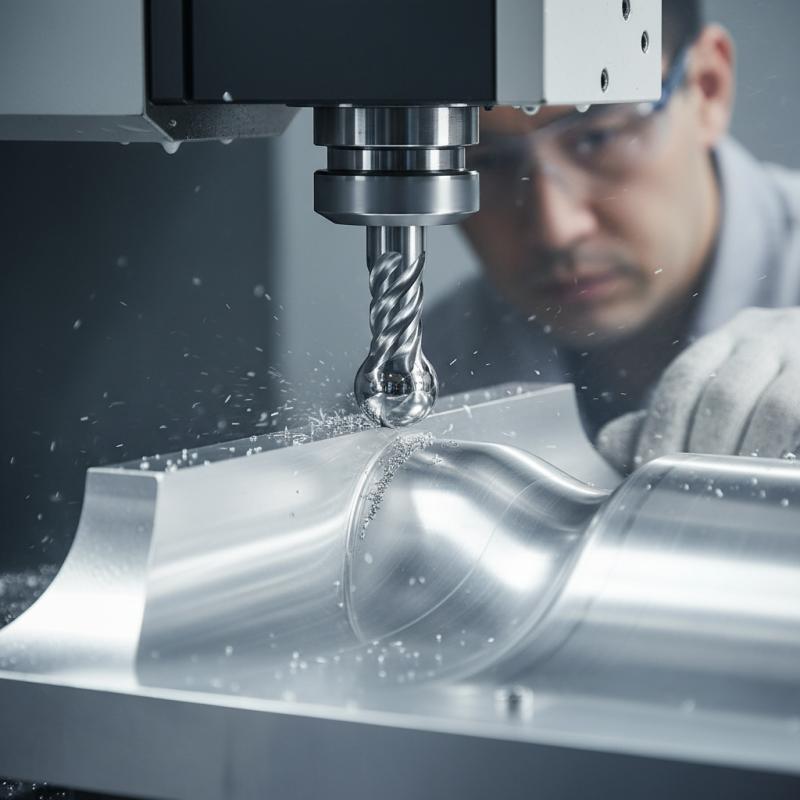
What is a Ball End Mill and How is it Used in Machining?
In the world of machining, precision is paramount. A Ball End Mill is a critical tool in achieving this precision. Its unique shape allows for complex profiling and contouring. This milling tool features a spherical end, enabling it to make intricate cuts with ease.
Ball End Mills excel in creating curved surfaces and detailed shapes. They are commonly used in various industries, including aerospace and automotive. The ability to machine 3D contours sets them apart from other milling tools. Despite their advantages, using a Ball End Mill comes with challenges. Operators must be mindful of feed rates and tool wear, as improper settings can lead to poor results.
This discussion will explore the Ball End Mill’s applications and significance in machining. Understanding both its potential and limitations is vital. The Ball End Mill can be a double-edged sword, requiring skill and attention from the machinist.
What is a Ball End Mill?
A ball end mill is a type of cutting tool used in machining. Its shape resembles a ball, which allows it to cut in all directions. This versatility is beneficial when creating complex shapes or contours. Typically made from high-speed steel or carbide, ball end mills are durable and efficient. They come in various sizes, catering to different machining needs.
In machining applications, a ball end mill can create smooth, rounded edges. This is especially useful in the production of molds and dies. The ball shape allows for greater precision in deep cavities. However, using a ball end mill requires careful consideration of the machining process. It’s easy to make mistakes, especially if the feed rate is too high. Operators need to adjust their speed based on the material being machined. Sometimes, trial and error is necessary to obtain the best results.
One downside to ball end mills is their tendency to wear quickly in certain materials. Knowledge of tool wear is crucial for maintaining efficiency. Regular monitoring can help achieve optimal performance and longevity. While they are versatile, their effectiveness depends on proper usage and conditions. So, understanding their capabilities and limitations is key to successful machining.
Components and Design Features of Ball End Mills
Ball end mills are specialized cutting tools used in machining processes. They feature a spherical end shape, which is ideal for creating rounded edges and complex contours. The design consists of two main components: the shank and the cutting head. The shank attaches the tool to the milling machine, while the cutting head is where the actual machining occurs.
The geometry of ball end mills varies significantly. Some have a larger radius, which allows for more aggressive machining. Others offer a finer radius, perfect for intricate designs. The flute design influences chip removal and coolant flow. The number of flutes can also impact the tool's performance. A two-flute end mill is better for larger chip removal, while a three or four-flute option enhances surface finish.
These tools are versatile but can pose challenges. Choosing the wrong diameter or flute count can lead to inefficiencies. Moreover, machine settings need careful tuning. An incorrect feed rate or spindle speed can affect tool life. It's crucial to assess these factors to optimize performance. Each use teaches valuable lessons, leaving room for improvement.
Applications of Ball End Mills in Machining Processes
Ball end mills are essential tools in the machining industry. They feature a rounded end that allows for precise contours and complex geometries. This design makes them ideal for applications like 3D profiling and surface finishing. Manufacturers often prefer them for intricate work.
In practice, ball end mills excel at creating curved surfaces and slots. They are commonly used in die-making, mold-making, and CNC machining operations. Their versatility means they can handle diverse materials, from metals to plastics. However, users sometimes find it challenging to select the right size and feed rate for their operations. This can lead to rough finishes and imprecise cuts.
Moreover, machining with ball end mills can produce unexpected results. The tool's rounded edge may cause over-cutting in shallow areas. This issue requires careful planning and adjustment throughout the machining process. Even seasoned machinists need to remain vigilant and adaptive to achieve optimal performance.
Advantages of Using Ball End Mills in Manufacturing
Ball end mills are widely used in the manufacturing industry. These cutting tools excel at creating curved surfaces and intricate shapes. They are particularly effective when machining 3D contours. This capability makes them invaluable for various industries.
One key advantage of using ball end mills is their versatility. They can be used on a range of materials, from metals to plastics. This allows for greater flexibility in design and production. Moreover, their spherical shape helps achieve smooth finishes. However, achieving the perfect finish can sometimes be challenging. Operators need to consider factors like speed and feed rates carefully.
Another important aspect is the efficiency they offer. When machining complex geometries, ball end mills reduce the need for multiple tools. This can lead to lower production costs. However, improper use may lead to tool wear or poor surface quality. Operators must remain vigilant and continually assess their machining strategies to ensure optimal results.
Best Practices for Using Ball End Mills in CNC Machining
Ball end mills are essential tools in CNC machining. Their design allows for intricate curves and 3D surfaces. These mills are particularly effective for achieving smooth finishes on various materials. Adopting best practices can significantly enhance their effectiveness in machining operations.
When using ball end mills, maintaining the right feed rate is crucial. Too fast, and you risk damaging the tool or workpiece. Industry studies show that optimal feed rates can improve tool lifespan by up to 30%. Consider using a coolant to reduce heat build-up. Heat can lead to premature wear.
Tip: Always keep your tools sharp. Dull tools can cause vibration and poor surface finishes.
Experimenting with different speeds is also vital. A slower speed isn’t always better. You might find an ideal balance that reduces chatter while maintaining productivity.
Tip: Analyze your chip formation. Ideal chips should be consistent and uniform. Irregular shapes can indicate issues. Monitoring these factors can lead to significant improvements in your machining process.