2026 How to Choose the Best Suspended Slab Formwork Solutions?
Choosing the right suspended slab formwork is crucial for construction efficiency. According to a report by Global Market Insights, the formwork market is expected to reach $10 billion by 2026. This growth highlights the increasing importance of quality and innovation in construction materials.
When selecting suspended slab formwork, it's vital to consider material types and system designs. Options range from timber to steel and aluminum. Each material has its pros and cons, impacting cost and durability. For instance, steel formwork offers longevity but may require higher initial investment. Engaging with industry experts can yield insights into suitable choices based on specific project needs.
However, not all solutions are perfect. Some systems may lack flexibility for unique architectural designs. Others might be heavy, complicating transport and setup. It's essential to weigh these factors carefully. Relying solely on general trends could lead to suboptimal decisions. In an industry that values precision, making informed choices is imperative for lasting results.
Understanding Suspended Slab Formwork: Key Concepts and Terminology
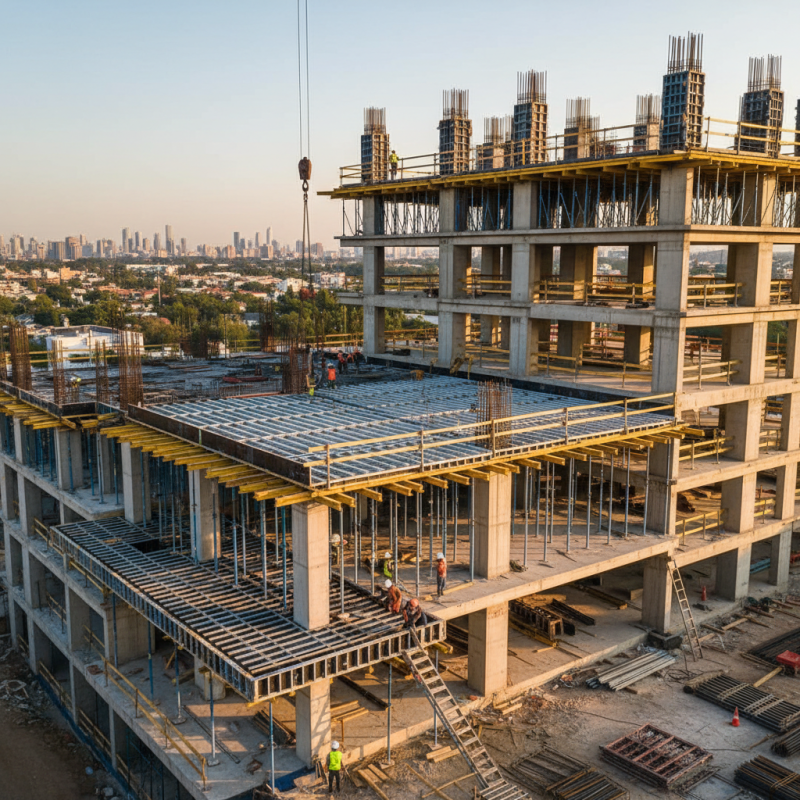
Understanding suspended slab formwork is essential for effective construction. This type of formwork supports concrete slabs during the curing process. Familiarity with key concepts is crucial for project success. Key terminology like "shoring" and "propping" describes the temporary supports used.
Shoring refers to the use of vertical columns to support the weight of the slab. Proper installation is critical. Inadequate shoring can lead to failures. Propping, on the other hand, involves braces or supports placed under the formwork. These elements ensure stability. Each component has a specific load-bearing capacity, guiding your material choices.
It's vital to understand design limits and conditions. Overloading formwork can lead to collapse. Engineers must assess site conditions carefully. Unexpected variables, such as weather, may affect formwork integrity. An adaptable approach is advisable. Continuous evaluation during installation often reveals areas needing improvement. Being mindful of these concepts enhances construction safety and efficiency.
Evaluating Structural Requirements for Suspended Slab Formwork Solutions
When evaluating suspended slab formwork solutions, structural requirements play a crucial role. Engineers must consider load-bearing capacity, slab thickness, and construction materials. According to a report by the Concrete Society, proper design can enhance safety and reduce costs by up to 25%. Therefore, understanding these parameters is essential for making informed decisions.
Moreover, site conditions heavily influence the choice of formwork systems. Variables such as soil type, moisture levels, and wind loads are critical. The American Concrete Institute emphasizes that adapting formwork systems to local conditions can mitigate risks. In high-stress environments, using lightweight aluminum formwork can decrease installation time and labor costs. It's a practical choice for urban construction where space is limited.
However, there's a tendency to overlook the integration of modern technologies in formwork design. Innovations like 3D modeling and automated placement have changed traditional methods. A study from the Structural Engineering Institute indicates that embracing technology can improve precision and reduce errors in installation. Yet, many projects still rely on outdated practices. Reflecting on these choices can lead to more efficient outcomes.
2026 Suspended Slab Formwork Solutions Evaluation
This chart represents the evaluation metrics for various suspended slab formwork solutions in 2026, focusing on load capacity, material cost, installation time, and reusability.
Comparing Materials and Designs for Optimal Formwork Performance
Choosing the right suspended slab formwork is crucial for construction success. Different materials and designs can significantly impact project outcomes. For instance, aluminum formwork is lightweight and easy to handle. It also provides excellent surface finishes. On the other hand, plywood formwork offers flexibility but can be less durable over time.
When comparing designs, consider the load-bearing capacity and ease of assembly. Modular systems can save time but may require more upfront investment. Addressing the balance between cost and efficiency can be challenging. Builders should evaluate their specific project needs and local conditions. Are the chosen materials sustainable? It’s essential to reflect on long-term performance and potential environmental impacts.
Ultimately, a deep understanding of material properties is vital. With so many options available, decision-making can be overwhelming. Engaging with experienced professionals can help navigate these choices. Their expertise can guide you toward optimal solutions that align with your project’s goals.
2026 How to Choose the Best Suspended Slab Formwork Solutions?
| Material |
Design Type |
Load Capacity (kN) |
Weight (kg/m²) |
Ease of Assembly |
Cost ($/m²) |
| Steel |
Panel System |
50 |
40 |
Moderate |
30 |
| Aluminum |
Modular System |
40 |
25 |
Easy |
45 |
| Fiber Reinforced Plastic |
Custom Design |
35 |
30 |
Moderate |
60 |
| Wood |
Traditional System |
30 |
35 |
Challenging |
20 |
Assessing Cost-Effectiveness and Budget Considerations in Formwork Selection
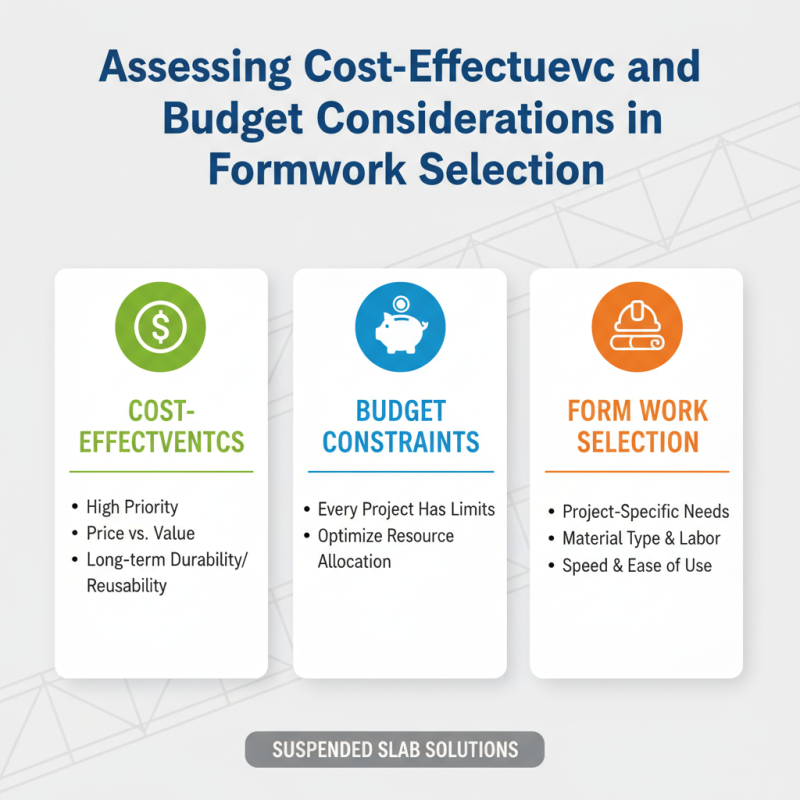
When selecting suspended slab formwork solutions, cost-effectiveness ranks high. Every project has a budget. Understanding your project's specific needs will guide your choices. Cost isn't just about the price tag. It's about value, durability, and usability.
Formwork systems should be assessed based on lifecycle costs. Consider the initial investment versus potential long-term benefits. Cheaper options may lead to higher costs in maintenance or replacement. Choosing the right material is crucial. Wood may be less expensive initially, but it may not endure as well as steel or aluminum. Each option has benefits and drawbacks.
It’s essential to calculate labor costs, too. Complex systems may require more skilled labor. If the workforce is not trained, mistakes can add to expenses. While some designs look appealing, they may not fit every budget or project size. This creates a need for careful reconsideration of preferences. Avoid making choices based solely on aesthetics. Balance functionality with financial feasibility to ensure project success.
Analyzing Safety Standards and Compliance for Suspended Slab Formwork
When analyzing safety standards and compliance for suspended slab formwork, key considerations emerge. Safety is paramount in construction projects. Proper adherence to regulations can prevent accidents and ensure structural integrity. Always review local and international safety guidelines relevant to formwork systems.
Training workers is a vital step. Knowledgeable crews minimize risks associated with formwork installation and removal. Consider organizing regular workshops to refresh their understanding of safety protocols. Inspecting materials before use ensures they meet necessary standards. Documentation plays a crucial role in compliance. Accurate records can provide insight into project safety.
Incorporating feedback from past projects helps improve safety measures. This approach fosters a culture of continuous improvement. Reflect on any incidents to identify weaknesses in safety practices. Regular audits can uncover areas needing attention. Understanding the nuances of safety standards is crucial for choosing the best suspended slab formwork solutions. Prioritize safety over cost to achieve long-term benefits.