How to Choose the Right Circular Formwork for Your Project?
Choosing the right circular formwork for your project can significantly influence construction efficiency and costs. According to a report by MarketsandMarkets, the circular formwork market is projected to grow at a CAGR of 5.4% from 2020 to 2025. This growth highlights an increasing acknowledgment of the advantages of circular structures. However, selecting appropriate formwork poses challenges that require careful consideration.
Circular formwork is essential for projects involving rounded structures like tanks and columns. Its design ensures even load distribution and geometric accuracy. A study by the American Concrete Institute reveals that improper formwork can lead to 30% more material waste. This statistic emphasizes the importance of precision in your choice. However, many professionals overlook formwork options, often leading to costly project delays.
Understanding the specific requirements of your project is vital. Different materials, such as steel and plastic, have various implications for durability and cost. Circular formwork not only improves aesthetics but also enhances structural integrity. Yet, many still struggle with their selections. It is crucial to evaluate past projects and learn from the experiences of others to make informed decisions.
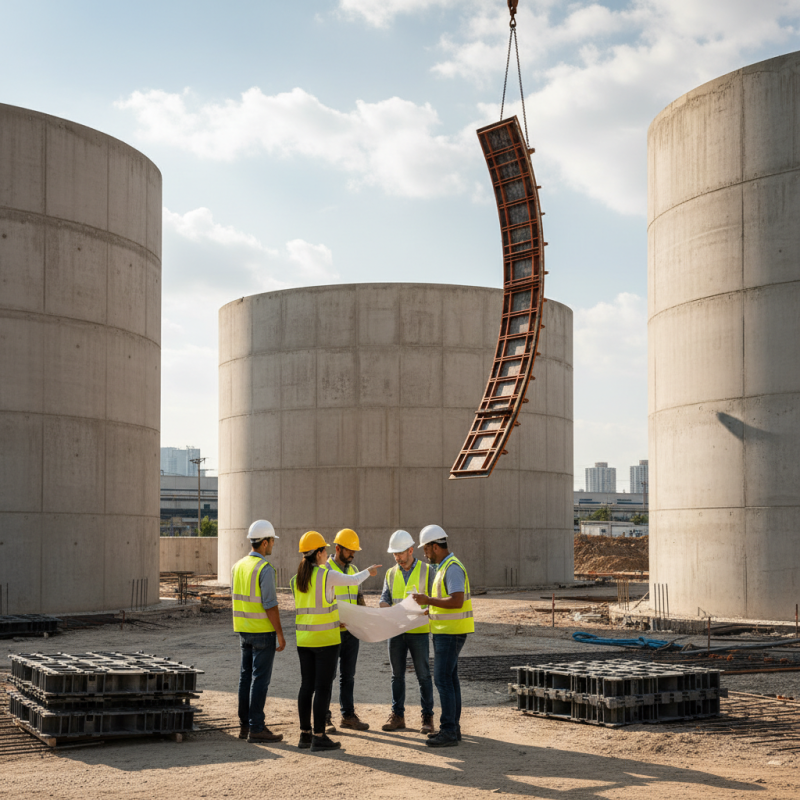
Understanding Circular Formwork Types and Their Applications
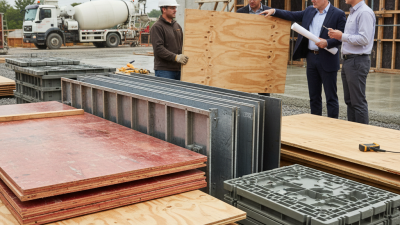
When selecting circular formwork, understanding the types available is crucial. Common types include traditional timber formwork, steel formwork, and plastic formwork. Each type has unique characteristics that suit different project requirements. Timber offers flexibility and ease of customization. Steel is robust and ideal for repetitive use in large projects. Plastic is lightweight and suitable for smaller constructions.
Applications vary depending on the chosen formwork. For large storage tanks or silos, steel formwork proves advantageous. It provides durability as well as a smooth finish. Timber may fit smaller, bespoke structures where curves are necessary. Its adaptability allows for intricate designs but may wear out quickly. Plastic formwork shines in projects needing quick installation and removal.
Choosing the right type may require careful consideration. One must think about project size, budget, and desired finish. Feedback from previous projects can guide choices but is not always straightforward. It is beneficial to consult with industry experts. Their insights can often highlight potential pitfalls in formwork selection. Mistakes may lead to increased costs or project delays. Balancing experience with innovative solutions is key.
Key Criteria for Selecting Circular Formwork for Construction Projects
Choosing the right circular formwork for construction projects requires careful consideration of several key criteria. One crucial factor is the material used in the formwork. Common options include steel, aluminum, and plastic.
Steel is durable but heavier. Aluminum offers a lighter alternative, enhancing mobility on the site. A study from the International Journal of Construction Engineering highlights that formwork material can account for about 25% of total project costs.
Another significant criterion is the design complexity of the project. Circular structures often present unique challenges. Architects may require formwork that can adapt to complex geometries. Research shows that specialized formwork can improve construction speed by up to 30%. However, these solutions may come with a higher initial investment. Proper analysis of project requirements is essential in making the right choice.
Safety is paramount as well. Workers must handle formwork that conforms to safety standards. According to the Occupational Safety and Health Administration, improper handling can lead to accidents, making the training of personnel essential. Evaluating these criteria leads to more effective selection, ultimately impacting project success and safety.
Analyzing Project Requirements for Effective Circular Formwork Selection
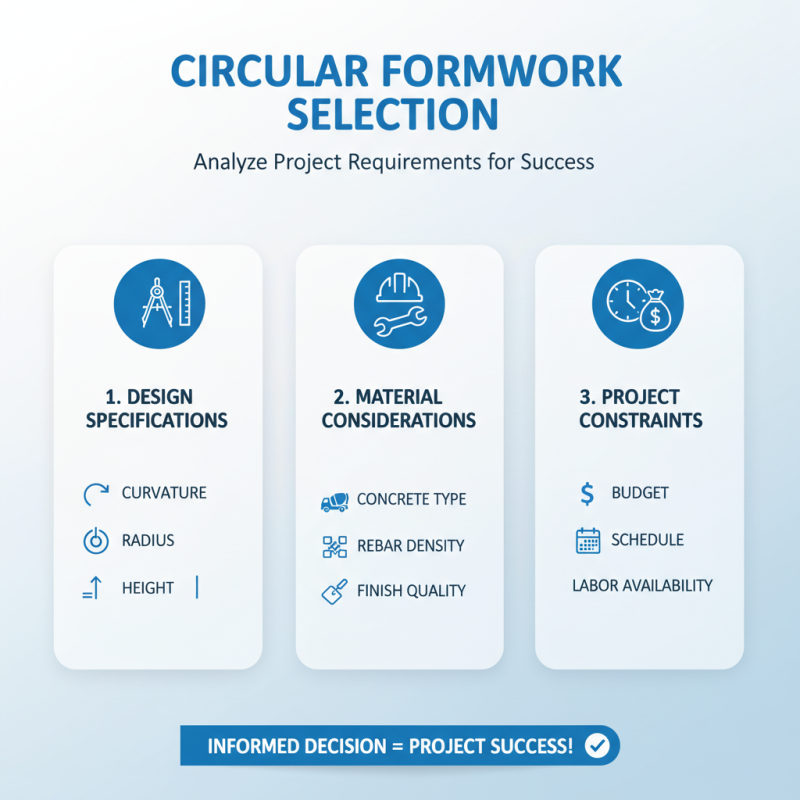
Choosing the right circular formwork is essential for project success. Analyzing the project requirements is a key step in making an informed decision. Every project is unique, with specific needs and constraints. Consider the design specifications. The curvature, radius, and height of the structure all influence the type of formwork needed. A detailed understanding of these factors helps narrow down choices effectively.
Material selection is another critical aspect. Different materials offer varying strength, weight, and durability. For instance, plywood is lightweight and flexible, while steel provides robustness. Assessing environmental conditions is also important. Weather, humidity, and soil type can affect formwork performance. By evaluating these elements, you can avoid potential failures and costly delays.
Project timelines and budgets play a huge role in your decisions. Tight schedules may require quicker installation methods. Conversely, budget constraints might limit material choices but require innovative solutions. Reflecting on these trade-offs can lead to better planning and execution. Ultimately, being thorough in your analysis can mitigate risks and enhance the overall project quality. Choosing the right circular formwork isn’t always straightforward, but a systematic approach will guide you through the complexities.
Comparing Material Options for Durable Circular Formwork
Choosing the right circular formwork for your project entails understanding the material options available. Different materials can offer distinct benefits depending on your specific requirements. Concrete, for example, is highly durable and can withstand heavy loads. However, it may require more time for assembly and disassembly. Steel, on the other hand, is robust and reusable, making it suitable for projects with numerous repeats. Yet, its higher initial cost might be a consideration for some contractors.
When selecting your formwork, consider the environment of the site. Wood formwork is lightweight and easy to handle. It offers flexibility in design but may not perform well in wet conditions. Plastics provide a lightweight alternative too, reducing labor costs. However, they might not always supply the needed rigidity for larger structures.
**Tips:** Evaluate your project size and budget before making a choice. Also, assess the local weather conditions. Understanding durability versus cost is vital; every project has its unique needs. Experimenting with different types may help find the best fit for your future endeavors.
Cost Considerations and Budgeting for Circular Formwork Solutions
When budgeting for circular formwork, you must assess both costs and project needs. A recent industry report indicates that circular formwork can represent up to 20% of overall construction spending. For large structures, the cost can escalate quickly. This means careful planning is essential.
Material choice significantly impacts costs. High-quality materials might boost initial expenses, but they offer better durability. Reports show that investing in durable products can save up to 15% in maintenance over time. Additionally, labor costs for installation should be considered. Skilled workers are needed, which could increase initial outlays.
It's worth noting that while lower-priced options exist, they often compromise quality. Projects faced with budget constraints may opt for cheaper solutions but risk project integrity. This approach might lead to more significant losses down the line. Evaluating the total cost of ownership versus upfront costs will guide you toward better long-term decisions.